

Daily Dose Of Jazz…
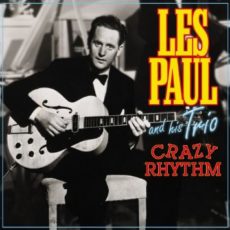
Les Paul was born Lester William Polsfuss on June 9, 1915 in Waukesha, Wisconsin. At the age of eight, he began playing the harmonica and after trying to learn the piano, he switched to the guitar, teaching himself how to play. It was during this time that he invented a neck-worn harmonica holder, allowing him to play both sides of the harmonica hands-free while accompanying himself on the guitar. By age thirteen, he was performing semi-professionally as a country music singer, guitarist, and harmonica player.
He began his first experiment with sound wanting to make himself heard by more people at the local venues, so he wired a phonograph needle to his guitar and connected it to a radio speaker, using that to amplify his acoustic guitar. As a teen Les created his first solid body electric guitar using a 2-foot piece of rail from a nearby train line. By age seventeen, he was playing with Rube Tronson’s Texas Cowboys and soon after he dropped out of high school and joined Sunny Joe Wolverton’s Radio Band in St. Louis, Missouri on KMOX.
Moving to Chicago in 1934 he continued to perform on radio, met pianist Art Tatum, whose playing influenced him. Paul formed a trio in 1937 with singer/rhythm guitarist Jim Atkins and bassist/percussionist Ernie “Darius” Newton. Four years later he was in New York in 1938 with a featured spot on Fred Waring’s Pennsylvanians radio show. Drafted into the Army working on the Armed Forces Radio Network, he backed Bing Crosby, The Andrews Sisters and performed as a leader. His guitar style was strongly influenced by the music of Django Reinhardt, whom he greatly admired, met and befriended after World War II and paid part of the funeral cost when Django died in 1953.
He would go on to play with Nat King Cole at the inaugural Jazz At The Philharmonic in 1944, record with Crosby and the Andrews Sisters and then nearly lose his career after his right arm was shattered in a near fatal car crash. Los Angeles doctors set his arm just under a ninety degree angle, giving him the ability to cradle and pick the guitar after a year and a half recovery.
Paul performed in the genres of jazz, country and blues, was also a songwriter, luthier, inventor and pioneer of the solid body electric guitar, utilized multi-tracking, overdubbing, tape delay and phasing effects in his recordings aided in his innovative playing style of licks, trills, chording sequences and fretting techniques that set him apart from his contemporaries and inspired many guitarists of the present day. With his wife Mary Ford he recorded in the 1950s, and together they sold millions of records.
Guitarist Les Paul has been honored with induction into the Rock and Roll Hall Of Fame, the National Inventors Hall of Fame, won several Grammy Awards, Grammy Trustees Award, with Mary Ford their How High The Moon was inducted into the Grammy Hall of Fame, National Medal of Arts, was inducted into the Big Band Hall of Fame and the Jazz Hall of Fame, received an Emmy Lifetime Achievement Award in Engineering, the Lifetime Achievement in Music Education from the Wisconsin Foundation for School Music, and a star on the Hollywood Walk of Fame, among numerous other honors.
Suffering from arthritis in the mid-1960s his condition worsened over his career and in his final years he lost the use of his right hand except for two fingers. On August 12, 2009 guitarist Les Paul passed away from complications from pneumonia at White Plains Hospital in New York.

Give The Gift Of Knowledge

More Posts: guitar
Daily Dose Of Jazz…
Paul Bollenback was born on June 6, 1959 in Hinsdale, Illinois. The guitarist first got his hands on a nylon stringed guitar when he was seven years old. It was a gift from his dad, who played trumpet, adored music as much as the his son. He developed a taste for the exotic over the course of the three-year period his family lived in India at the age of 11 years old.
At the age of 14, the budding guitarist returned to the states with his family, where he discovered the delights of rock & roll. Around this time he started to play the electric guitar, but it was when Paul discovered Miles Davis that his musical development took a major turning point.
Bollenback studied music at the University of Miami then went on to eight more years of private instruction under the tutelage of Asher Zlotnik in Baltimore. By 1993 he embarked on a European tour and received a National Endowment for the Arts grant in conjunction with the Virginia Commission on the Arts, for New Music for Three Jazz Guitars.
He was named 1997 Musician of the Year by The Washington Area Music Awards, SESAC honored two of his original pieces, Romancin’ the Moon and Wookies’ Revenge, both of which were included on the album Reboppin’ by Joey DeFrancesco. He joined the music faculty at American University, has been an artist-in-residence at the Litchfield Jazz Festival Summer Music School and is a featured artist on the bill of the Summer Guitar & Bass Workshop offered by Duquesne University. T
Throughout his career Paul has performed on among others Entertainment Tonight, The Tonight Show, The Today Show, Joan Rivers, and Good Morning America. He has shared the stage with a long list of musical artists, including Charlie Byrd, Arturo Sandoval, Herb Ellis, Stanley Turrentine, Spyro Gyra’s Scott Ambush, Della Reese, Carol Sloane and Gary Thomas among others.
Guitarist Paul Bollenback, who uses modern quartal harmony, and has eight albums under his name as a leader to date since his debut of Original Vision in 1995, continues to teach, record and perform as both leader and sideman.
Jazz Is Global – Share
More Posts: guitar
Daily Dose Of Jazz…
Peter Erskine was born on June 5, 1954 in Somers Point, New Jersey and began playing the drums at the age of four. He graduated from the Interlochen Arts Academy in Michigan, then studied percussion at Indiana University.
He began playing professionally in 1972 when he joined the Stan Kenton Orchestra. After three years with Kenton he spent two years with Maynard Ferguson and in 1978 Erskine joined Weather Report along Jaco Pastorius in the rhythm section. After four years and five albums with Weather Report and the Jaco Pastorius big band Word of Mouth, he joined Steps Ahead.
Over the course of his prolific career Peter has recorded 20 albums as a leader and to date has been a sideman on over ninety-five albums working with John Abercrombie, Diana Krall, Eliane Elias, Queen Latifah, Linda Ronstadt, Eberhard Weber, Kate Bush, Gary Burton, Randy and Michael Brecker, George Cables, Pino Daniele, Eddie Daniels, Al Di Meola, Marty Ehrlich, Joe Farrell, Jan Garbarek, Giorgio, Gordon Goodwin, Joe Henderson, Bobby Hutcherson, Marc Johnson, Rickie Lee Jones, Gary Peacock, Joni Mitchell, Steely Dan, Rod Stewart, Ralph Towner, Joe Zawinul, Kenny Wheeler and many more.
Drummer Peter Erskine currently splits his time between performing and teaching. He ss a professor at the Thornton School of Music at the University of Southern California. His big band recordings with the Bob Mintzer Big Band are modern big band jazz/funk performances studied by many students of drums and drumming. He has published five books on drumming and has one DVD titled The Erskine Method of Drumming.
Sponsored By
Voices From The Community
More Posts: drums
Daily Dose Of Jazz…
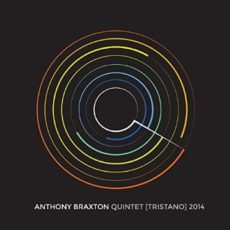
Anthony Braxton was born June 4, 1945 in Chicago, Illinois. He studied philosophy at Roosevelt University and early in his career he led a trio with violinist Leroy Jenkins and trumpeter Wadada Leo Smith. He was involved with the Association for the Advancement of Creative Musicians (AACM) founded in his birthplace.
In 1969, Braxton recorded the double album For Alto, the first full-length album for unaccompanied saxophone. The album’s tracks were dedicated to Cecil Taylor and John Cage among others. The album influenced other artists like soprano saxophonist Steve Lacy and trombonist George Lewis, who would go on to record their own solo albums.
Joining pianist Chick Corea’s trio with bassist Dave Holland and Barry Altschul they form the short-lived avant garde quartet Circle around 1970. When Corea broke up the group to form Return To Forever, Holland and Altschul remained with Braxton for much of the 1970s as part of a quartet, rotating Kenny Wheeler, George Lewis and Ray Anderson. With Sam Rivers they recorded Holland’s This group recorded for Arista Records and the core trio with saxophonist Sam Rivers recorded Holland’s Conference of the Birds on ECM. In the 1970s he recorded duets with Lewis and with synthesizer player Richard Teitelbaum. In 1975, he released Muhal with the Creative Construction Company featuring Richard Davis, Steve McCall, Muhal Richard Abrams, Wadada Leo Smith and Leroy Jenkins. He would oo on to record through the 70s, 80s and early 90s wth Marilyn Crispell, Mark Dresser and Gerry Hemingway.
He performed at the Woodstock Jazz Festival, was awarded a MacArthur Fellowship, composed his Ghost Trance Music released on his now defunct Braxton House label, and the final Ghost House live recordings at the New York City Iridium club were released by Firehouse 12 label in 2007. He recorded a prodigious series of multi-disc sets of standards during the 1990 and early 2000s
Besides playing saxophone, Braxton also plays clarinet, flute and piano, performs and records in the avant-garde, improvisation, bebop and mainstream genres, composes operas, orchestral and classical compositions, and is an avid chess player. He is the author of multiple volumes explaining his theories and pieces, such as the philosophical three-volume Triaxium Writings and the five-volume Composition Notes.
Composer and instrumentalist Anthony Braxton has released well over 100 albums since the 1960s, has taught at Mills College in the Eighties, was Professor of Music at Wesleyan University from the 1990s until his retirement at the end of 2013, and in 2013, was named a 2014 National Endowment for the Arts Jazz Master.
Give A Gift Of Jazz – Share
Daily Dose Of Jazz…
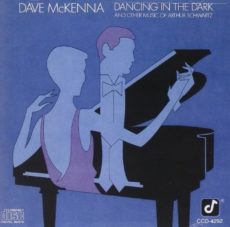
Dave McKenna was born May 30, 1930 in Woonsocket, Rhode Island and started out at the age of 15 playing with Boots Mussulli in 1947. He then worked with Charlie Ventura and Woody Herman’s Orchestra three years later. He went on to spend two years in the military, and re-joined Ventura in 1953.
He worked with a variety of swing and Dixieland musicians including Gene Krupa, Joe Venuti, Stan Getz, Zoot Sims, Al Cohn, Bob Wilbur, Eddie Condon, and Bobby Hackett but became primarily a soloist after 1967 operating nearly exclusively in the Northeast United States. McKenna performed with Louis Armstrong at the 1970 Newport Jazz Festival. He was an accompanist, recording with singers such as Rosemary Clooney, Teddi King, Donna Byrne and Tony Bennett.
During the 1970s his star rose but chose to play in his local area rather than travel extensively playing in clubs and hotels over center stage in major venues. He retired around the turn of the millennium due to increasing mobility problems brought on by his long battle with diabetes. Pianist Dave McKenna passed away in Pennsylvania on October 18, 2008 from lung cancer.
Jazz Is Global – Share
More Posts: piano