

Daily Dose Of Jazz…
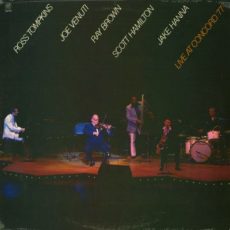
Ross Tompkins was born in Detroit, Michigan on May 13, 1938 and went on to attend the New England Conservatory of Music. This he followed with a move to New York City in 1960 where he worked and recorded with Kai Winding from 1960 to 1967.
During the Sixties he also performed with Eric Dolphy, Wes Montgomery, Bob Brookmeyer & Clark Terry, Benny Goodman, and Bobby Hackett, Al Cohn and Zoot Sims into the Seventies. A move to Los Angeles, California in 1971 found him playing and recording with Louie Bellson, Joe Venuti, and Red Norvo through the 1970s and Jack Sheldon in the 1980s.
He was best known for his longtime association with The Tonight Show Band under the leadership of Doc Severinsen, becoming a member of the band from 1971 until Carson’s retirement in 1992. He recorded for Concord Jazz as a leader in the second half of the 1970s.
He recorded for Concord Records as a leader in the second half of the Seventies decade, and in the eighties and Nineties recorded for Famous Door, Progressive, HD and Arbors record labels, culminating in a dozen albums. As a sideman he recorded 53 albums with J.J. Johnson, Tommy Newsom, Herb Ellis, Snooky Young, Bill Watrous, Joe Newman, Tony Mottola, Howard Roberts, Lorraine FEather, Peanuts Hucko, Red Norvo, Bob Cooper, Harry “Sweets” Edison, Jack Lemmon, Conte Candoli, Polly Podewell and Plas Johnson among others.
Pianist Ross Tompkins passed away of lung cancer at the age of 68 on June 30, 2006.
Sponsored By
Bronze Lens

#preserving genius
More Posts: piano
Daily Dose Of Jazz…
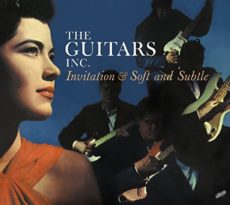
Alton Reynolds Hendrickson was born May 10, 1920 and grew up in Eastland, Texas before moving to the West Coast. In 1940 he worked for Artie Shaw and performed in Fred Astaire ‘s second chorus. By the mid-1940s he was in the coast guard but in the post-war period he played guitar in the bands of Freddie Slack, Ray Linn and Benny Goodman, whose sextet he also belonged to.
As a baritone Hendrickson was recorded on Goodman’s On a Slow Boat to China , which became a big hit in the USA in 1947. The 1950s saw him as a busy studio session player for both film and television soundtracks, The Danny Kaye Show, as well as for pop productions from Columbia Records since 1959. He worked in the productions of The Weavers and The Monkees, with country singer Sheb Wooley and jazz pianist Dodo Marmarosa.
In the field of jazz and popular music his was involved from 1940 to 1986 to 493 recording sessions with Rosemary Clooney, Bing Crosby, Doris Day, Lee Hazlewood, Eartha Kitt, Frankie Laine, Henry Mancini, Ann-Margret, Dean Martin, Ella Mae Morse, Harry Nilsson, Louis Prima, Elvis Presley Shorty Rogers, Bud Shank and Frank Capp’s Juggernaut big band.
Retiring to Oregon in the late Eighties he authored the Encyclopedia of Bass Chords, Arpeggios and Scales and Al Hendrickson Jazz Guitar Solos: Complete Book. Guitarist Al Hendrickson, who also played banjo, mandolin and was a vocalist, passed away on July 19, 2007 in North Bend Oregon.
Sponsored By

#preserving genius
More Posts: guitar
Daily Dose Of Jazz…
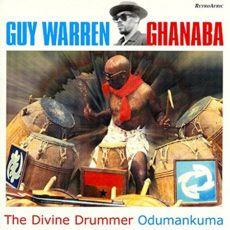
Guy Warren, also known as Kofi Ghanaba was born Warren Gamaliel Kpakpo Akwei in Accra, Ghana on May 4, 1923. Educated at the Government Boys’ School, his interest in music had him playing in the school band. After passing with distinction he enrolled as a student/founder at Ordorgonno Secondary School in 1940 and also joined the Accra Rhythmic Orchestra under Yeboah Mensah as a drummer.
He won a government teacher training scholarship to Achimota College, Accra, in 1941 with the intention of becoming a teacher at his father’s school. By 1943 Warren had enlisted in the Office of Strategic Services, a branch of the United States Army that dealt with overt and covert operations in World War II. Returning to Accra he went on to become a reporter and then held various journalistic positions before beginning to broadcast jazz programmes while working at the Gold Coast Broadcasting Service under the name Guy Warren, which he continued using for the next three decades.
Teaming up with E. T. Mensah and others they formed The Tempos, considered the greatest jazz band in Africa. In 1955 Guy left for Chicago, Illinois to join the Gene Esposito Band as co-leader, percussionist and arranger. With them he recorded his first album, Africa Speaks, America Answers on the Decca label in 1956. And confirmed his reputation as the musician who established the African presence in jazz. During his American stay, he met and worked with Duke Ellington, Max Roach, Charlie Parker, Louis Armstrong and many other leading jazz musicians.
By 1974 he had returned to Ghana, and changed his name to Ghanaba. In the 1990s, he played a role in the film Sankofa, Ghanaba continued to make music until his death. Drummer Guy Warren, pioneer of the African renaissance and author of I Have A Story To Tell that chronicled his sojourn in America, passed away on December 22, 2008.
Sponsored By
#preserving genius
Daily Dose Of Jazz…
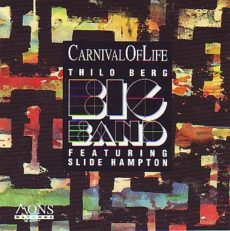
Thilo Berg was born April 23, 1959 in Dortmund, Germany and attracted attention in the 1980s, as a modern jazz drummer and big band leader. He has produced and organized more than 700 jazz, classical, R&B and soul events. Besides his own productions, he worked on large industry concerts as well as kick-off meetings and social events.
Berg completed studies as a classical percussionist with Herrmann Gschwendtner and held the position of solo timpanist and percussionist in the Southwest German Radio Symphony Orchestra and the German between 1981 and 2008. Having worked in various bands, in 1986 he formed his big band, performing with guest soloists such as Barbara Dennerlein, Ack van Rooyen, Jiggs Whigham, Barbara Morrison, Silvia Droste, Jim Snidero, Slide Hampton, Bob Mintzer, Art Farmer and Bill Ramsey.
Over seven year together they recorded three albums and the band saw coming through its ranks Till Brönner, Paul Heller, Peter Weniger, Ludwig Nuss, Mark Nightingale, Gerald Presencer, Martin Shaw, Hubert Nuss and Thilo Wagner.He also worked in smaller groups with Jack van Poll, Bobby Shew, Heiner Franz, John Gordon, Elaine Delmare and Curtis Fuller.
Drummer Thilo Berg founded the jazz and classical music label Mons Records in 1991, has worked as a music producer for Sony Music, BMG, Columbia and Universal, and continues to perform, record and produce.
Sponsored By
www.whatissuitetabu.com
#preserving genius
More Posts: drums
Daily Dose Of Jazz…
Alexander Gafa was born on April 9, 1941 in New York City and worked as a student in the city from 1964 to 1969, playing guitar with Kai Winding and Sam Donahue . During the late Sixties he was a part of the New York Playboy Club playing with Winding, Earl May and Al Foster.
From 1969 to 1970, he was musical director and accompanist for Carmen McRae and performed as a member of the Sammy Davis Jr. orchestra in 1970 and 1971. During this decade he also did some live dates with Sarah Vaughan, one of which aired on PBS.
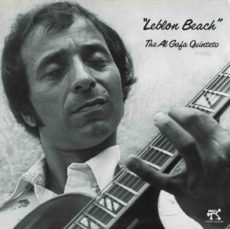
In 1971 Al played with Dizzy Gillespie and joined his group and toured with him for a period. Under his own name, he recorded the album Leblon Beach in 1976 for Pablo Records. He has recorded as well with Susannah McCorkle, Paul Simon, The Monkees, Alex Leonard, Duke Pearson, Johnny Hartman, Joe Albany and Sonny Stitt.
Before the fall of the World Trade Centers, he and bassist Dr. Lyn Christie would play in a duo configuration in the restaurant on the top floor. He is also part of Tom Lord’s 34 recording sessions from 1934 to 2011 of acoustic and electric guitar, and banjo. Guitarist Al Gafa currently resides in Brooklyn, New York where he performs occasionally.
Sponsored By
www.whatissuitetabu.com
#preserving genius
More Posts: guitar