

Daily Dose Of Jazz…
Bob Carter was born Robert Kahakalau on February 11, 1922 in New Haven, Connecticut and learned to lay the bass and guitar from his father, a vaudeville performer of Hawaiian heritage. He played in local orchestras from 1937 to 1940, toured from 1940 to 1942 and worked with his own trio in Boston, Massachusetts in 1944.
By 1944 he was working in various groups on New York City’s 52nd Street with Tony Scott, Dizzy Gillespie, Charlie Parker, Stuff Smith and Charlie Shavers among others. Following time spent playing bebop with Allen Eager and Max Roach in 1946, he worked with Charlie Ventura from 1947 to 1949 and again in 1953-54. Between the Ventura stints he played with Benny Goodman in 1949-50.
In 1953, he also worked with jazz guitarist Johnny Smith and appeared on the albums Jazz at NBC and The Johnny Smith Quintet Featuring Stan Getz.
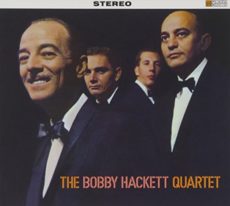
After his second stint with Ventura he studied composition with Wesley LaViolette and later that decade his arrangements were used by Red Norvo, Bob Harrington, and Shelly Manne. He spent two years in Hawaii beginning in 1957, then returned to New York in 1959, where he played with Bobby Hackett. In the early 1960s, he worked in Germany in the Kurt Edelhagen Orchestra. He did little playing after the end of the Sixties decade.
Bassist and arranger Bob Carter passed away in Honolulu, Hawaii on August 1, 1993 at the age of 71.
Sponsored By


#preserving genius
More Posts: bass
Daily Dose Of Jazz…
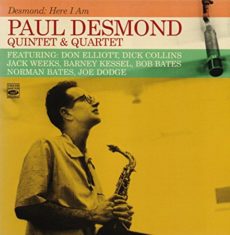
Joseph George Dodge was born on February 9, 1922 in Monroe, Wisconsin and was raised and grew up in San Francisco, California. He initially studied to be a symphonic percussionist, and like many young drummers of his generation, he was primarily influenced by Gene Krupa, Jo Jones, Jimmy Crawford and Shelly Manne, gathering different sources of inspiration that helped him to create his own creative style.
During World War II, Dodge fulfilled his military duties from 1942 until 1945 playing drums in the Coast Artillery band, where he met tenor saxophonist Dave van Kriedt, who introduced him to Dave Brubeck and Paul Desmond. After his discharge in 1946 he worked in several dixieland groups and dance bands around the Bay area.
In 1950, becoming tired of road touring and economic instability took a job working in a bank but still kept in touch with Desmond, who arranged for him to play a Brubeck engagement as a temporary replacement for drummer Cal Tjader. The Brubeck octet was steady playing at the San Francisco Opera House, and opened for Nat King Cole and Woody Herman.
A few years later, Desmond again recommended Joe to Brubeck and he joined the quartet as Brubeck’s regular drummer. During his tenure he helped to record five successful albums between 1953 and 1956. During the same period, he was featured in two albums with different formats directed by Desmond.
By late 1956, Dodge was worn down again by the travel and intense schedule with the quartet and wanted to spend more time with his family. He then told Brubeck it was time to look for another drummer and took a day job in San Francisco. In 1957 he was offered a transitory position with Stan Kenton but again declined and from 1958 until he retired in 1981, he would combine working in the liquor business with evening musical engagements. Never losing touch with Desmond or Brubeck, he would play at the latter’s 50th wedding anniversary in 1992. Drummer Joe Dodge passed away on August 18, 2004 in Lake Elsinore, California at the age of 82.
Sponsored By

#preserving genius
More Posts: drums
Daily Dose Of Jazz…
Frank Ricotti was born on January 31, 1949 in London, England and played in the National Youth Jazz Orchestra while a teenager, then attended Trinity College of Music from 1967 to 1970. From 1968 through 1974 hep performed with Neil Ardley, Dave Gelly, Graham Collier, Mike Gibbs, Stan Tracey, Harry Beckett, Norma Winstone and Gordon Beck.
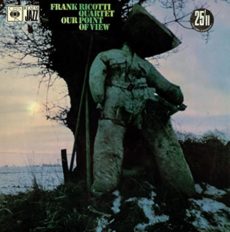
In the late 1960s and early 1970s, Ricotti led his own jazz quartet with a line-up of the band featuring the guitarist Chris Spedding, bassist Chris Laurence and drummer Bryan Spring. Together they recorded the album Our Point of View, and released it in 1969. By 1971, in partnership with bassist Mike de Albuquerque, he released the album First Wind. He recorded with Oliver Nelson on the album Oliver Edward Nelson in London with Oily Rags for the Flying Dutchman label in 1974.
The 1980s saw Frank playing with Chris Laurence and John Taylor in the group Paragonne, and then played with Beck again in 1984. After this he worked primarily as a studio musician recording with groups outside the jazz genre, such as, Status Quo, Freddie Mercury, Pet Shop Boys, Swing Out Sister, Belle and Sebastian, Clannad, Barclay James Harvest, Meat Loaf, Elkie Brooks, Rick Wakeman, Tina Turner, Aztec Camera, Thomas Anders, and Alphaville.
Between 1984 and 1987 Ricotti wrote the soundtrack music for Yorkshire Television’s The Beiderbecke Trilogy, in the style of Bix Beiderbecke. The music was performed by his band, the Frank Ricotti All Stars, and featured Kenny Baker on cornet. The band made a cameo appearance in the final series, playing in a jazz club and the soundtrack album was released in 1988.
In 2007 he played vibes on Mark Knopfler’s album Kill to Get Crimson and vibraphonist and percussionist Frank Ricotti continues to perform, record and compose.

#preserving genius
More Posts: percussion,vibraphone
Daily Dose Of Jazz…
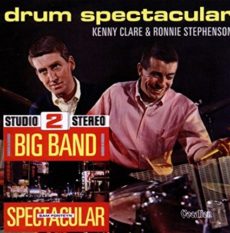
Ronnie Stephenson was born January 26, 1937 in Sunderland, England and as a boy wanted to become a tap dancer like his idol Gene Kelly, but he was persuaded by his father and his pianist brother to take up the drums. Already playing his first public gig the same week he took his first drum lesson at the age of 14, Ronnie was soon working with his elder brother Bob’s band, and then with the Ray Chester’s Sextet. Moving to Birmingham he joined the Cliff Deeley Band at the Tower Ballroom, and played for several months before going on the road.
At 16 he joined singer Lita Roza, a national star who had left the Ted Heath band to tour the variety theatre circuit as a soloist. The 10 months he spent with her garnered him great experience in the music business. Conscripted into the Army, Stephenson performed in The Royal Signals Band until he was demobbed in 1957. Having a close association with Ronnie Scott, he spent two years in Scott’s Quartet, playing the club and accompanying many visiting stars.
He toured Germany with Tom Jones in 1969 and then sat the resident drum chair with the Kurt Edelhagen Band after moving to Cologne, Germany with his wife and two children. After three years with Edelhagen, Ronnie teamed up with pianist Paul Kuhn in Berlin, Germany and toured all over Europe with a variety of bands and artists. He played on the Bond themes Diamonds Are Forever and You Only Live Twice and on other film scores, including Chitty Chitty Bang Bang. Stephenson joined the Theater des Westens Orchestra in Berlin from 1981 to 1995, and taught at the University of Berlin from 1990 to 1993. He retired from music due to poor health, settled in Scotland, and turned to golf as a restorative, becoming a member of Strathmore Golf Club.
Drummer Ronnie Stephenson, one of the most in-demand drummers of the British jazz scene, passed away on August 8, 2002. Over the course of his career he performed or recorded with Sonny Rollins, Stan Getz, Wes Montgomery, Zoot Sims, Quincy Jones, Paul Gonsalves, Johnny Griffin, Roland Kirk, Gerry Mulligan, Sonny Stitt, Barney Kessel, Benny Golson, Benny Goodman, Nelson Riddle, Ella Fitzgerald, Mel Tormé, Tony Bennett, Ronnie Ross, Stan Tracey, Ted Heath, Dick Morrissey, Terry Smith, Jack Parnell, John Dankworth, Tubby Hayes, Cleo Laine, Peter Herbolzheimer, Horst Jankowski, Paul Kuhn, Rolf Kuhn, Kenny Clarke, Victor Feldman, Heinz von Hermann and Hans Rettenbacher, among many others including pop stars Matt Monro, Engelbert Humperdinck, Cilla Black and Shirley Bassey.

Dose A Day-Blues Away
#preserving genius
More Posts: drums
Daily Dose Of Jazz…
Ted Nash was born December 28, 1960 in Los Angeles, California. His trombonist father, Dick, and reedman uncle Ted, were both well-known jazz and studio musicians and both exposed and encouraged the young man. He started playing the piano at seven, by 12 the clarinet, and a year later he picked up the alto saxophone. In high school he studied jazz improvisation with vibraphonist Charlie Shoemake and had his first gig when he was This was followed by a week with Lionel Hampton in Hawaii.
Ted went on to win an audition to play lead alto with the Quincy Jones band, and by the time he turned 17 he had toured Europe, appeared on three records, and was performing regularly with the likes of Don Ellis, Louie Bellson and Toshiko Akiyoshi, as well as leading his own quintet. The following year he moved to New York City, recorded Conception, his debut album as a leader for the Concord label and became a regular member of a variety of ensembles. He worked with the Gerry Mulligan Big Band, the National Jazz Ensemble and for ten years would be a part of the Mel Lewis Jazz Orchestra.
An accomplished composer his first composition, Tristemente, was recorded by Louie Bellson, he has been commissioned by the Davos Musik Festival in Switzerland to compose works featuring a string quartet in a jazz setting, and commissioned by the Jazz at Lincoln Center Orchestra to compose the well-received Portrait in Seven Shades. It is dedicated to the representation of seven different artists, each in their own movement and was nominated for a Grammy in 2010. The artists were Claude Monet, Salvador Dalí, Henri Matisse, Pablo Picasso, Vincent van Gogh, Marc Chagall, and Jackson Pollock.
Composer and alto saxophonist Ted Nash leads an eclectic group called Odeon, and is a member of the Jazz Composers Collective along with Ben Allison, Frank Kimbrough, and Michael Blake.
Sponsored By

More Posts: saxophone