

Daily Dose Of Jazz…
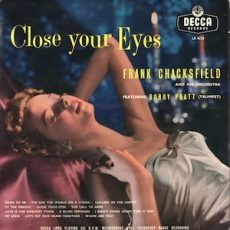
Robert Stuart Pratt was born on January 24, 1927 in Aberdeen, Scotland and was a professional musician from the age of 16, having mastered trumpet, flugelhorn, piano, drums and vocals. He served in the Royal Corps of Signals leading the Skyliners Army Dance Band.
In 1948 he joined Ken McIntosh’s outfit for a year before joining Ted Heath the following year. Due to his ability to play high and loud brought distinction to the brass section and his high note duets with Bert Ezzard became a highlight of the band’s appearances. Bobby was a mainstay with Heath until 1960.
As one of the busiest session players in Britain, Pratt found himself in high demand not only for jazz big band work but consistent work with top jazz and pop perfprmers in both record, tv and film studios. He played in the big bands of Humphrey Littelton, Eddie Harvey, Tubby Hayes, Tommy Watts, Vic Feldman, Jack Parnell, the Forty Two Big Band and the Downbeat Big Band.
Over the course of his career Bobby also recorded as a member of the Tommy Whittle Septet, The Kirchin Band, the Johnny Keating All Stars, Frank Chacksfield and Kenny Baker’s Dozen.
Trumpeter Bobby Pratt committed suicide on June 5, 1968 at the age of 41.

More Posts: drums,flugelhorn,history,instrumental,jazz,music,piano,trumpet,vocal
Daily Dose Of Jazz…
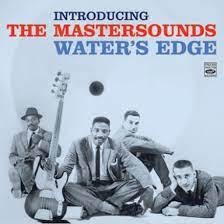
Richie Crabtree was born January 23, 1934 in Sidney, Montana. A student of legendary piano virtuoso Freddie Saatman, the pianist first popped up on the jazz scene in the company of the Montgomery Brothers. His short recording career seems to have taken place between the late ’50s and early ’60s, largely as a member of a quartet called the Mastersounds. This group, which duplicated the Modern Jazz Quartet’s popular instrumentation of piano, vibes, bass, and drums, but not its style, was an even mix of Montgomery siblings and others. Monk played the bass, with Buddy on the vibraphone, and Crabtree took rhythmic cues from drummer Benny Barth.
While Wes sat in at times, it was Buddy and Monk that were continually looking for a way of making the intricate inventions of bebop more appealing to easy listening and pop listeners. In 1957 the group was gigging in San Francisco and landed a contract with the World Pacific label. They recorded two albums before label honcho Dick Bock went to Indianapolis to check out Wes that they had been bragging about. The resulting recordings were also the debut on vinyl for a 19-year-old Freddie Hubbard.
A serious devotee of the founding fathers of bebop, Richie was not about to slouch on the harmonic contribution. However, little seems to have been written about him since 1961, a point where discographers place his last recording session. The Mastersounds group was at the height of its popularity in 1960, so naturally this was also the year the group decided to break up.
Pianist Richie Crabtree faded into obscurity and to date nothing has surfaced about his whereabouts or whether he is living or dead.

Daily Dose Of Jazz…
Theodore Smith was born on January 22, 1932 in Washington, D.C. During the Sixties he played with Betty Carter, and with Clifford Jordan with whom he recorded the album Bearcat, and Kenny Dorham in 1961-62, recording the album Matador.
From 1962 to 1963 Teddy played with Jackie McLean and Slide Hampton. Following this he played with Horace Silver, including performances at the 1964 Montreux, Antibes, and Paris jazz festivals. He was a member of the quintet that recorded four tracks on Silver’s album Song for My Father.
Smith’s performance on the title track of Song for My Father, beginning with the opening unison figure between his bass and Silver’s piano, has been one of the most widely heard pieces of jazz music in the world for nearly a half-century and an influence on such artists as Stevie Wonder and Steely Dan.
Following his Silver residency in which he also recorded Live, Teddy went on to play with Sonny Rollins from 1964 to ‘65 recording The Standard Sonny Rollins and played with Sonny Simmons in 1966.
Double-bassist Teddy Smith, never a leader, died on August 24, 1979 in his birth city.
More Posts: bass,history,instrumental,jazz,music

Daily Dose Of Jazz…
Hank Frederic Gregson Wayland was born January 21, 1906 in Fall River, Massachusetts. He learned music from his father who was a musician and played in high school bands. He moved to New York City in 1926, where he played the double bass in theater orchestras and in the studios.
In the 1930s he performed and/or recorded with Benny Goodman, Red Norvo, Artie Shaw, Bunny Berigan, and Larry Clinton. During The Depression, Wayland was forced to send his sons to Florida to live with his wife’s brother while he toured the US and in Europe.
In the early Forties Hank played with Bob Chester, then moved to California the following year where he played with Eddie Miller and Wingy Manone in addition to more work as a studio musician. He appeared in bit parts in low budget Hollywood films, however he did appear without credit in the film Stars and Stripes Forever.
During The Depression, Wayland was forced to send his sons to Florida to live with his wife’s brother while he toured the US and in Europe. He eventually relocated his family to Glendale, California and faded from the scene after the 1950s. He officially retired from his music career in 1968.
Diagnosed with colon cancer in 1978 he underwent a colectomy. Later that year he was suspected of suffering from Alzheimer’s disease. Double bassist Hank Wayland, who never led a recording session, died peacefully on March 27, 1983 while living in a retirement home.
More Posts: bass,history,instrumental,jazz,music
Daily Dose Of Jazz…
Antoine Hervé was born on January 20, 1959 in Paris, France. He studied composition at the Conservatoire National Supérieur de Musique. Between 1987 and 1989 he was director of the French National Jazz Orchestra.
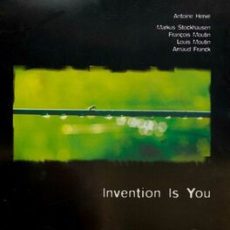
Next to musicals, soundtracks for movies and dance shows Hervé has composed a concert for trumpet and a piece for drums and orkest. During 1997 he and Markus Stockhausen founded a quintet.
Emerging as a gifted representative of his generation of improvisers, his delve into fusion music, European classical music, contemporary and modern jazz led him and 12 other musicians to form the group Bob 13. He would go on to create a trio with bassist Michel Benita and drummer Peter Gritz.
His influences have been Bill Evans, Wynton Kelly, Oscar Peterson and McCoy Tyner, as well as Chopin, Debussy and Bartok.
Pianist Antoine Hervé continues to explore the realm of jazz through his compositions and performance.
More Posts: bandleader,history,instrumental,jazz,music,piano