

Daily Dose Of Jazz…
Gordon “Whitey” Mitchell was born on February 22, 1932 in Hackensack, New Jersey. He began on clarinet and tuba as a youngster before choosing bass as his primary instrument. He studied radio & television at Syracuse University and then plunged into the New York jazz scene, becoming a regular at the famed nightspots Birdland and Basin Street East.
He led his own groups at The Village Vanguard and The Embers and later toured with big band greats Benny Goodman and Pete Rugolo, played Carnegie Hall with Gene Krupa, appeared with Buddy Rich, Ella Fitzgerald, Dizzy Gillespie and Lester Young on Jazz At The Philharmonic.
In the early 1950s he played with Elinor Sherry and Shep Fields before serving in the Army during the Korean War. From 1954 he worked freelance in New York City, playing with Gene Krupa, Mel Tormé, Jack Jones, J.J. Johnson, Kai Winding, Lester Young, Charlie Ventura, Herbie Mann, Betty Roche, Oscar Pettiford, Gene Quill, Joe Puma, Johnny Richards, Peter Appleyard, André Previn, Benny Goodman, and again with Rugolo.
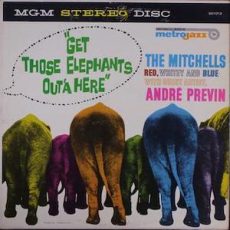
He performed on hundreds of recording sessions, television and film scores but only released one album under his own leadership on ABC-Paramount in 1956, and one with his brother Red and Blue Mitchell in 1958 as The Mitchells: Red, Whitey & Blue, released on MetroJazz Records. Whitey recorded with Anita O’Day, Barbra Streisand, Anthony Newley, and played the bass solo introduction on Ben E. King’s hit record Stand By Me.
After 1965 he largely ceased playing jazz and moved to Hollywood, California on advice from Lenny Bruce and André Previn to pursue a career as a television writer. He worked on shows such as Get Smart, All In the Family, The Jeffersons, Good Times, The Mary Tyler Moore Show, The Odd Couple, Mork and Mindy, and several Bob Hope television specials. He wrote the feature film Private Resort starring Johnny Depp.
As an educator he taught screenwriting at UCLA and UC Riverside. In 1995 he had his own radio show, The Power Lunch and wrote a golf column for a local magazine. He recorded his CD Just In Time and played jazz in all the nightclub venues. He was the author of two books, Hackensack to Hollywood: My Two Show Business Careers and Star Walk: A Guide to the Palm Springs Walk of Stars.
Bassist and television writer/producer Whitey Mitchell, who often placed in the Metronome and Downbeat jazz polls, transitioned on January 16, 2009.

More Posts: bandleader,bass,history,instrumental,jazz,music
Daily Dose Of Jazz…
Albert Omega Sears was born February 21, 1910 in Macomb, Illinois. His first major gig came in 1928 when he replaced Johnny Hodges in Chick Webb’s ensemble. The Thirties had him first playing with Elmer Snowden, then led his own groups between 1933 and 1941.
In the early 1940s he joined Andy Kirk and Lionel Hampton before he became a member of Duke Ellington’s Orchestra in 1944, replacing Ben Webster. He remained with Ellington until 1949, when first Jimmy Forrest and then Paul Gonsalves took over his chair. He played with Johnny Hodges in 1951–52 and recorded the tune Castle Rock with him. The tune became a hit but unfortunately was released under Hodges’s name.
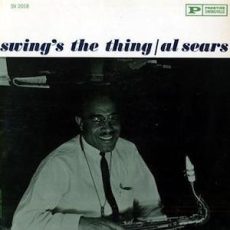
Sears was in Alan Freed’s band when Freed did live shows, being introduced as “Big Al Sears”. He played as a studio musician on R&B albums in the 1950s and recorded two albums for Swingville in 1960. He also owned several record labels, including Arock, Serock, and Gator.
Tenor saxophonist and bandleader Al Sears, who recorded four albums as a leader, transitioned on March 23, 1990 in St. Albans, New York at the age of 80.
More Posts: bandleader,history,instrumental,jazz,music,saxophone
Daily Dose Of Jazz…
Frank Isola was born on February 20, 1925 in Detroit, Michigan and was heavily influenced by Gene Krupa. He played in the U.S. military during World War II and then studied and performed in California with Bobby Sherwood and Earle Spencer.
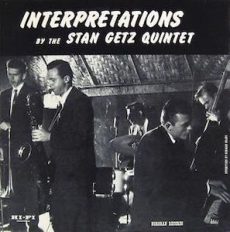
Moving to New York City he played with Johnny Bothwell and Elliot Lawrence in 1947. Following this, in the Fifties Frank played with Stan Getz and Gerry Mulligan, as well as with Mose Allison, Eddie Bert, Bob Brookmeyer, Jimmy Raney, Johnny Williams and Tony Fruscella.
By the late 1950s Isola returned to Detroit and kept working periodically with local bands or in jam sessions but well out of the spotlight. He was active in the Cass Corridor area of Detroit in the 1970s playing jazz standards with pianist Bobby McDonald and others at Cobb’s Corner Bar.
He worked as a drummer briefly at Captain Hornblower’s in Key West, Florida in the late 1980s with pianist Johnny Williams. By the early Nineties, he moved back north and was playing weekly at Tom’s Steamer’s Bar in Grosse Pointe, Michigan. In 1994 and 1995 Isola played at The Windsor Jazz Festival in Ontario, Canada backing Franz Jackson and Marcus Belgrave. The 1994 concert was released on Parkwood Records as Live at Windsor Jazz Festival III with Jackson and Belgrave as co-leaders.
He recorded fourteen albums between 1954 and 1981 with Getz, Mulligan, Mose Allison, Bob Brookmeyer, Dick Garcia, Franz Jackson, Charlie Parker and Bob Szajner. Drummer Frank Isola, who never led a recording session, transitioned on December 12, 2004.
More Posts: drums,history,instrumental,jazz,music
Daily Dose Of Jazz…
Kim Reith was born on February 19, 1954 in San Diego, California. As a child, she was exposed to a large jazz, blues, folk, opera, world and ethnomusicology recording collection belonging to her music-loving mother.
In 1979 Reith made her entrée into music as a backup vocalist in an all-women’s blues and gospel chorale for San Francisco, California blues pianist, singer/songwriter and recording artist Gwen Avery. She began her instrumental career as a guitarist, singer and songwriter for an experimental SF punk-rock trio, the Well Babies. In 1985 she began studying guitar privately with San Francisco jazz guitarists Marlena Teich and Duncan James and with the Los Angeles/San Diego jazz guitarist Art Johnson, and spent many years in independent study.
1987 saw her beginning to focus exclusively on jazz studies, eventually getting her feet wet with various small San Francisco jazz bands. In 1992 she supported herself by playing solo jazz guitar on the streets of Paris, France returning to San Diego in 1993. That year, she joined acclaimed avant-garde Canadian saxophonist Maury Coles for duo explorations and performances. At the opposite end of the jazz spectrum, Kim also performed with the UCSD Big Band under Jimmie Cheatham’s direction. She formed both the duo Groove Yard and the Kim Reith Trio in 1994, performing extensively with both groups throughout San Diego between 1994 and 2000.
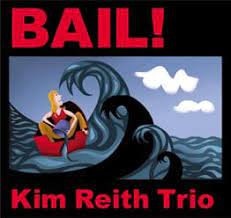
Reith has been composing jazz works for small and large ensembles since 1993, formally studying jazz theory, composing and arranging under Rick Helzer at SDSU. Recording her debut album BAIL! In late 1999 she documented her compositions and her ensemble work with San Diego bassist Bruce Grafrath. She has gone on to collaborate with Bronx-born Swiss resident Edmund J. Wood, on a series of experimental open improvisations, featuring Reith on hollow-body electric guitar and Wood on fretless bass and implied-time drum loops.
Guitarist Kim Reith currently composes and performs in Los Angeles, California. Unfortunately she has not posted any of her music on line.
More Posts: bandleader,composer,guitar,history,instrumental,jazz,music
Daily Dose Of Jazz…
Shirley Crabbe was born on February 18, 1963 in New York City, New York. As a teenager she wanted to sing jazz after being inspired by a performance of Ella Fitzgerald singing the song A Tisket, A Tasket in an old Abbott and Costello movie. She pursued her dreams first to Northwestern University in Evanston, Illinois where she earned a Bachelor of Music, then returned home to study Voice at the Manhattan School of Music. During this period of study by day she traveled downtown to sing jazz in the clubs.
She has performed at festivals, jazz clubs and concert series in New York City and its surrounding area. She has appeared at some of Harlem’s best jazz rooms such as Minton’s and the Lenox Lounge, as well as the 2019 Berks Jazz Fest, Zinc Bar, Metropolitan Room and Birdland. Crabbe has opened for Abby Lincoln, recorded with Houston Person, and has performed with Harold Mabern, Jamil Nasser, Donald Vega, David Budway, Ron Blake, David Glasser, Brandon Lee, Matt Haviland, Cameron Brown, Jon Burr, Jim West, among others.
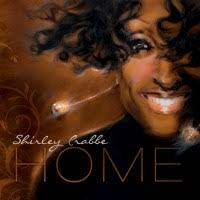
In 2011 Shirley released her debut album Home which remained on the Jazz Week Album Chart for 26 weeks. Her sophomore project Bridges hit the Jazz Week album chart Top 50 albums. She has been the recipient of several honors and awards.
Vocalist Shirley Crabbe, who won the New York Bistro Award Winner for Outstanding Recording: Bridges in 2019, continues to performa nd record.
More Posts: bandleader,history,instrumental,jazz,music,vocal