

Daily Dose Of Jazz…
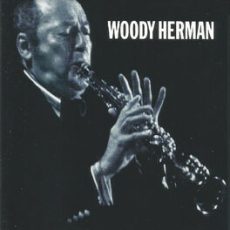
Ronald “Ronnie” Zito was born on February 17, 1939) in Utica, New York, into a musical family including his pianist brother Torrie Zito. He began playing drums at the age of 10 and at age 14 took a year and a half of formal lessons.
He has played with Woody Herman, J.R. Monterose, Frank Rosolino, Peggy Lee, Cher, Roberta Flack and Eartha Kitt. Zito was Bobby Darin’s personal drummer for four years.
Ronnie has recorded with David Pomeranz, Barry Manilow, Irene Cara, Frankie Valli, Roberta Flack, Jake Holmes, Cher, and Don McLean.
Drummer Ronnie Zito continues to perform and record.

More Posts: drums,history,instrumental,jazz,music
Daily Dose Of Jazz…
Paul Crawford was born on February 16, 1925 in Atmore, Alabama, to parents who were a Baptist minister and a music teacher. After serving in the Navy during World War II he graduated from the Eastman School of Music in Rochester, New York where he studied trombone in a classical style. He went on to study under trombonist and teacher Emory Remington, pursued for a time graduate studies at the University of Alabama. Moving to New Orleans, Louisiana in 1951 he became a specialist in the Dixieland style of Jazz.
Crawford initially took up residence in the French Quarter of New Orleans where he became acquainted with people in the local arts and music scene. He also started performing at the New Orleans Jazz Club and learned to play Dixieland. Soon after he became co-bandleader of the Crawford-Ferguson Night Owls, with Leonard Ferguson, frequently performing on the steamboat President.
He made his first recordings on trombone in 1957 with the Lakefront Loungers. During this time, Paul played the trombone on non-paying gigs, and participated in jam sessions. He performed with Sharkey Bonano and with bandleader Paul “Doc” Evans.
By the 1950s, with Deep South laws prohibiting white musicians from performing with Black musicians, jobs dried up. As these laws were struck down in the 1960s, opportunities opened up for Crawford to perform with various notable Black jazz musicians in New Orleans. In 1964, Crawford was approached by Allan Jaffe, who was the owner of Preservation Hall, about performing at the Preservation Hall venue. With Punch Miller, he became a part of the Preservation Hall Jazz Band.
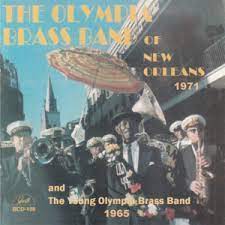
Shortly thereafter, he became a part of the Olympia Brass Band, marched in many New Orleans Jazz Funerals and often performed with the baritone horn. He was a founding member of the New Orleans Ragtime Orchestra. As a member of this group and others, he helped make the soundtrack for the movies “Pretty Baby” and “Live and Let Die”, as well as many other recording sessions. Crawford played the baritone horn in many performances of the musical “One Mo’ Time”.
Crawford was an associate curator at the Tulane University Hogan Jazz Archive. As curator, conducted numerous interviews for an oral history of jazz, and resurrected many forgotten pieces of jazz music and developed arrangements of them. He also developed a significant number of photos of jazz musicians and performances, in a private collection.
Trombonist, baritone hornist, arranger and music historian Paul Crawford, who specialized in Dixieland jazz, transitioned on July 31, 1996 of lung cancer. He had been living in a New Orleans skilled nursing facility at the time.
More Posts: arranger,bandleader,baritone horn,curator,historian,history,instrumental,jazz,music,trombone
Daily Dose Of Jazz…
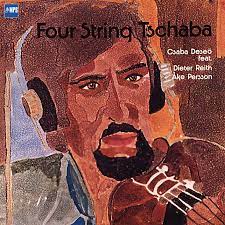
Csaba Deseo was born February 15, 1939 in Budapest, Hungary. His mother was a violin teacher and he began playing the instrument at the age of 10. He continued his musical education at Béla Bartók Conservatory in Budapest, and got his diploma in 1961. He taught in music schools until 1967 when he became a member of the Hungarian National Philharmonic Orchestra, where he played until 1999. During the time he played innumerable concerts in Hungary and in many countries of the world from Japan to the United States. He performed with artists like Sir Georg Solti, Leonard Bernstein, Ádám Fischer, and Yehudi Menuhin, to name a few.
His career took off in 1963 when he appeared with his first group at the legendary Dalia Club in his hometown. From 1964 they gave regular concerts and were frequently featured on Hungarian Radio and TV. He would play at festivals and jamborees in the Sixties, then recorded his debut album under his own name Four String Tschaba in 1975 for MPS Records in West Germany. In that session Deseo played both violin and viola, and he would go on to record 4 LPs and 6 CDs with Hungarian and foreign musicians.
1975 saw Csaba meeting Zagreb vibraphonist Bosko Petrovic, with whom he played regularly until 2011. He also appears as a guest star in Germany, where he usually solos with the group of Walter Kurowski.
Since 1980 Deseo has fronted bands with different line-ups. His more important partners were pianist Laszlo Gardony, vibraphonist Richard Kruza, guitarist Andor Kovacs, bassist Bela Lattmann and drummer Imre Koszegi. Since 1990 he’s been working mainly in a trio and is a regular guest artist at the concerts of the Benko Dixieland Band and the Budapest Ragtime Band.
During the past few decades he has also played with international stars and is a regular contributor to the specialist Hungarian music magazine, Gramofon ~ Classical and Jazz. Violinist Csaba Deseo continues to perform and record.
More Posts: bandleader,history,instrumental,jazz,music,viola,violin
Daily Dose Of Jazz..
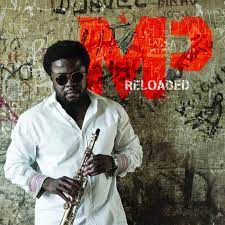
Moreira Chonguiça was born in Maputo, Mozambique on February 13, 1977. On completing his schooling he attended the University of Cape Town to further his music studies, graduating from the South African College of Music with a degree in jazz performance. He also graduated cum laude and holds an honours degree in Ethnomusicology.
In 2010 he started a jazz festival, Morejazz, in Maputo, where artists are invited to play at the festival and also hold master-classes at the Eduardo Mondlane University in the city. That same year his group, The Moreira Project, opened the Standard Bank Jazz Festival in Grahamstown in the Eastern Cape. He collaborated with Manu Dibango on the album M & M, which was released in 2017.
His philanthropy extends to renovating schools, conducting workshops, poetry projects about HIV/Aids, inmate music programs to encourage reform, and works with road safety and family planning groups. Saxophonist Moreira Chonguiça continues to record, perform and pursue various philanthropic endeavors.
More Posts: bandleader,composer,ethnomusicologist,history,instrumental,jazz,music,saxophone
Daily Dose Of Jazz…
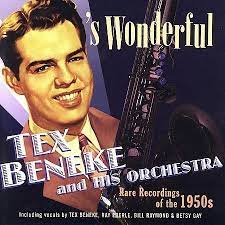
Tex Beneke was born Gordon Lee Beneke on February 12, 1914 in Fort Worth, Texas. He started playing saxophone when he was nine, going from soprano to alto and settling on the tenor saxophone. His first professional work was with bandleader Ben Young in 1935, but it was after a Gene Krupa recommendation when he joined the Glenn Miller Orchestra three years later that his career hit its stride.
Miller immediately made Beneke his primary tenor saxophone soloist and he played all but a few of the tenor solos on all of the records and personal appearances made by the Miller band until it disbanded in 1942. He appeared with Miller and his band in the films Sun Valley Serenade in 1941 and Orchestra Wives in 1942, and both film solos helped propel the singer/saxophonist to the top of the Metronome polls. He went on to perform with the 1941 Metronome All-Star Band led by Benny Goodman. In 1942, Glenn Miller’s orchestra won the first Gold Record ever awarded for Chattanooga Choo Choo.
With the orchestra disbanded due to Miller’s enlistment, Tex briefly joined Horace Heidt before joining the Navy himself, leading a Navy band in Oklahoma. He led two bands in the navy and kept in touch with Miller while they were both serving in the military. By 1945, he felt ready to lead his own orchestra. When Glenn went missing in 1944 he took over the band, shaping it as a ghost band per the desires of the Miller estate, however by 1950, he and the estate parted ways.
Post Miller, Beneke led his own groups but as swing faded from the mainstream so did opportunities. There was a small revival in the late Seventies but he was limited to small labels and competition from Miller alumni and other imitators. He would make the television circuit making appearances on The Tonight Show and Merv Griffin. 1990 saw him have a stroke which sidelined his saxophone playing but he continued to conduct and sing.
On May 30, 2000 saxophonist, vocalist and bandleader Tex Beneke, who received a star on the Hollywood Walk of Fame, transitioned from respiratory failure at a nursing home in Costa Mesa, California, aged 86. His saxophone is currently used by the Arizona Opry.
More Posts: bandleader,history,instrumental,jazz,music,saxophone,vocal