

Daily Dose Of Jazz…
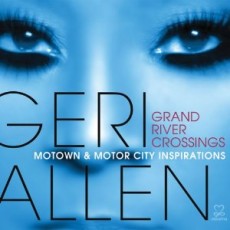
Geri Allen was born on June 12, 1957 in Pontiac, Michigan and received her early jazz education at Cass Technical High School in Detroit and the Jazz Development Workshop under the mentorship of Marcus Belgrave. In 1979 she graduated fro Howard University with a jazz studies degree, moved to New York and studied with Kenny Barron. She went on to get a degree in ethnomusicology from the University of Pittsburgh, returned to New York and joined the Brooklyn based M-Base crowd, recording several albums with Steve Coleman, beginning in 1985.
Geri’s 1984 debut album “The Printmakers” showcased the pianist’s more avant-garde tendencies, followed by “Etudes” and “Twenty-One” in 1995 in which she was the first recipient of Soul Train’s Lady of Soul Award for jazz album of the year. She has played with a luminous list of musicians not the least Ron Carter, Tony Williams, Charlie Haden, Anthony Cox, Betty Carter, Ornette Coleman, Jack DeJohnette, Mary Stallings and Charles Lloyd.
Geri Allen currently teaches as Associate Professor of Jazz Piano & Improvisation Studies at the University of Michigan as well as recording and touring with Charles Lloyd; and in 2007 participated in the documentary film titled “Live Music, Community & Social Conscience” that looks at how music connects us to our humanity, and to each other regardless of borders, politics, culture economics, or religion. She was the 2008 recipient of a Guggenheim Fellowship.
Allen has received many awards such as the “African-American Classical Music Award”, “A Salute to African-American Women: Phenomenal Woman”, nominations in 2011 for the NAACP Image Award for Best Jazz Album, “Geri Allen & Timeline Live” and for both The 10th Annual Independent Music Awards for “Live Performance Album” and for “Best Jazz Pianist”, by the Jazz Journalists Association.
As an educator Geri has taught Jazz & Contemporary Improvisation at the School Of Music Theatre & Dance, at the University Of Michigan and was a curator in New York City at the STONE. Since 2013 she’s been teaching at her alma mater, the University of Pittsburgh, as an Associate Professor of Music and as the Director of the Jazz Studies Program.
Pianist Geri Allen continued to perform, tour and record until she passed away on June 27, 2017, two weeks after her 60th birthday in Philadelphia, Pennsylvania after losing her battle with cancer..

Inspire A Young Mind
More Posts: piano
Daily Dose Of Jazz…
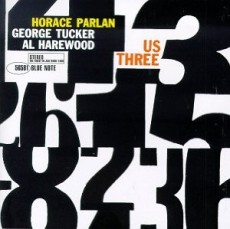
Al Harewood was born on June 3, 1923 and as a child Harewood was a gifted tap dancer that gave recitals and was affiliated with Bill “Bojangles” Robinson’s school of dance. With his older brother’s drum unoccupied when he was drafted into the Army during WWII, He began his apprenticeship. Having contracted pneumonia as a child and exempted from military service, Al began his illustrious career as a jazz drummer.
While working at a munitions armory during the war, Harewood taught himself the drums, finding uncommon aptitude for playing the traps with fire and swing. He began listening to the major percussion innovators of the time: Max Roach, Art Blakey, Philly Joe Jones, and the new bop styling’s of Kenny Clarke and began playing club dates around New York.
Harewood plays very melodically with rhythmic punches, a talent that made him an expert at feeding and supporting each soloist while never getting in the way of a horn player’s melodic development. He has worked with J. J. Johnson, Kai Winding, Art Farmer, Gigi Gryce, Benny Golson, Horace Parlan, Ike Quebec, Grant Green, Lou Donaldson, Curtis Fuller, Stan Getz, Carmen McRae, Mary Lou Williams, Stanley Turrentine, Shirley Scott and Dexter Gordon to name a few.
By age 88, Al Harewood maintained a wonderful sense of humor, dignity and courage as one of the original creators of modern jazz drumming. He played in New York’s clubs each and every night at the very least in spirit if not influence. He spent his time between New York and his family home in Barbados until his passing on March 13, 2014 at the age of 90.
Give A Gift Of Jazz – Share
More Posts: drums
Daily Dose Of Jazz…
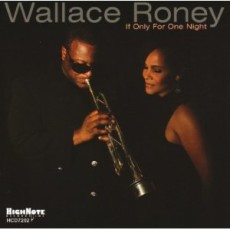
Wallace Roney was born May 25, 1960 in Philadelphia, Pennsylvania and at the age of 4 it was discovered he had perfect pitch. He began his musical and trumpet studies at the Settlement School of Music, then from the age of 7 studied with Sigmund Herring of the Philadelphia Orchestra and under the watchful eye of Eugene Ormandy was regularly presented at the Settlement recitals with the Philadelphia Brass Ensemble.
Having already made his recording debut at 14 by the time he entered the Duke Ellington School of the Arts in Washington, D.C., Wallace made his mark in D.C. as a gifted local performer by his graduation. He studied with Langston Fitzgerald of the Baltimore Symphony, attended Howard University and Berklee College of Music, took lessons from Clark Terry and Dizzy Gillespie.
Wallace studied with Miles Davis from 1985 until his death in ’91 and credits Miles as having helped to challenge and shape his creative approach to life as well as being his music instructor, mentor and friend and holds the distinction of being the only trumpet player Davis ever personally mentored.
With all of his skills and early accomplishments, Roney early career was bleak, bordering on homelessness, until he got a call to tour with drummers Tony Williams and Art Blakey. This shot in the arm culminated in him becoming one of the most in-demand trumpeters on record, movie and commercial recording sessions. In 1979 and again in 1980, Wallace Roney won the Down Beat Award for Best Young Jazz Musician of the Year. In 1989, and again in 1990, Wallace won Down Beat Magazine’s Critic’s Poll for Best Trumpeter to Watch.
He has played with Herbie Hancock, Ron Carter, Wayne Shorter, Elvin Jones, Jay McShann, Walter Davis Jr., Sonny Rollins and Curtis Fuller to name the short list and has recorded on over 250 sessions by the time he turned 40. The hard bop and post bop trumpeter Wallace Roney continued to perform, record and tour until he passed away at age 59 from complications arising from COVID~19 on March 31, 2020 in Paterson, New Jersey.
Give A Gift Of Jazz – Share
More Posts: trumpet

Daily Dose Of Jazz…
Ralph Peterson, Jr. was born on May 20, 1962 in Pleasantville, New Jersey into a family of drummers, having four uncles and a grandfather as drummers. He began on percussion at age three and was raised in Atlantic City where he played trumpet in high school and worked locally in funk groups. He applied to Livingston College Rutgers for drums but failed the percussion entrance exam and enrolled as a trumpeter instead.
In 1983 he joined Art Blakey’s Jazz messengers as the second drummer, playing with him for several years. He has worked with Terence Blanchard. Donald Harrison, Walter Davis, Tom Harrell, Out of the Blue, Branford Marsalis, David Murray, Craig Harris, James Spaulding, Roy Hargrove, Jon Faddis, Dewey Redman, George Colligan, Stanley Cowell, Mark Shim, Betty Carter, Charles Lloyd, Wynton Marsalis and many, many others.
After living in Canada for some time he returned to Philadelphia where he worked further with Fo’Tet and also recorded as Triangular Too with Uri Caine. He also led a group Hip Pocket with whom he played trumpet. He has recorded 15 albums as a leader and another six with Uri Caine and David Murray.
Drummer Ralph Peterson has taught at Philadelphia’s University of the Arts, currently teaches at Berklee College of Music in Boston, Massachusetts and continues to perform, record and tour.
Inspire A Young Mind
More Posts: drums
Daily Dose Of Jazz…
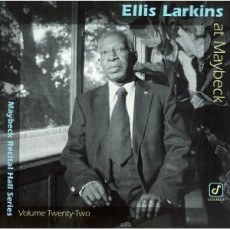
Ellis Larkins was born in Baltimore, Maryland on May 15, 1923. The pianist was the first African American to attend the Peabody Conservatory of Music in Baltimore and began his professional playing career in New York City after moving there to attend the Julliard School. Following school Larkins performed with Billy Moore and Edmond Hall.
He recorded with Coleman Hawkins, Mildred Bailey and Dickey Wells in the 1940s, Ruby Braff and Ella Fitzgerald in the Fifties recording “Ella Sings Gershwin” and “Songs In A Mellow Mood” with the latter. His 1960s work included recordings and/or performances with Eartha Kitt, Joe Williams, Helen Humes, George Gibbs and Harry Belafonte.
Though he was best known as an accompanist, Larkins recorded several solo albums in the 1950s. In the 1970s he performed regularly at several New York venues, including Gregory’s, a small bar in the east 70s. Next to Jimmy Jones, traditional jazz fans regard him as one of the most lyrical and romantic pianists in jazz history. Ellis Larkins passed away on September 30, 2002.
Take A Dose On The Road
More Posts: piano