

Daily Dose Of Jazz…
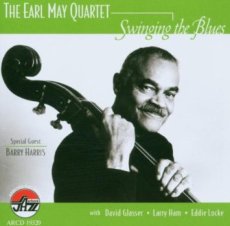
Earl May was born on September 17, 1927 in New York City first gravitated to drums, but at 14 acquired an acoustic bass, later making his professional debut at the Bronx’s 845 Club. While working an insurance job by day, 1949 saw May moonlighting across the New York club circuit, eventually catching the attention of drummer Connie Kay, who invited him to sit in behind Lester Young at Harlem’s now-legendary Minton’s Playhouse. He continued honing his craft in clubs like Minton’s Playhouse with musicians such as Lester Young and Mercer Ellington. A protégé of the legendary Charles Mingus, in 1951 Earl joined the Billy Taylor Trio, appearing regularly in such clubs as the Hickory House, Birdland and the Downbeat Club.
During the Fifties Earl also worked with Charlie Parker, Miles Davis, Quincy Jones, Gene Ammons, Sonny Stitt, Chet Baker, and Lorez Alexandria, Webster Young among others and recorded the classic “Lush Life” with John Coltrane. He left the Billy Taylor Trio in 1959 to form his own group and act as musical director and arranger for Gloria Lynne.
By the mid-sixties May took up the electric bass and led the Earl May Quartet at The New York Playboy Club and the group rapidly became the epitome of great music in the New York club scene.
Over the years Earl has performed or recorded with Dizzy Gillespie, Frank Foster, Cab Calloway, Tommy Flanagan, Barry Harris, Junior Mance, Benny Powell, Carmen Bradford, Frank Foster, Dizzy Gillespie, Linda Hopkins, Doc Cheatham, Charles Brown, Claude Williams, Jon Hendricks, Charles McPherson, Marlena Shaw, Ruth Brown, Winard Harper and Phyllis Hyman to name a few more.
Jazz bassist Earl May, one of the most prodigious and prolific bassists of the postwar era, lent his rich, round sound to every session and performance, was the only bassist to play with his left hand but kept the strings in their normal order and was a member of Local 802 since 1947, passed away on January 5, 2008. He was 80 years old.

Give The Gift Of Knowledge
More Posts: bass
Daily Dose Of Jazz…
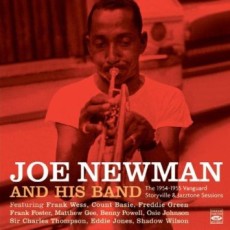
Joseph Dwight Newman was born on September 7, 1922 in New Orleans, Louisiana. A child of a pianist father, he had his first music lessons from David Jones. He continued his study of trumpet at Alabama State College where he also played, led and toured the school band, the Bama State Collegians.
By 1941 Joe joined Lionel Hampton for two years, before signing with Count Basie, a relationship that lasted for a total of thirteen years resulting in a number of small group recordings as leader, spent time with Illinois Jacquet, and then with J.C. Heard. He also played on Benny Goodman’s 1962 tour of the Soviet Union.
Leaving the Basie band in 1961, Newman helped found Jazz Interactions, of which he became president in 1967. Jazz Interactions was a charitable organization which provided an information service, brought jazz master classes into schools and colleges, and later maintained its own Jazz Interaction Orchestra, for whom Newman wrote.
In the 1970s and 1980s Newman toured internationally, recorded for various major record labels. He suffered a stroke in 1991, however, which seriously disabled him. Joe Newman, trumpeter, composer and educator best known for his years with Count Basie passed away on July 4, 1992.
Inspire A Young Mind
More Posts: trumpet
Daily Dose Of Jazz…
Wayne Shorter was born August 25, 1933 in Newark, New Jersey and attended Newark Arts High School where his love of music flourished under the encouragement of his father to take up the saxophone. In his youth Shorter had acquired the nickname “Mr. Gone”, which later became an album title for Weather Report.
Graduating in 1952, he matriculated through New York University in 1956, spent two years in the Army, during which he briefly played with Horace Silver and after his discharge, he played with Maynard Ferguson.
In 1959, Shorter became a Messenger joining Art Blakey, stayed five years and became the bands musical director. When Coltrane left Miles Davis’ band he proposed Wayne, as his replacement but his unavailability di not release him from Blakey until 1964. Along with Herbie Hancock, Ron Carter and Tony Williams, the Second Great Quintet was born.
During his tenure with Miles, Wayne would compose “Prince of Darkness”, “E.S.P.”, “Footprints”, “Sanctuary”, “Nefertiti”, and many others; often providing half of the compositions on an album, typically hard bop workouts with long, spaced-out melody lines above the beat. He remained in Davis’s band after the breakup of the quintet in 1968, playing on the early jazz-fusion recordings including “In A Silent Way” and “Bitches Brew”.
Until 1968, he played the tenor saxophone exclusively but the next year he put down the tenor after his final Davis recording of Filles de Kilimanjaro and began playing the soprano, which he used on his own Super Nova release with Chick Corea and John McLaughlin. By the early 1970s, however, he chiefly played soprano.
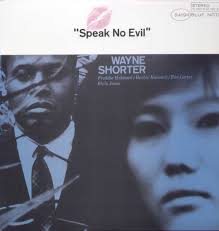
Shorter recorded eleven albums for Blue Note Records featuring almost exclusively his own compositions, with a variety of line-ups, quartets and larger groups. He would enlist the talents of Freddie Hubbard, Lee Morgan, McCoy Tyner, Reggie Workman and Elvin Jones.
Juju, Speak No Evil and Adam’s Apple The All Seeing Eye and Schizophrenia played in the spaces between free-jazz and carefully constructed melodies. Hey incorporated old friends like Hancock, Carter, Curtis Fuller and Joe Chambers. He recorded occasionally in the sideman slot with Donald Byrd, McCoy tyner, Grachan Moncur III, Hubbard, Morgan, Hancock and Williams.
In 1970, Shorter formed the fusion group Weather Report with Joe Zawinul and Miroslav Vitous, Airto Moreira and Alphonse Mouzon. They lasted until 1985. One of the most notable alumni included revolutionary bassist Jaco Pastorious and the band produced funk, bebop, Latin jazz, ethnic music and futuristic recordings.
He would record with Milton Nascimento, Carlos Santana, V.S.O.P Quintet, Joni Mitchell, Steely Dan’s Aja, Terri Lynne Carrington, Marilyn Mazur, Jim Beard, Don Henley, Wallace Roney, and can be heard on the Harrison Ford film soundtrack of The Fugitive. By the mid 90s Wayne released his Verve Records debut High Life and received a Grammy for Best Contemporary Jazz Album in 1997.
Into the millennium Shorter has continued to receive wide acclaim working with Hancock once again in 1997, on the much acclaimed and heralded album 1+1. The song “Aung San Suu Kyithem won them both a Grammy Award. He continues to work in a number of group configurations and winning Grammys for his Beyond The Sound Barrier & Alegria – Best Instrumental Jazz Album amongst his 10 Grammy Awards, and has been a Down Beat reigning critics’ poll winner for ten consecutive years and the readers’ for 18. The soprano saxophonist has amassed an impressive discography and continues to compose, reinvent his music, perform and tour.
Dose A Day – Blues Away
More Posts: saxophone
Daily Dose Of Jazz…
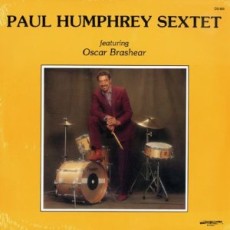
Oscar Brashear was born August 18, 1944, in Chicago, Illinois. After studying at trumpet and music at DuSable High School and Wright Jr. College under John DeRoule, he worked briefly with Woody Herman before going on to join Count Basie from 1968-69, then returning to freelance in Chicago. There her worked with Sonny Stitt, Gene Ammons, Dexter Gordon and James Moody.
A move to Los Angeles in 1971, he worked with Gerald Wilson, Harold Land, Oliver Nelson, Shelly Manne, Quincy Jones, Horace Silver and Duke Pearson.
To date Brashear has contributed to more than five-dozen recording sessions with Teddy Edwards, Jimmy Smith, Sonny Rollins, Benny Golson, Bobby Hutcherson,, B.B. King, Bobby Bland, Freddie Hubbard, Joe Farrell, The Crusaders, McCoy Tyner, Gene Harris, Earth Wind and Fire, Carole King, Ry Cooder and Frank Sinatra among many others. He continues to perform and record as a session player.
Take A Dose On The Road
More Posts: trumpet
Daily Dose Of Jazz…
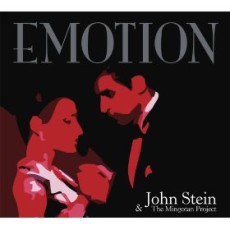
John Stein, born on June 19, 1949, was raised in Kansas City, Missouri and took up the guitar at a very early. His was musically educated on the instrument at Berklee College of Music, where he now holds the position of associate professor.
Stein collaborates with Boston hitters Bill Pierce, Kenneth Weinberger, John LaPorta and Bob Freedman but has graced stages with David “Fathead” Newman, Lou Donaldson, Dr. Lonnie Smith, and Idris Muhammad.
John has published educational columns in Just Jazz Guitar Magazine, focusing on composition and arranging for jazz guitar. He has published arranging materials in a book titled Berklee Jazz Standards For Solo Guitar, as well as his compositional materials into two books. Composing Blues For Jazz Performance, and Composing Tunes For Jazz Performance.
He has also performed in Europe, conducting tours in Germany, France, Switzerland Brasil and the States. As a mainstay on the jazz circuit, guitarist John Stein continues to record, perform and tour with his compositions and performances covering a range of jazz including blues, bebop, bossa nova and swing.
Give A Gift Of Jazz – Share
More Posts: guitar