


Daily Dose Of Jazz…
Larry Goldings was born on August 28, 1968 in Boston, Massachusetts and Larry studied classical piano until the age of twelve. While in high school he attended a program at the Eastman School of Music and during this period Errol Garner, Oscar Peterson, Dave McKenna, Red Garland and Bill Evans were prime influences. As a young teenager, Larry studied privately with Ran Blake and Keith Jarrett.
Goldings moved to New York in 1986 to attend The New School and while in college he studied piano with Jaki Byard and Fred Hersch. As a freshman he traveled to Copenhagen with Sir Roland Hanna and played piano with Sarah Vaughan, Harry Sweets Edison and Al Cohn. His later college years saw him touring worldwide with Jon Hendricks and subsequent collaboration with guitarist Jim Hall.
In 1988, Larry started developing his organ style while gigging at Augie’s (now Smoke) in New York City. His 1991 debut release was Intimacy Of The Blues and since then has performed and/or recorded with Charlie Haden, Jack Dejohnette, Carla Bley, Pat Metheny, Madeleine Peyroux, Michael Brecker, Luciana Souza, Steve Gadd, Melody Gardot, David Sanborn, Al Jarreau, Sia, John Scofield and India.Arie to name a few.
Pianist, organist, producer/arranger and composer Larry Goldings has 16 albums as a leader, eighty-four as a sideman, half dozen film and tv credits, has been nominated for a “Best Jazz Album of the Year” Grammy, has twice been a Jazz Journalist Association Winner “Best Organist/Keyboardist of the Year”, has won The New Yorker Magazine Best Jazz Albums for Awareness and Big Stuff. His latest released this year is Rhombus, with Peter Bernstein and Bill Stewart, proves that he continues to compose, perform, tour and record.
Daily Dose Of Jazz…
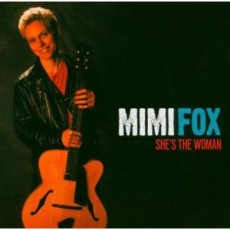
Mimi Fox was born on August 24, 1956 in New York City and started playing drums at nine and guitar when she was ten. She was inspired by the wide variety of music enjoyed by her family – show tunes, classical, Dixieland, Motown – and her own youthful inclination towards pop, folk, and R&B. By the time she was fourteen, she bought her first jazz album, John Coltrane’s classic Giant Steps, changing the course of her musical life. She began touring right out of high school and eventually settled in the San Francisco Bay area where she became a sought after player.
Mimi has released seven albums but her “Perpetually Hip” released in 2006 reached #23 on the Billboard “Top Jazz Albums” chart. This two-disc set contains standards and new tunes written by Fox, with one disc featuring solo recordings while the other is with a band composed of bassist Harvie S, drummer Billy Hart and pianist Xavier Davis.
As a composer, Mimi has received numerous grants, writing and performing original scores for orchestras, documentary films and dance projects. A dedicated educator and clinician, she is Chair of the Guitar Department, a faculty advisor and instructor at The Jazzschool for Musical Study and Performance in Berkeley, California and an Adjunct Professor at New York University. Guitarist Mimi Fox continues to compose, perform and tour.
More Posts: guitar
Daily Dose Of Jazz…
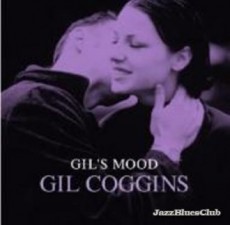
Gil Coggins was born Alvin Gilbert Coggins on August 23, 1928 in New York City of West Indian heritage and started playing piano at an early age. He attended The High School of Music and Art in Harlem and also school in Barbados.
In 1946, Coggins met Miles Davis while stationed in Missouri and after his discharge he began playing piano professionally, working with Davis on several of his Blue Note and Prestige releases. He also recorded with John Coltrane, Sonny Rollins, Lester Young, Art Blakey’s Jazz Messengers, Ray Draper and Jackie McLean.
Coggins gave up playing jazz professionally in 1954 and took up a career in real estate, playing music only occasionally. He did not record as a leader until 1990, when Interplay Records released “Gil’s Mood”. He continued performing through the 190s and into the new millennium. On February 15, 2004 pianist Gil Coggins passed away from complications sustained in a car crash eight months earlier in Forest Hills, New York. His second album recorded as a leader, “Better Late Than Never”, was released posthumously in 2007 on the Smalls Records label.
More Posts: piano
Daily Dose Of Jazz…
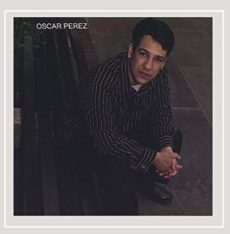
Oscar Perez was born on August 21, 1974 in Queens, New York City and from the age of seven he has been expressing himself on a piano. Raised on his father’s Cuban folk music, his piano lessons and playing in the church band made his commitment to the music his life before the ninth grade. Attending LaGuardia High School for the Performing Arts, jazz would take him on his musical and personal journey.
He studied with Robert Harris of Juilliard and Edgar Roberts of New York University before matriculating through the University of North Florida. Under the American Music Scholarship, he studied with jazz pianists Harry Pickens and Kevin Bales, and it was here that he began composing for small group and big band. He went on to study with Danilo Perez at the New England Conservatory in Boston, Massachusetts, weekend gigging in New York City, and a Master’s Degree at the Aaron Copland School of Music at Queens College in New York under the guidance of Sir Roland Hanna. While studying composition and arranging with Phillip Michael Mossman, he got many writing and arranging opportunities.
By his early twenties he was sharing the stage with Bunky Green, George Russell, Curtis Fuller and George Garzone and has played with Wycliffe Gordon, Christian McBride, Eddie Allen, Mike Lee, Steve Turre, Dave Stryker, Melissa Walker, Phoebe Snow and Charenee Wade. With saxophonist Adrian Cunningham he recorded Professor Cunningham And His Old School.
He was appointed music director for St Edward’s Church in Harlem, and the accompanist for the Nightingale/Bamford Gospel Choir. He recorded his debut CD Nuevo Comienzo in 2016 with his quintet, Afropean Affair, featuring guest artists trombonist Wycliffe Gordon and guitarist Peter Bernstein.
As an educator and performer he has taught and played at the Kupferberg Center at Queens College, the Juilliard School, Jazz Connections Camp at Montclair St. University, Carnegie Hall, the New York Pops, JazzHouse Kids and Jazz at Lincoln Center. He received the 2006 ASCAP/IAJE Commission in honor of Billy Strayhorn and premiered the work at the 2007 International Association of Jazz Education Convention. He was a finalist in the 2014 Jacksonville Jazz Piano Competition. Pianist Oscar Perez continues to compose, perform and record.
More Posts: piano

Daily Dose Of Jazz…
Byron Stripling was born August 20, 1961 in Atlanta, Georgia and was educated at the Eastman School of Music in Rochester, New York, and the Interlochen Arts Academy in Interlochen, Michigan. An accomplished actor and singer, Stripling was chosen, following a worldwide search, to star in the lead role of the Broadway bound musical, “Satchmo”. He was featured in a cameo performance in “The Young Indiana Jones Chronicles”, and his critically acclaimed performance in the 42nd Street production of “From Second Avenue to Broadway”.
Stripling earned his stripes as lead trumpeter and soloist with the Count Basie Orchestra, under the direction of Thad Jones and Frank Foster. He has also played and recorded extensively with the bands of Dizzy Gillespie, Woody Herman, Lionel Hampton, Clark Terry, Louis Bellson, and Buck Clayton in addition to The Lincoln Center Classical Jazz Orchestra, The Carnegie Hall Jazz Band, and The GRP All Star Big Band.
He is the Columbus Jazz Orchestra Artistic Director and as a trumpet virtuoso, has ignited audiences performing at jazz festivals throughout the world. He has soloed with Boston Pops, Cincinnati Pops, Seattle Symphony, Baltimore Symphony, Minnesota Orchestra, St. Louis Symphony, Vancouver Symphony, Utah Symphony, The American Jazz Philharmonic and at the Hollywood Bowl.
Trumpeter Byron Stripling continues to perform and record.
More Posts: trumpet