


Daily Dose Of Jazz…
Tony DiGregorio was born June 1, 1958 in Poughkeepsie, New York and started playing guitar at age 10. He later received informal lessons with uncle, Oscar DiGregorio, Louis E. Bruno, Gene Bertoncini, and Mark Diorio. He received his B.A.in music from Aaron Copland School of Music at Queens College. He studied classical guitar with Dennis Cinelli, composition with Schoenberg, harmony/counterpoint, piano and solfeggio with Paul Caputo, and improvisation/composition with Marty Ehrlich.
As a composer Tony created and performed incidental music for experimental theater productions of The Room, The Lady Aoi, and Journey into the Night in New York City and San Francisco, California with bassist Gerard Zanonico and clarinetist Robert Rossette.
From 1985 to 1994 DiGregorio played with the Swing Now Trio with various special guests Charlie Persip, Teddy Charles, Max Kaminsky, Chuck Wayne, Gene Bertoncini, Buddy Tate, Tom Harrell, Eddie Barefield, Mel Lewis, and Bobby Watson just to name a few.
Since 1994 Tony has worked with Laurel Watson, Hill Greene, Ken Filiano, Theo Wilson, Nicki Parrot, John Rasczka, Dave Hopkins Trio, Marco Katz, Tim Hays, and others including a performance of Terry Rielly’s “In C” with The Styrenes in 2003.
Guitarist and composer Tony DiGregorio continues to compose, perform and record.

More Posts: bandleader,composer,guitar,history,instrumental,jazz,music
Daily Dose Of Jazz…
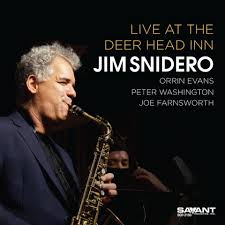
James J. Snidero was born in Redwood City, California on May 29, 1958 and grew up in the Washington, D.C. suburb of Camp Springs, Maryland. He then attended the University of North Texas, performed in the One O’clock Lab band and then moved to New York City in 1981. Once there he recorded and toured with Jack McDuff from 1981 to 1982, then joined Toshiko Akiyoshi’s Jazz Orchestra in 1983 after she moved to New York.
Snidero was a working member of Frank Sinatra’s band from 1991 to 1995 and Eddie Palmieri’s band beginning 1994. He performed with the Frank Wess Sextet, the Mingus Big Band, and Walt Weiskopf. He has worked as a sideman for David Hazeltine, David Murray, Mike LeDonne, Joe Magnarelli, Maria Schneider, Mel Lewis, Jim Rotondi, Brian Lynch, Conrad Herwig, and Tom Varner.
He recorded and performed with his own quintet and over time had various musicians including trumpeters Brian Lynch, Tom Harrell and Tim Hagans; pianists Benny Green and Mulgrew Miller; double bassists Peter Washington and Dennis Irwin; and the drummers Billy Hart and Louis Hayes, Gene Jackson, and Adam Nussbaum.
As an educator Jim has held professor positions at the New School University, Indiana University and Princeton University. He has written five series of jazz etude books and produced courses in jazz improvisation and performance for The Jazz Conception Company.
Saxophonist Jim Snidero Snidero, who has recorded 27 albums as a leader and thirty-three as a sideman, continues to perform throughout the United States, Europe, and Japan.

More Posts: bandleader,educator,history,instrumental,jazz,music,saxophone

Daily Dose Of Jazz…
Neil Richard Ardley was born in Wallington, Surrey, England on May 26, 1937. He attended Wallington County Grammar School and at the age of thirteen started learning the piano and later the saxophone. He studied chemistry at Bristol University, also playing both piano and saxophone in jazz groups, graduating in 1959 with a BSc.
Moving to London, England the next year he studied arranging and composing with Ray Premru and Bill Russo. He joined the John Williams Big Band as pianist, arranger and composer, and from 1964 to 1970 was the director of the New Jazz Orchestra. The band employed some of the best young musicians in London, including Ian Carr, Jon Hiseman, Barbara Thompson, Dave Gelly, Mike Gibbs, Don Rendell, and Trevor Tomkins.
The late 1960s saw Ardley begin composing, combining classical and jazz methods. The New Jazz Orchestra 1969 album Le Déjeuner sur l’Herbe is considered a classic of British jazz. It includes arrangements of Nardis by Miles Davis and Naima by John Coltrane, and compositions by young writers associated with the orchestra – including Ardley, Michael Garrick, Mike Gibbs, Howard Riley and Mike Taylor.
His rich orchestrations were augmented in the 1970s by the addition of synthesisers. He began work on an all-electronic album in 1980 which fell through when his recording contract was suddenly terminated, but continued to play and compose, especially with Zyklus, the electronic jazz group he formed with composer John L. Walters, Warren Greveson and Ian Carr.
Neil went on to sing in local choirs in the later 1990s led him to start composing choral music, and to gig and record again with a slimmed down Zyklus consisting of himself, Warren Greaveson, and Nick Robinson
Composer and pianist Neil Ardley, who was an author of popular books on music, died in Bakewell, Derbyshire, England on February 23, 2004.
More Posts: author,composer,history,instrumental,jazz,music,piano
Daily Dose Of Jazz…
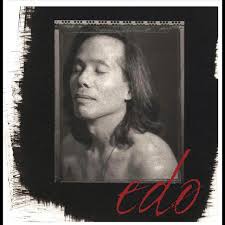
Edo Castro was born on May 24, 1957 in San Francisco, California to mother Aida Saberi, the only child from her first marriage. He attended Grattan Elementary, Herbert Hoover Junior High and J. Eugene McAteer High School, all in the city by the bay. Growing up during the tumultuous 1960s, where from an early age he was exposed to a myriad of musical styles, listening not only to rock and roll, R&B, but classical music, folk and jazz.
The first jazz albums came to him via his uncle, a recording engineer pioneer Reice Hamel. From these, Edo was first exposed to and enthralled by the sounds of Vince Guaraldi, Hugh Masekela, Ahmad Jamal, Bill Evans, Ramsey Lewis and Paul Desmond. He initially studied piano and violin, but when a friend suggested he try the electric bass, he knew he had found his instrument.
Castro attended Humboldt State University in northern California. Nearly three years later he bought an acoustic bass and auditioned for the music department at San Jose State University. So inspired by the musicians he met and their sound, he moved to Chicago, Illinois in 1982, and studied at DePaul University for a year, then completed his studies at the American Conservatory of Music, earning a Bachelor of Arts in 1987 with a focus on jazz studies and electric bass.
Returning to the Bay Area in 1990, Edo has performed and recorded with among others David Amram, Roy Haynes, Fareed Haque, David Onderdonk, Ed Thigpen, Johnny Griffin, Joel Harrison, Deborah Winters, Jill Knight, Bethany Pickens, Armando Peraza, Caren Armstrong, Percy Howard, Mark Egan, Yves Carbonne, and David Friesen.
Bassist Edo Castro has performed across Europe, Asia and South America. He continues to perform and record.
More Posts: bandleader,bass,history,instrumental,jazz,music
Daily Dose Of Jazz…
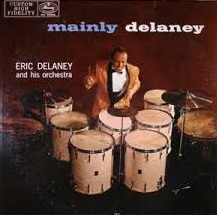
Eric Delaney was born on May 22, 1924 in Acton, London, England. Learning to play early in life by age sixteen, he won the Best Swing Drummer award and later joined the Bert Ambrose Octet which featured George Shearing on piano.
Between 1947 to 1954 he appeared with the Geraldo Orchestra and filled his time with regular session work in recording studios and on film, TV and radio. In 1954 he formed his own band and later signed with the new Pye Records label. Two years later he made three appearances on the Royal Variety Show, the first in 1956.
Specializing in up-tempo dance hall music, often carrying a rock and roll label due to the rise of The Beatles. However, Delaney was able to remain active touring in the UK in holiday resorts. He was held in high regard by his musical peers, drummer Louie Bellson with whom he recorded on the 1967 album Repercussion. Originally released in high quality stereo on the Studio2Stereo label, it was re-released on the Vocalion label in 2011.
Although best known as a swing drummer, Eric was a multi-percussionist. Classically trained as a timpanist, his unique approach turned the ‘timps’ into a lead & solo instrument. He also played xylophone, glockenspiel, military snare drum, tubular bells, Chinese and orchestral gongs, which is exhibited in his showmanship routines, such as Persian Market.
Apart from his showmanship, Delaney could be occasionally found behind a minimal kit, sitting in with a jazz quartet, and letting others take the spotlight. 1990s onward, he would also make guest appearances with bands across the UK. Another facet of his work was his playing on the soundtrack of The Longest Day, where his snare opens the movie.
Drummer and bandleader Eric Delaney, who was popular in the Fifties and early 1960s, died of a brain haemorrhage on July 14, 2011 at 87.
More Posts: drums,history,instrumental,jazz,music