


Daily Dose Of Jazz…
Anthony Kerr was born in Belfast, Northern Ireland on October 16, 1965. From 1981 till 1984 he received his education at the Belfast School of Music. Moving to New York City after graduating, he studied vibes and marimba with David Friedman and Kenny Werner. He won a scholarship to the New School of Jazz and Contemporary Music in 1987.
Returning to Ireland, Anthony went on to work as a percussionist with the RTE Symphony Orchestra. There was a period of time when he was employed with the UK’s National Theater.
Kerr later worked as a jazz musician with John Taylor, Louis Stewart, Peter King, Norma Winstone, Mike Westbrook, a bandleader he toured with around Europe. He worked with Charlie Watts and Georgie Fame, while simultaneously leading his own group and conducting jazz workshops in Belfast.
He toured with the Irish Youth Jazz Orchestra and worked with BBC Big Band and collaborated with Ian Shaw and a saxophonist Dale Barlow. He leads his own quartet and the Mallet Band with Justin Woodward, Stewe Brown and Geoff Gascoyne.
In 1994 Kerr was voted best instrumentalist at the British Jazz Awards and the following year received the Young Jazz Musician of the Year. He also won nominations in the Rising Star category in 1995, 1996 and 1998.
His first album “First Cry” was made in collaboration with singer / lyricist Jacqui Dankworth. His second album, “Now Hear This” which was recorded live at Ronnie Scott’s Club, was released in 1997.
Vibraphonist Anthony Kerr currently teaches vibraphone and jazz improvisation at the Royal College of Music in London, produces and records music from his home studio in Hertfordshire, England.

More Posts: bandleader,educator,history,instrumental,jazz,music,vibraphone
Daily Dose Of Jazz…
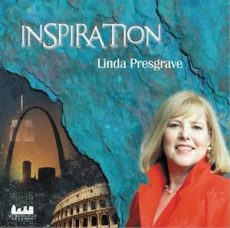
Linda Presgrave was born in St. Louis, Missouri on October 12, 1951. During her hometown years she performed as a leader with her group, After Six Jazz, at the finest jazz venues in St. Louis. At the same time she worked with the Sessions Big Band, the Modern Vintage Jazz Quartet and the Kim Portnoy Jazz Orchestra. As a former professional French Horn player, she performed regularly at the Muny, Fox and Riverport theaters in orchestral settings behind top entertainers, world class ballet ensembles and national theatrical productions.
Relocating to New York City in 1998 she left a very active music career in her native city for the vibrant jazz scene of a new city. Since moving Linda has released four compact discs on the Metropolitan Records label. She continues on a mission to bring attention to compositions by inspirational jazz artists who happen to be women.
Linda has performed on prestigious jazz festival stages in America and a few in Europe. When not performing with her own group she sits in the piano chair of Carol Sudhalter’s Astoria Big Band and also with a new group, Ladies Day, led by MJ Territo that features music and lyrics by women.
Linda Pianist, composer and arranger Linda Presgrave continues to perform, record and tour.
More Posts: bandleader,history,instrumental,jazz,music,piano
Daily Dose Of Jazz…
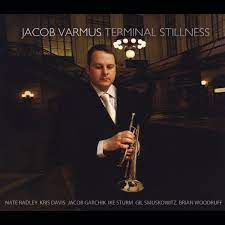
Jacob Varmus was born on October 6, 1973 in San Francisco, California. He first heard the trumpet’s call when he was two years old and ten years later had a trumpet of his own. He began winning top marks at all the California Music Educators’ Association festivals for his work as soloist and chamber musician.
Evolving parallel to his love of music was a talent for using language artistically thru poetry, critical essays, and autobiographical stories. In high school he won awards for poetry and sports journalism as well as music. His first year of college at the University of Iowa, Jacob studied poetry closely with MacArthur grant recipient Jorie Graham and classical trumpet virtuoso David Greenhoe.
An initiation to the music of John Coltrane sent Varmus to focus on jazz. In 1994 he moved to New York City to finish his BFA at the New School Jazz program. There he received timeless lessons from a long list of artists including Arnie Lawrence and Billy Harper. Here he became known to his peers and elders as a composer of harmonically intricate yet compellingly simple and striking tunes.
By his senior year he was being commissioned by the Jazz Composers’ Collective to write a suite combining jazz quintet with string quartet. It featured Ted Nash and Frank Kimbrough. He went on to enroll in composer workshops, receiving a further commission for jazz quartet.
As an educator he is on the faculty of the New York Jazz Academy. Trumpeter and composer Jacob Varmus continues to pursue his highly melodic yet rigorous music.
More Posts: bandleader,cornet,history,instrumental,jazz,music,trumpet
Daily Dose Of Jazz…
Kobi Yakob Arad was born on October 2, 1981 and raised in Haifa, Israel. He earned his bachelor’s degree at Tel Aviv University and became the first musician to earn a doctorate in contemporary improvisation and third stream from the New England Conservatory of Music.
While living in Israel, Kobi participated as a keyboardist in a trio with Asaf Sirkis and Gabriel Mayer in the 1990s. He collaborated with Stevie Wonder and his manager Stephanie Andrews at the Berklee Performance Center in 2005.
Between 2009 and 2015 Arad released Sparks of Understanding, The Experience Project, Webern Re-Visioned, and Superflow which is a collaboration with Roy Ayers, featuring bassist Jonathan Levy.
He went on to record a tribute album Ellington Upside Down with the Kobi Arad Band. The album’s mashup of “Take The ‘A’ Train” and “It Ain’t Mean a Thing” was nominated for Best Jazz Instrumental at the 17th Independent Music Awards in 2019. His album Segments went on to win Best Jazz Instrumental in the album category at the same event.
In 2021 he won the Independent Music Artist award in Best Jazz for his performance of Thelonious Monk’s Bemsha Swing at the Hollywood Music in Media Awards. Pianist, vocalist, composer, and music producer Kobi Arad, who has collaborated with Stevie Wonder, Cindy and Carlos Santana, and Jack DeJohnette, continues to perform and record.

More Posts: composer,history,instrumental,jazz,music,piano,producer,vocal
Daily Dose Of Jazz…
Chris Abelen was born in Tilburg, Netherlands on September 29, 1959 and started out on trumpet at 11, switching to the bigger horn at 18. He studied classical trombone with Charles Toet and Henri Aarts, and then jazz and improvised music with Willem van Manen a member of Willem Breuker Kollektief, the band that first called global attention to Dutch improvised music.
Taking over van Manen’s chair in the Kollektief in 1984, they would tour and record extensively with that band until 1988. Abelen led his own groups and in 1992 led a pan-generational, pan-stylistic international tentet showcasing the players with mini-concertos that demonstrate Abelen’s preoccupations with color, texture, mood, and his wry indirect sense of humor.
His desire to lead his own band had him forming first a sextet that evolved into a quartet. He then put together a tentet, in which a quartet and quintet was produced. All the configurations went on to record several albums. Over the years Chris has toured and recorded with numerous Dutch jazz and new music ensembles, including Willem van Manen’s Contraband, I Compani, Paradise Regained Orchestra, Eric van der Westen Octet, and numerous others.
Taking his music in a new direction by 2016 he had released his sixth album, A Day At The Office, with a septet. Other new projects are still in the pipeline and trombonist Chris Abelen continues to perform and compose.

More Posts: bandleader,history,instrumental,jazz,music,trombone