
Daily Dose Of Jazz…
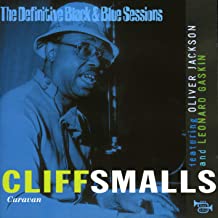
Cliff Smalls was born Clifton Arnold on March 3, 1918 and was raised in Charleston, South Carolina. His father, a carpenter, performed piano and organ for Charleston’s Central Baptist Church. He taught Smalls classical music at an early age. He left home with the Carolina Cotton Pickers and also recorded with them, for instance, Off and on Blues and “Deed I Do, which he arranged and featured Cat Anderson in 1937 when he was 19.
With his career coinciding with the early years of bebop, from 1942 to 1946 he was a trombonist, arranger and also backup piano-player for band-leader and pianist Earl Hines, alongside Dizzie Gillespie and Charlie Parker. While in the Hines band he performed often during broadcasts seven nights a week on open mikes coast-to-coast across America. Hines also used Teddy Wilson, Jess Stacy and Nat “King” Cole as backup piano-players but Smalls was his favorite. He also played in the Jimmie Lunceford and Erskine Hawkins bands.
After the inevitable post-World War II breakup of the Hines big-band, Cliff went on to play and record in smaller ensembles with his former Earl Hines band colleagues, singer and band-leader Billy Eckstine, trombonist Bennie Green, saxophonist Earl Bostic and singer Sarah Vaughan. In 1949 he recorded with JJ Johnson and Charlie Rouse. He was the pianist on Earl Bostic’s 1950 hit Flamingo along with John Coltrane but had a serious automobile accident, with Earl Bostic, in 1951 and laid in bed all of 1952, till March of 1953.
Recovering, Smalls shifted his musical career to serve as music director/arranger for singers Eartha Kitt, Ella Fitzgerald, Sammy Davis, Jr., Smokey Robinson and the Miracles, Clyde McPhatter, Roy Hamilton and Brook Benton. He recorded Bennie Green with Art Farmer in 1956 and was, for many years, a regular with Sy Oliver’s nine-piece Little Big-Band from 1974-1984, a regular stint in New York’s Rainbow Room.
In the 1970s he returned to jazz-recording, including four solo tracks for The Complete Master Jazz Piano Series in 1970, with Sy Oliver in 1973, Texas Twister with Buddy Tate in 1975, Swing and Things in 1976 and Caravan in France in 1978. In 1980 Smalls was featured playing piano in The Cotton Club, directed by Francis Ford Coppola. Trombonist, pianist, conductor and arranger Cliff Smalls, who worked in the jazz, soul and rhythm & blues genres, passed away in 2008.

More Posts: arranger,bandleader,conductor,history,instrumental,jazz,music,piano,trombone
Daily Dose Of Jazz…
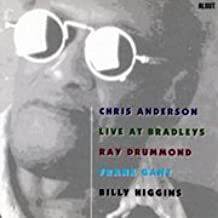
Chris Anderson was born on February 26, 1926 in Chicago, Illinois and was a self-taught pianist. He began playing in Chicago clubs in the mid-1940s and played with Von Freeman and Charlie Parker, among others. Hired as Dinah Washington’s accompanist in New York City, his tenure with Washington was a brief six weeks as she changed accompanists frequently. After his firing, he decided to stay in the city.
In 1960 he recorded what might be his best-regarded album My Romance on the VeeJay label with bassist Bill Lee and drummer Art Taylor. He was a great influence on his student Herbie Hancock.
Despite the respect of his peers, Anderson had difficulty finding work or popular acclaim due in large to his disabilities. He was blind and his bones were unusually fragile, causing numerous fractures, which at times compromised his ability to perform at the times or places requested, although he continued to record until he was well into his 70s. A DownBeat profile indicated he had osteogenesis, probably meaning osteogenesis imperfecta.
He would record his first album as a leader in 1960 and ultimately record a total of ten. As a sideman, he worked with Charlie Haden, Clifford Jordan, Sun Ra, and Frank Strozier. Pianist Chris Anderson passed away on February 4, 2008 in Manhattan, New York City.
More Posts: bandleader,history,instrumental,jazz,music,piano
Daily Dose Of Jazz…
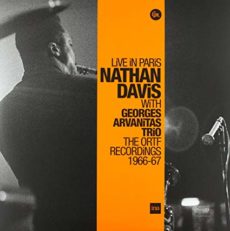
Nathan Tate Davis was born on February 15, 1937 in Kansas City, Kansas and eventually would travel extensively around Europe after World War II. He moved to Paris in 1962 but would return to the U.S. by 1969, holding a Ph.D. in Ethnomusicology from Wesleyan University and was a professor of music and director of jazz studies at the University of Pittsburgh, an academic program that he helped initiate.
He was the founder and director of the University of Pittsburgh Annual Jazz Seminar and Concert, the first academic jazz event of its kind in the United States. He also helped to found the university’s William Robinson Recording Studio as well as establish the International Academy of Jazz Hall of Fame located in the school’s William Pitt Union and the University of Pittsburgh-Sonny Rollins International Jazz Archives.
One of Davis’ best known musical associations was heading the Paris Reunion Band from 1985 to1989, which at different times included Nat Adderley, Kenny Drew, Johnny Griffin, Slide Hampton, Joe Henderson, Idris Muhammad, Dizzy Reece, Woody Shaw, and Jimmy Woode. He also toured and recorded with the post-bop ensemble leading Roots which he formed in 1991. He composed various pieces, including a 2004 opera entitled Just Above My Head.
He retired as director of the Jazz Studies Program at Pitt in 2013. Davis also served as the editor of the International Jazz Archives Journal. Over the course of his career, he recorded eighteen albums as a leader.
Multi-instrumentalist Nathan Davis, who played the tenor saxophone, soprano saxophone, bass clarinet, and flute, and was awarded the Mid-Atlantic Arts Foundation’s BNY Mellon Jazz Living Legacy Award at the Kennedy Center for the Performing Arts, passed away in Palm Beach, Florida on April 8, 2018 at the age of 81.
More Posts: clarinet,educator,flute,history,instrumental,jazz,music,saxophone
Daily Dose Of Jazz…
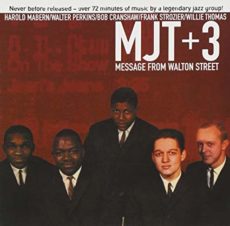
Walter “Baby Sweets” Perkins was born on February 10, 1932 in Chicago, Illinois. Starting out in his hometown, he began his professional career drumming with Ahmad Jamal in 1956–57. He recorded as a leader for Argo Records in 1957 under the name MJT+3 with trumpeter Paul Serrano, Nicky Hill on tenor saxophone, Muhal Richard Abrams on piano, and bassist Bob Cranshaw.
1959 witnessed the regrouping under the same name with Willie Thomas on trumpet, Frank Strozier on alto saxophone, pianist Harold Mabern, and Cranshaw on bass. They recorded four albums for Vee-Jay in 1959 and 1960 and played in Chicago until 1962 when Walter made his move to New York City.
Perkins played with Sonny Rollins in 1962 and accompanied Carmen McRae in 1962–63. By 1964 he was playing with Art Farmer and Teddy Wilson, however, following this he recorded with Rahsaan Roland Kirk, George Shearing, Gene Ammons, Charles Mingus, Billy Taylor, Etta James, J.J. Johnson, Johnny Coles, Booker Ervin, Jaki Byard, Lucky Thompson, Pat Martino, Sonny Stitt, Sonny Criss, Ray Bryant, Duke Pearson, Bobby Timmons, and Charles Earland. And that’s the shortlist as he recorded some 44 albums throughout his career as a sideman.
Drummer Walter Perkins passed away on February 14, 2004 in Queens, New York.
More Posts: bandleader,history,instrumental,jazz,music,vocal
Requisites
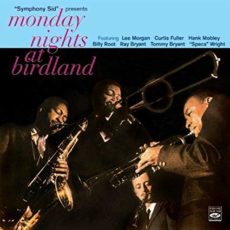
Monday Night at Birdland is a live album that was recorded on April 21, 1958 at Birdland in New York City and released by the Roulette label.
Track Listing | 46:00
- Introduction by Symphony Sid – 0:09
- Walkin’ (Richard Carpenter) – 12:26
- All the Things You Are (Jerome Kern, Oscar Hammerstein II) – 11:27
- Bag’s Groove (Milt Jackson) – 12:29
- There Will Never Be Another You (Harry Warren, Mack Gordon) – 9:29
- Hank Mobley, Billy Root – tenor saxophone
- Lee Morgan – trumpet
- Curtis Fuller – trombone
- Ray Bryant – piano
- Tommy Bryant – bass
- Specs Wright – drums
Monday Night at Birdland | by Eddie Carter
This morning’s subject of discussion takes us to the legendary jazz club Birdland where Monday nights were always special, especially during the fifties and sixties. Musicians and vocalists who were performing would be off that night and the stage would be given to up and coming jazz artists. Thankfully, Roulette Records was available to record the performance on April 21st to give jazz fans, Monday Night at Birdland (Roulette R–52015/SR–52015) to enjoy for all who couldn’t be there in person. The Master of Ceremonies for these weekly jam sessions is the legendary jazz disc jockey, “Symphony Syd” Torin of WBNX in the Bronx, New York; WHOM in Jersey City, New Jersey, and WWRL, WMCA and WJZ in New York City. Syd announces all the tunes on the album and has a brief comment after three of them conclude. The stars of this set are Lee Morgan on trumpet; Curtis Fuller on trombone; Hank Mobley, Billy Root on tenor sax; Ray Bryant on piano; Tommy Bryant on bass and “Specs” Wright on drums. My copy used in this report is the 1988 Spanish Mono reissue (FSR-631) by Fresh Sound Records.
Symphony Syd starts the first side with the song’s introduction; the septet then launches Walkin’ by Richard Carpenter. The trio opens the song evolving into the ensemble’s collective melody. Hank takes the spotlight first wailing enthusiastically followed by Lee who picks up the pace with a bright tone and feisty phrasing. Curtis takes the reins next with a considerable zest for a rousing performance, Ray solos with evident delight in the next reading. “Specs” takes the final scintillating statement in exchange with the front line for a robust finish into the closing chorus and climax. The septet eases the throttle back for the 1939 standard, All The Things You Are by Jerome Kern and Oscar Hammerstein II. Fuller cooks at an easy groove on the opening melody, then infuses the lead solo with a lively simplicity and splendor. Mobley makes his presence felt on a brisk interpretation next, then Morgan illustrates his assured mastery on the trumpet with an engaging performance. Root takes his first solo next, giving an exquisite statement that fits the ensemble’s artistic temperament with a superb reading. Bryant ends with a short solo that’s profoundly moving before the collective reprise and coda.
Side Two opens with Milt Jackson’s contemporary classic, Bags’ Groove; it was written in 1952 and made its debut on Wizard of The Vibes (Blue Note LP 5011), released that year. After a collective theme treatment, Lee is up first, combining lyricism and emotion for a charming lead solo. Curtis soars joyously on the next statement, then comes Hank who takes the next reading with a solid rock-steady rhythm from beginning to end. Billy steps up next for a captivating performance unleashing red-hot notes from his horn and Ray glows brilliantly on the final spot ahead of the out-chorus and ovation. The set ends with an invigorating finale, There Will Never Be Another You by Harry Warren and Mack Gordon, originally written in 1942 and appearing in the musical film, Iceland. The propulsive power of Wright’s drums brings the song to life leading to the speedy melody. Mobley accelerates to race car speed on the opening statement and never decelerates. Root’s tenor sax is an adrenaline rush on the next scintillating solo, followed by Morgan who also gives a spectacular exhibition. Fuller pulls no punches with a buoyant, effervescent interpretation next and Bryant shows he’s a fierce and fervid performer on the closer before the closing chorus and appreciative applause from the crowd.
Monday Night at Birdland was produced by Rudy Traylor, who’s also an arranger, jazz drummer, pianist, and vibraphonist. The sound quality of the album is quite good throughout, and Hank Mobley, Billy Root, Lee Morgan, Curtis Fuller, Ray Bryant, Tommy Bryant, and “Specs” Wright offer the listener the very essence of live jazz. In fact, there’s only one noticeable defect, on Symphony Syd’s introduction of Walkin’, his microphone has a little harshness. I don’t know if this appears on the original album or is exclusive to this LP. I’ll admit, I’m not that familiar with Fresh Sound Records, and don’t know if they’re in that group of European labels like DOL, Doxy, Jazz Wax, Jazz Workshop, Wax Time, etc. However, I’m pretty impressed with what I’ve heard on this particular reissue and the performances are worth the price of admission for me to invite you to seek a copy of Monday Night at Birdland to check out for yourselves and form your own opinion!
~ All The Things You Are, There Will Never Be Another You – Source: JazzStandards.com ~ Bags’ Groove – Source: Wikipedia.org ~ © 2020 by Edward Thomas Carter

More Posts: choice,classic,collectible,collector,history,instrumental,jazz,music,saxophone