

Daily Dose Of Jazz…
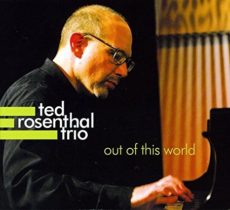
Ted Rosenthal was born on November 15, 1959 and raised in Great Neck, Long Island, New York. He began playing by ear at a young age, and started studying at 12 with Tony Aless, a sideman with Charlie Parker and Stan Getz. In high school, he studied briefly with Jaki Byard and Lennie Tristano, and attended workshops with Billy Taylor, Woody Shaw and others.
Finding limited opportunities to study jazz at the conservatory level, Ted found joy in in studying classical piano at the Manhattan School of Music. He received bachelor’s and master’s degrees in piano performance while continuing to pursue his love of jazz outside the classroom. After college, he continued his classical piano studies with Phillip Kawin while playing jazz in and around New York.
Rosenthal won the Thelonious Monk International Jazz Competition in 1988, launched his solo career, released his first CD as a leader New Tunes, New Traditions, with Ron Carter, Billy Higgins and Tom Harrell. The album interweaves Thelonious Monk songs with his original compositions. In the early 1990s with the last Gerry Mulligan Quartet, recording three CDs with Mulligan and performed in major jazz festivals throughout the world. After Mulligan’s death, Rosenthal became musical director of The Gerry Mulligan All Star Tribute Band, featuring Lee Konitz, Bob Brookmeyer and Randy Brecker. The group’s CD, Thank You, Gerry!, was nominated for a Grammy award in 1998.
As a sideman Ted has performed in small groups led by Art Farmer, Jon Faddis, Phil Woods, Jay Leonhart, Wynton Marsalis and the Lincoln Center Jazz Orchestra, the Carnegie Hall Jazz Band, the Westchester Jazz Orchestra, the Vanguard Jazz Orchestra, Lewis Nash, George Mraz, Bill Charlap, Dick Hyman, Helen Merrill, Mark Murphy and Ann Hampton Callaway, to name a few.
Pianist Ted Rosenthal, a recipient of 3 NEA grants, currently holds faculty positions at the Juilliard School and Manhattan School of Music in New York City, is a member of the Juilliard Jazz Quintet and continues to perform, record, compose and tour as a leader and sideman.

More Posts: piano
Daily Dose Of Jazz…
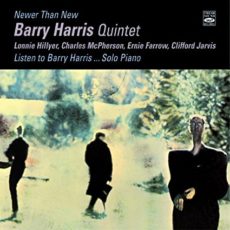
Ernie Farrow was born on November 13, 1928 in Huntington, West Virginia and is the half-brother to Alice Coltrane. It is said that he was responsible for introducing her to jazz. He had his own bands throughout high school and emerged in the professional jazz scene in the first half of the ’50s, working with a series of demanding bandleaders including Terry Gibbs and Stan Getz.
Farrow’s relationship with Yusef Lateef began around 1956, performing alongside Hugh Lawson and drummer Louis Hayes and recording a dozen albums with him from 1957 to 1964. Over the course of his short career he also worked with Barry Harris and John Williams among others.
A few years later he began leading his own group, based out of Detroit and was a strong influence on his younger piano-playing sister. In the ’60s he was featured on bass in a terrific classic jazz piano trio fronted by Red Garland.
Best known as a bassist, he however, started on piano before adding bass and drums. Multi-instrumentalist Ernie Farrow, who played piano, double bass, and drums, passed away on July 14, 1969.

Daily Dose Of Jazz…
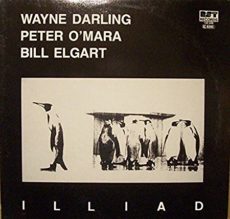
Bill Elgart or Billy Elgart was born on November 9, 1942 in Chelsea, Massachusetts. A student of Alan Dawson, he studied at the Berklee College of Music. By the 1960s he was playing with Carla Bley, Paul Bley, Marion Brown, Sam Rivers, Lowell Davidson, Mark Levinson, Roswell Rudd, John Tchicai, Jack Walrath and Glenn Ferris. In 1968 he made his recording debut on Mr. Joy, with Paul Bley and Gary Peacock.
Moving to Europe in 1976, Bill settled first in Salzburg, Austria and later in Ulm, Germany. He played with Karl Berger, Dave Holland, Ed Schuller and Wayne Darling over the course of the 1980s and 1990s. He was a member of the group Zollsound 4 with Carlo Mombelli, Lee Konitz, and Thomas Zoller. He played in the Sundial Trio with Peter O’Mara from 1982 to 1990, and in 1991 he worked with Caoma alongside Ed Schuller, Sigi Finkel and Tomasz Stanko. He and Stanko also played with Vlatko Kucan in the 1990s.
Elgart worked on the Annemarie Roelofs Projekt, alongside Berger, Frank Möbus, Vitold Rek, and Ingrid Sertso. He has performed as a sideman on recordings by Leszek Zadlo, Manfred Bründl, Kenny Wheeler, Carlo Mombelli, Charlie Mariano, Arrigo Cappelletti, Franco D’Andrea, Wolfgang Lackerschmid, Claudio Fasoli, Sigi Finkel and Paolino Dalla Porta. He has also worked with Tim Berne, Barre Phillips, Eddie Gómez, Conny Bauer, Sheila Jordan, David Friedman and Matthias Schubert. Drummer Bill Elgart continues to perform and record.
More Posts: drums
Daily Dose Of Jazz…
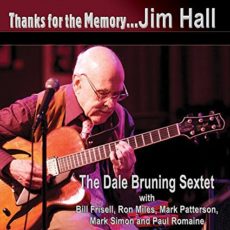
Dale Bruning was born on November 8, 1934 in Carbondale, Pennsylvania and as a small child played piano. When he was in high school he moved to the guitar and went on to become adept at playing tuba, double bass, vibraphone and drums. He was influenced by a wide range of jazz and classical musicians and composers. It was on guitar, however, that he went on the road with various small groups before playing for four years in US Navy bands.
In 1961, he led the house band on The Del Shields Show on NBC in Philadelphia, Pennsylvania that attracted him considerable attention. He performed during the Fifties and following decades were Dennis Sandole, his mentor and principal tutor, Jim Hall, Red Norvo, Dave McKenna, Dizzy Gillespie, Erroll Garner, Marian McPartland, Michael Moore, Gus Johnson, Bill Frisell, and Chet Baker.
He also recorded with bassist Ted Alexander, Nicky DeMatteo and Tony Luis in the late 1950s to early Sixties, and with Rich Chiaraluce in the early 70s. Moving to Denver, Colorado for domestic reasons, he has remained a resident and became an educator in 1960. His playing is inventive in conception and fluid in execution albeit regional in recognition. Though he won many awards, it was not until the late NIneties that Bruning’s reputation began to spread both nationally and internationally.
His book published in 1997, The Dale Bruning Jazz Guitar Instruction Book Series, Vol. I: Phrasing and Articulation, along with new albums received critical acclaim. His profile rose with a series of theme concerts, conceived in collaboration with writer-producer Jude Hibler, that celebrated the music of Duke Ellington, Hoagy Carmichael, Harold Arlen, Harry Warren, Johnny Mandel, Michel Legrand, Cole Porter and Kurt Weill, among others.
Guitarist Dale Bruning continues to educate, has also composed several songs, is an accomplished arranger and continues to perform.
More Posts: guitar
Daily Dose Of Jazz…
Barbara Sfraga was born on October 28, 1956 in Bay Shore, Long Island, New York. Pursuing her vocal talent she attended Long Island University from 1974-76 before moving to Connecticut, attending the University of Bridgeport from 1976-78 and majoring in classical voice.
After discovering the music of Ella Fitzgerald, Sarah Vaughan and Anita O’Day, she became seriously interested in jazz singing. This was soon followed with her discovery of the innovations of Mark Murphy, Betty Carter and Lambert, Hendricks & Ross, and in the 1980s, she began singing jazz in New York clubs.
In 1996, Barbara founded In Concert with our Community, an organization whose initial goal was using cultural events to raise funds for children’s organizations. 1998 saw her recording her debut album as a leader titled Oh, What A Thrill, bringing in guests as Mark Murphy, who wrote the liner notes and pianist Fred Hersch.
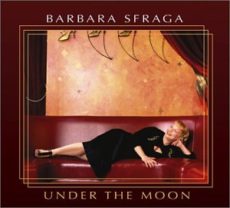
In 2003, her sophomore album, Under the Moon, was released by the Chicago-based A440 label. the risk-taking jazz vocalist and lyricist Barbara Sfraga, who sings in the avant-garde and post bop genres, continues to perform, tour and write.

More Posts: vocal