

Daily Dose Of Jazz…
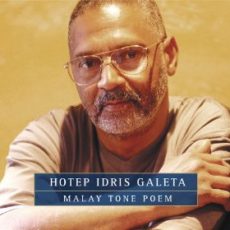
Hotep Idris Galeta was born Cecil Galeta on June 7, 1941 in Crawford, Cape Town, South Africa but according to local custom he was more commonly known as Cecil Barnard, using his father’s first name instead of a last name.
In his teens Hotep played with some of the best jazz musicians in South Africa; Abdullah Ibrahim (Dollar Brand) and Lami Zokufa who introduced him to bebop and hard bop. Galeta left South Africa clandestinely for the United Kigdom after the Sharpeville Massacre made it impossible for anyone but white artists to have quality of life. After a year in the UK, he moved to the United States.
Once in the United States, he played and recorded with Herb Alpert, John Handy, Bobby Hutcherson, Elvin Jones, Hugh Masekela, Jackie McLean, Mario Pavone, Joshua Redman and Archie Shepp. Outside jazz he performed and recorded with David Crosby and the Byrds. In 1985, Jackie McLean invited him to teach at The Hartt School of the University of Hartford, where he taught until he returned to South Africa in 1991, following the collapse of apartheid.
Once home he recorded, performed, and taught at the University of Fort Hare, held the musical directorship of a national music education program for high schools, and coordinator of music outreach programs in Cape Town. He has been Project Manager for the establishment of a school of jazz and a multimedia audio visual production center at the University of Fort Hare’s new urban campus in the east coast South African city of East London in the Eastern Cape Province. Pianist, composer and bandleader Hotep Idris Galeta passed away in Johannesburg, South Africa on the November 3, 2010 following an asthma attack.

Uplift Someone’s World

More Posts: piano
Daily Dose Of Jazz…
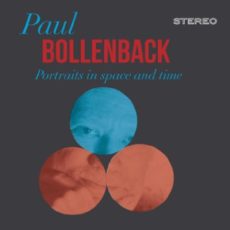
Paul Bollenback was born on June 6, 1959 in Hinsdale, Illinois. The guitarist first got his hands on a nylon stringed guitar when he was seven years old. It was a gift from his dad, who played trumpet, adored music as much as the his son. He developed a taste for the exotic over the course of the three-year period his family lived in India at the age of 11 years old.
At the age of 14, the budding guitarist returned to the states with his family, where he discovered the delights of rock & roll. Around this time he started to play the electric guitar, but it was when Paul discovered Miles Davis that his musical development took a major turning point.
Bollenback studied music at the University of Miami then went on to eight more years of private instruction under the tutelage of Asher Zlotnik in Baltimore. By 1993 he embarked on a European tour and received a National Endowment for the Arts grant in conjunction with the Virginia Commission on the Arts, for New Music for Three Jazz Guitars.
He was named 1997 Musician of the Year by The Washington Area Music Awards, SESAC honored two of his original pieces, Romancin’ the Moon and Wookies’ Revenge, both of which were included on the album Reboppin’ by Joey DeFrancesco. He joined the music faculty at American University, has been an artist-in-residence at the Litchfield Jazz Festival Summer Music School and is a featured artist on the bill of the Summer Guitar & Bass Workshop offered by Duquesne University. T
Throughout his career Paul has performed on among others Entertainment Tonight, The Tonight Show, The Today Show, Joan Rivers, and Good Morning America. He has shared the stage with a long list of musical artists, including Charlie Byrd, Arturo Sandoval, Herb Ellis, Stanley Turrentine, Spyro Gyra’s Scott Ambush, Della Reese, Carol Sloane and Gary Thomas among others.
Guitarist Paul Bollenback, who uses modern quartal harmony, and has eight albums under his name as a leader to date since his debut of Original Vision in 1995, continues to teach, record and perform as both leader and sideman.
Jazz Is Global – Share
More Posts: guitar
Daily Dose Of Jazz…
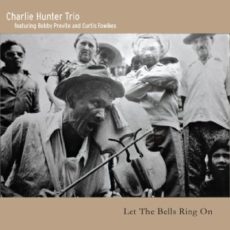
Charlie Hunter was born on May 23, 1967 in Rhode Island but by age four his mom packed him and his younger sister in an old yellow school bus and headed west. After several years living on a commune in Mendocino County they settled in Berkeley, California and graduating from Berkeley High School and taking lessons from guitar teacher Joe Satriani. At eighteen he moved to Paris, becoming a professional busker, working 8 to 12 hours a day to make ends meet.
Returning to the Bay area, he played a seven-string guitar and organ in Michael Franit’s political rap group, The Disposable Heroes of Hiphoprisy. Since the 1993 debut of his self-titled Charlie Hunter Trio with John Ellis on sax and Jay Lane on drums, he has recorded seventeen albums. He co-founded Garage A Trois, a jazz fusion band with Stanton Moore and Sherik, has collaborated with Bobby Previte on the ongoing project Groundtruther, and has recorded and toured with Previte’s The Coalition of the Willing.
Charlie has recorded with Christian McBride, has played in the band T.J. Kirk, that merged the music of Thelonious Monk, James Brown and Rahsaan Roland Kirk. He is an inaugural member of the Independent Music Awards judging panel to support independent artists, and over the years has performed and recorded with Erik Deutch, Tony Mason, Eric Kalb, Ben Goldberg, Ron Miles, Scott Amendola, and Curtis Fowlkes, continuing to perform, compose and tour.
Give The Gift Of Knowledge
More Posts: guitar
Daily Dose Of Jazz…
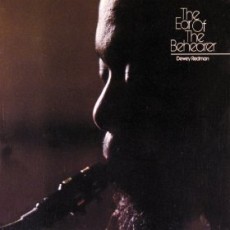
Walter Dewey Redman was born May 17, 1931 in Fort Worth, Texas. He attended I.M. Terrell High School and played saxophone in the school band with Ornette Coleman, Prince Lasha and Charles Moffett. After high school he briefly enrolled in the electrical engineering program at Tuskegee Institute in Alabama but became disillusioned with the program and returned home to Texas. In 1953, he earned a bachelor’s degree in Industrial Arts from Prairie View Agricultural and Mechanical University and while attending switched from clarinet to alto saxophone, eventually to tenor.
Following his degree, Redman served for two years in the Army and upon his discharge he began working on a master’s degree in education at the University of North Texas. While there he taught music to fifth graders in Bastrop, Texas and worked as a freelance saxophonist at night and on weekends around Austin, Texas. By 1957 he graduated in Education with a minor in Industrial Arts.
1959 saw him moving to San Francisco, California as result of an early collaboration with clarinetist Donald Rafael Garrett. He would go on to perform with Ornette Coleman, from 1968 to 1972 and recording New York Is Now!, among others. Dewey was also a part of Keith Jarrett’s American Quartet from 1971 – 1976, whose album The Survivors’ Suite was voted Jazz Album of the Year by Melody Maker in 1978.
In the mid-70s Redman formed the quartet Old And New Dreams with Coleman alumni Don Cherry, Charlie Haden and Ed Blackwell. They recorded four albums in the period to 1987. He performed and recorded as an accompanying musician with jazz musicians who performed in varying styles within the post-1950s jazz idiom, including drummer Paul Motian, Pat Metheny, Jane Bunnett, Anthony Cox, Cameron Brown, Billy Hart, Matt Wilson, Roswell Rudd, Randy Weston, Clifford Thornton, Jon Ballantyne, Michael Boclan, David Bond, Leroy Jenkins, Dane Belany and Michel Benita.
As a leader with more than a dozen recordings, Dewey established himself as one of the more prolific tenor players of his generation. Though generally associated with free jazz, he would also play standards and ballads reminiscent of the blues and post-bop mainstream and would sometimes hum into his sax while performing.
Tenor saxophonist Dewey Redman, who occasionally played alto saxophone, the Chinese suona and clarinet mainly in the free jazz genre, passed away from liver failure in Brooklyn, New York, on September 2, 2006. He was the subject of an award-winning documentary film Dewey Time and recorded two albums with his son Joshua.
Inspire A Young Mind
Daily Dose Of Jazz…
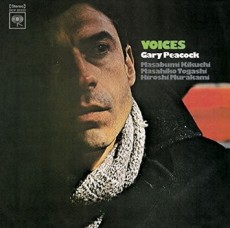
Gary Peacock was born May 12, 1935, in Burley, Idaho and studied the bass as a youth. After military service in Germany, during the early Sixties he worked on the West Coast with Barney Kessel, Bud Shank, Paul Bley and Art Pepper. Moving to New York he continued working with Bley as well as with Paul Motian in the Bill Evans Trio, and with Sunny Murray in the Albert Ayler trio. He also played some live dates with Miles Davis as a temporary substitute for Ron Carter.
In the late 1960s Peacock spent time in Japan, abandoning music temporarily to study Zen philosophy. After returning to the U. S. in 1972, he studied biology at the University of Washington, Seattle and taught music theory at Cornish College of the Arts from 1976 to 1983.
In 1983 Gary joined Keith Jarrett’s Standard Trio with Jack DeJohnette and the trio releaseded Standards Vol. 1 & 2 and Standards Live. Under Peacock’s leadership the trio recorded earlier in 1977 Tales of Another on the ECM label.
Peacock has recorded a dozen albums under his leadership, six releases as part of the group Tethered Moon and another sixty-two albums as a sideman with Bill Connors, Don Elis, Clare Fischer, Marc Copland, Marilyn Crispell, Barney Kessel, Prince Lasha, Sonny Simmons, Don Pullen, Bud Shank, Ravi Shankar, Ralph Towner, Mal Waldron, Tony Williams and Jimmy Woods to name a few.
He has composed for two film shorts, performed on three documentaries, performed as the Keith Jarrett Trio on the Most Martha soundtrack, and has appeared on television. Double bassist Gary Peacock continued to perform, tour and record until he passed away on September 4, 2020, at his home in Upstate New York. He was 85.
Uplift Someone’s World
More Posts: bass