

Daily Dose Of Jazz…
Gene Perla was born on March 1, 1940 in Woodcliff Lake, New Jersey. He studied piano at Berklee School of Music and Boston Conservatory before switching to bass.
In 1969 Perla played with Woody Herman, as well as Thad Jones/Mel Lewis, Sarah Vaughan, Miles Davis, Nina Simone, Jeremy Steig, Elvin Jones and Sonny Rollins in the early Seventies.
During the decade Gene founded PM Records and later headed Plug Records and under his leadership the labels recorded Dave Liebman, Elvin Jones, Steve Grossman, Pat La Barbera and Jerry Bergonzi. Forming the Stone Alliance with Grossman and Don Alias in 1975, he continues to perform.
As a sideman he has recorded several albums with Frank Foster, Elvin Jones and Mickey Tucker. Bassist Gene Perla currently teaches at Lehigh University and the New School of Jazz & Contemporary Music.

Dose A Day-Blues Away
More Posts: bass
Daily Dose Of Jazz…
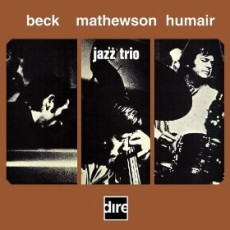
Ron Mathewson was born 19 February 1944 Lerwick, Shetland Isles, Scotland into an unusually musical household. At eight years old he was studying classical piano, continuing his studies and performing classical piano until he reached sixteen. A year earlier he started playing bass guitar and his talent was noted and encouraged by Shetland musician, Peerie Willie Johnson.
In 1962, Mathewson was in Germany playing professionally with a Scottish Dixieland band, then in London he also performed with various jazz and R&B bands through to the middle of the decade. Around this time he was also a member of the Kenny Clarke-Francy Boland Big Band.
By1966 Ron became a member of the Tubby Hayes band, with which he performed until 1973. From 1975 on in to the 1990s, he was frequently a participant in various Ronnie Scott recordings and concerts.
In 1983, he appeared on Dick Morrissey’s solo album After Dark with Jim Mullen, John Critchenson, Martin Drew and Barry Whitworth. In 2007 a benefit concert was held for him after he had an accident that left him recovering from two broken hips, a broken wrist and a burst artery.
Best known for his years spent with Scott, the double bassist and bass guitarist has recorded with Stan Getz, Joe Henderson, Ben Webster, John Taylor, Gordon Beck, Philly Joe Jones, Roy Eldridge, Tony Oxley, Kenny Wheeler, Oscar Peterson, John Stevens, Terry Smith, Bill Evans, Phil Woods and His European Rhythm Machine, Acoustic Alchemy, Ian Carr, Spontaneous Music Ensemble, Ray Nance and Charles Tolliver, among numerous others.
Jazz Is Global – Share
Daily Dose Of Jazz…
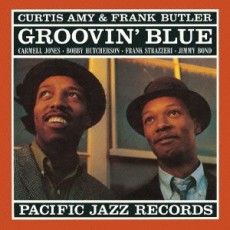
Frank Butler was born on February 18, 1928 in Kansas City, Missouri. A drummer from childhood he later moved west, becoming associated in large way with the West Coast school.
Never becoming well known or publicly popular Butler was highly regarded by fellow musicians. He performed and recorded with Duke Ellington, Dave Brubeck, John Coltrane and Art Pepper in the decades of the Fifties and Sixties.
In the mid-to-late 1950s, he was a member of the Curtis Counce Quintet and recorded with Joyce Collins, Ben Webster, Hampton Hawes, Elmo Hope, Fred Katz and Harold Land. By the Sixties he was co-leading a group with Curtis Amy, and recording with Phineas Newborn, Miles Davis on Seven Steps To Heaven.
However, sidelined for many years by his heroin addiction, he did not record an album under his own name until the 1970s. During this period he also recorded with Dolo Coker, Kenny Drew and Teddy Edwards. Drummer Frank Butler passed away on July 24, 1984 in Ventura, California at the age of 56.
Give A Gift Of Jazz – Share
More Posts: drums
Daily Dose Of Jazz…
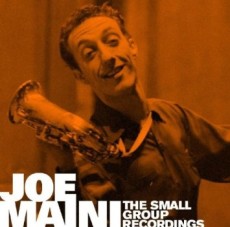
Joe Maini was born on February 8, 1930 in Providence, Rhode Island. Early in his career he played alto saxophone in the big bands of Alvino Rey, Johnny Bothwell and Claude Thornhill. He moved to Los Angeles, California and found work as a session musician and continued working in big bands, usually holding the lead alto chair.
Some of the leaders Joe worked with over the course of his career were Terry Gibbs, Onzy Matthews, Gerald Wilson, Bill Holman, Louis Bellson, Jack Montrose, Dan Terry, Johnny Mandel and Shelly Manne. He recorded in small group settings with Clifford Brown and Max Roach, Zoot Sims, Jack Sheldon, Red Mitchell, Lin Halliday, Kenny Drew and Jimmy Knepper. He also worked with his close friend, comedian Lenny Bruce.
Alto saxophonist Joe Maini passed away at age 34 in Los Angeles on May 7, 1964. History states it was while playing Russian roulette as the cause, but family and witnesses contend it was simply a firearms accident. Forty-four years after his death, Lone Hill Jazz issued a four-CD set with many of his small group recordings.
Take A Dose On The Road
More Posts: saxophone
Daily Dose Of Jazz…
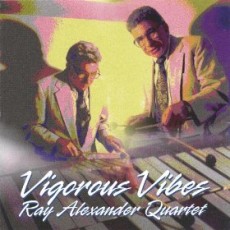
Ray Alexander was born on February 7, 1925 in Lynbrook, Long Island, New York. His mother was a concert pianist who began him on the instrument as a very young child. Asthma ended his ambitions to be a trumpeter but after hearing Gene Krupa his interest turned towards drums. He education also came from listening to Big Sid Catlett, Art Tatum, Dizzy Gillespie and Charlie Parker in the clubs.
Ray started his musical career as a drummer, playing with Claude Thornhill, Bobby Byrne, the Dorsey Brothers, Stan Getz, Joe Venuti, Mel Torme, Johnny Smith, Chubby Jackson, Stuff Smith and numerous others. Switching to the vibraphone he worked with George Shearing, Charlie Barnett, Bil Evans, Anita O’Day and Mel Lewis, as well as his own quartet.
In the early ’70’s he joined with Mousey Alexander and formed the Alexanders the Great quartet which was booked frequently at the new Half Note uptown, as well as gained notoriety and bookings through the city.
By 1983 Ray put out an album called “Cloud Patterns“, recorded live at Eddie Condon’s featuring Albert Daily on piano, Harvie Swartz on bass, Ray Mosca on drums and Pepper Adams on baritone saxophone. He would go on to work with Kenny Barron, Warren Vache Jr., Bob Kindred, Harvie Swartz, Oliver Jackson, Mac Chrupcala, John Anter and Marshall Wood, tour England and nearby European countries. Vibraphonist and drummer Ray Alexander passed away on June 9, 2002 in new Hyde Park, New York as a result of complications from elective surgery.
Give The Gift Of Knowledge
More Posts: drums,vibraphone