

Daily Dose Of Jazz…
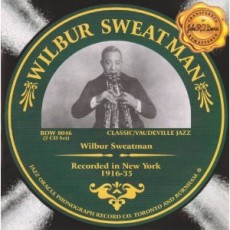
Wilbur C. Sweatman was born in Brunswick, Missouri on February 7, 1882 and started playing violin but took up clarinet. He toured with circus bands in the late 1890s, briefly played with the bands of W.C. Handy and Mahara’s Minstrels before organizing his own dance band in Minneapolis, Minnesota by late 1902.
It was there that Sweatman made his first recordings on phonograph cylinders in 1903 for a local music store. These included what is reputed to have been the first recorded version of Scott Joplin’s “Maple Leaf Rag”; however, no copies of these are known to exist today. By 1908, Sweatman was in Chicago as bandleader at the Grand Theater where he attracted notice and in a 1910 article was referred to his nickname, “Sensational Swet.”
By 1911, he had moved to the vaudeville circuit full-time, developing a successful act of playing three clarinets at once, went on to write a number of rags including his most famous “Down Home Rag”. He would move back to New York, tour major vaudeville circuits, befriend Scott Joplin and become his executor, record for Emerson Records, and the first Black to make recordings as Jazz or “Jass” as it was known then and one of the first to join ASCAP, and several notable musicians passed through his band, including Duke Ellington, Coleman Hawkins and Cozy Cole.
Wilbur Sweatman, ragtime and Dixieland jazz composer, bandleader and clarinetist who continue to record for Gennett, Edison, Grey Gull and Victor record labels, passed away in New York City on March 9, 1961.
More Posts: clarinet
Daily Dose Of Jazz…
John Robichaux: The Forgotten King of New Orleans Dance Bands
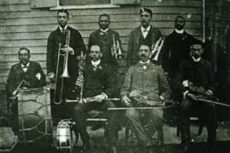
Before there was Louis Armstrong, before jazz became the word on everyone’s lips, there was John Robichaux—a Creole musician born January 16, 1866, in Thibodaux, Louisiana, who quietly ruled New Orleans’ dance scene for nearly half a century.
A Multi-Instrumentalist’s Rise
Picture a young man learning brass bass, alto saxophone, and drums, then maturing into a 25-year-old bass drummer with the prestigious Excelsior Brass Band—one of New Orleans’ most respected musical institutions. But Robichaux wasn’t content to simply keep the beat. From 1892 to 1903, while still performing with the Excelsior, he was simultaneously leading his own ensembles and adding violin to his growing arsenal of instruments. The man believed in keeping busy.
The Bandleader New Orleans Trusted
Here’s what makes his story remarkable: Robichaux’s bands weren’t just popular—they were the bands to hire if you wanted class, precision, and professionalism. At one point in 1913, he was conducting a staggering 36-piece orchestra. Imagine coordinating that many musicians in the early 20th century, long before modern amplification or recording technology!
His reputation attracted New Orleans’ finest musicians—legends like guitarist Bud Scott, clarinetist Lorenzo Tio Jr., and cornetist Manuel Perez all played under his baton. When you could attract that caliber of talent, you weren’t just running a band—you were running an institution.
Forty-Six Years at the Top
For an astonishing 46 years, Robichaux was the most continuously active dance bandleader in New Orleans. Forty-six years! That’s longer than most entire careers, a testament to both his musical excellence and his business acumen in an incredibly competitive city.
When History Changed the Game
But history has a way of complicating even the greatest success stories. When Louisiana’s Black Code amendment passed in 1894, it reclassified Creoles of color, throwing Robichaux’s refined Creole orchestras into direct competition with the grittier Uptown Negro bands that played a rawer, more improvisational style. The musical landscape was shifting beneath his feet, gradually eroding the dominance he’d worked decades to build.
A Prolific Legacy
Still, Robichaux persisted with remarkable productivity. Over his career, he composed more than 350 songs and orchestral arrangements—a staggering output that speaks to both his creativity and work ethic. He remained primarily in New Orleans, occasionally touring with the traveling musical revue One Mo’ Time, but always returning to the city that made him.
The Bridge Between Eras
When John Robichaux died of natural causes in 1939, an entire era of New Orleans music died with him. He represents a crucial bridge between the city’s formal, European-influenced dance orchestras and the raw, revolutionary jazz that would soon conquer the world. His bands were where young musicians learned discipline, arrangement, and professionalism before they went off to create something entirely new.
History remembers the revolutionaries, but it often forgets the masters who created the foundation upon which revolutions are built. John Robichaux deserves better than footnote status—he deserves recognition as one of the architects of New Orleans’ musical golden age.
More Posts: bandleader,drums,violin
Daily Dose Of Jazz…
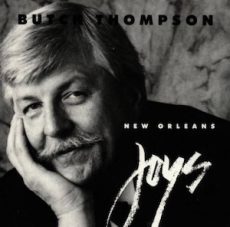
Richard Enos “Butch” Thompson was born on November 28, 1943 in St. Croix, Minnesota, began playing piano at the early age of three, and began taking lessons at age six. At Stillwater Area High School, he played clarinet in the band and in 1962 he joined the Hall Brothers New Orleans Jazz Band in Minneapolis, Minnesota and remained with them for twenty years.
>From 1974 to 1986, he was a regular and the original pianist on the radio show A Prairie Home Companion. From its inception in the 1960s he led the Butch Thompson Trio.
The 1970s saw Thompson’s recordings gaining popularity in Europe and he toured the continent extensively during the decade and into the 1980s, both as a solo artist and as a band leader or member.
He wrote for jazz publications and produced a radio show, Jazz Originals, for KBEM-FM in Minneapolis. Pianist and clarinetist Butch Thompson, best known for his ragtime and stride performances, died on August 14, 2022.

More Posts: bandleader,clarinet,history,instrumental,jazz,music,piano
Daily Dose Of Jazz…
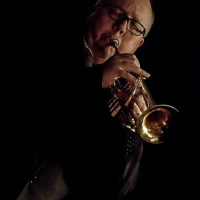
Martin Jones was born in Hull, England on October 14, 1955. He gained his experience playing trumpet first in school bands, and then Hull school bands with many concerts with orchestra’s, concert bands and a jazz swing band.
Leaving those to form his own bands he started working with his own band commercially in the jazz field in the late Seventies. By 1982 Martin was working professionally on the club and theatre circuits in cabaret. He started a residency at two clubs in the Latin Quarter in Paris. Returning to the UK he was trumpeter, front-man and vocalist at the City of London Tavern. He worked between London and Paris over the next two years, eventually joining the international cabaret group, The English Eccentric Ragtime Four.
He became a session trumpet player and vocalist in the London area. then spent some time working for New York Network Television while he was with this band. In 1987 Jones left the band to tour Europe, worked doing broadcasts on several TV shows and eventually left London and returned to his roots back in Hull.
He soon got work with a regional band called The Casablanca Boys, led six of his own bands and taught trumpet and vocal at The Keech School of Music. He developed a new Jazz Course at Access to Music in partnership with East Riding College as well as Jazz Summer Schools.
Trumpeter Martin Jones has currently published eleven books and continues performing, recording and teaching.

More Posts: educator,history,instrumental,jazz,music,trumpet
Daily Dose Of Jazz…
Bernard Sylvester Addison was born on April 15, 1905 in Annapolis, Maryland. At an early age, he learned mandolin and violin, and after moving to Washington, D.C. in 1920 he played banjo, initially with Claude Hopkins.
Moving to New York City he worked with Sonny Thompson and recorded for the first time in 1924. During the 1920s, he dropped the banjo for the acoustic guitar. The 1920s and 1930s saw Bernard playing with Louis Armstrong, Adelaide Hall, Fletcher Henderson, Bubber Miley, Art Tatum, and Fats Waller. Addison recorded with Red Allen, Coleman Hawkins, Horace Henderson, Freddie Jenkins, Sara Martin, Jelly Roll Morton, and Mamie Smith.
In 1936, John Mills of the Mills Brothers died, and Addison replaced him on guitar. For two years he toured and recorded with the Mills Brothers, increasing his popularity. After departing the Mills Brothers, he had little trouble finding work. He went on to record with Benny Carter and Mezz Mezzrow.
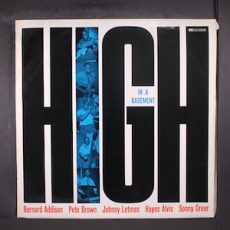
He played with Stuff Smith and recorded with Billie Holiday. In 1940, he recorded with Louis Armstrong and Sidney Bechet. He began to lead bands until he was drafted during World War II. In the late 1950s, he reunited with Henderson and played guitar for the Ink Spots. He performed at the Newport Jazz Festival with Eubie Blake in 1960 and recorded a solo album as a leader, Pete’s Last Date, and unfortunately was reissued under the name of saxophonist Pete Brown.
Guitarist Bernard Addison, who spent the remaining thirty years of his career teaching, died on December 18, 1990 at 85 in Rockville Centre, New York.
More Posts: guitar,history,instrumental,jazz,music