


Daily Dose Of Jazz…
Wilton Lewis Felder was born August 31, 1940 in Houston, Texas and is both saxophonist and bass player. He is best known as an original member of The Jazz Crusaders, founded while still in high school, along with Joe Sample, Wayne Henderson and Stix Hooper.
The Jazz Crusaders evolved from a straight-ahead jazz combo into a pioneering jazz-rock fusion group, with a soul music influence. They dropped jazz from the name and became simply known as The Crusaders. Felder worked with the original group for over thirty years, and continues to work in its current versions, which often features other founding members.
Felder also worked as a west coast studio musician, mostly playing electric bass, for various soul and R&B musicians. He was one of the in-house bass players for Motown Records when the label opened operations in Los Angeles in the early 70s working with The Jackson 5, Marvin Gaye, America, Billy Joel, Joni Mitchell and Michael Franks.
Wilton worked with Dizzy Gillespie, John Klemmer, Richard Groove Holmes, Grant Green and Milt Jackson among others during his studio years. His solo release titled “Secrets” featured vocalist Bobby Womack singing the hit “(No Matter How High I Get) I’ll Still Be Looking Up To You”. Wilton Felder continues to perform and record.
Daily Dose Of Jazz…
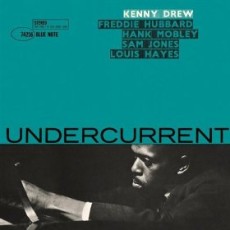
Kenneth Sidney Drew was born on August 28, 1928 in New York City. He first recorded with Howard McGhee in 1949, and over the next two years recorded with Buddy DeFranco, Coleman Hawkins, Milt Jackson, Charlie Parker, and Dinah Washington. He then led many recording sessions throughout the 1950s, and appeared on John Coltrane’s “Blue Train”.
Along with several other American jazz musicians who went to Europe, in 1961 Kenny moved to Copenhagen, Denmark. While he sacrificed much of the interest of the American jazz audience, he gained a wide following across Europe. He became a well-known figure on the Copenhagen jazz scene, recording many sessions with the Danish bassist Niels-Henning Orsted Pederson.
Drew along with Dexter Gordon appeared on screen in Ole Ege’s theatrically released hardcore pornographic film Pornografi – en musical in 1971), for which they composed and performed the score. He recorded for Blue Note, Xanadu, Steeplechase, Riverside, Verve, Soul and Storyville record labels leaving a catalogue of forty albums as a leader and another 34 as a sideman performing with the likes of Toots Thielmans, Sonny Rollins, Ben Webster, Chet Baker, Grant Green, Dizzy Gillespie and Dexter Gordon among others.
His touch has been described as “precise” and his playing a combination of bebop-influenced melodic improvisation and block chords, including “refreshingly subtle harmonizations”. Pianist Kenny Drew He passed away on August 4, 1993 in Copenhagen, leaving his son Kenny Jr. to carry on the family’s jazz piano legacy.
More Posts: piano
Daily Dose Of Jazz…
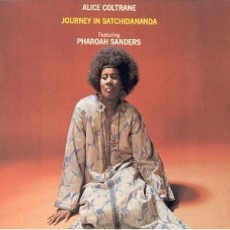
Alice Coltrane, née McLeod, was born on August 27, 1937 in Detroit, Michigan. She studied classical music and also jazz with Bud Powell and began playing professionally in Detroit, with her own jazz trio and as a duo with vibist Terry Pollard. It was while playing with the Terry Gibbs Quartet in 1962 that she met John Coltrane. Replacing McCoy Tyner as pianist with Trane’s group in 1965, the two married the following year and continued playing together until his death in 1967. She is the mother of daughter Michelle, drummer John Jr., and saxophonists Oran and Ravi.
After her husband’s death she continued to play with her own groups, later including her children, moving into more and more meditative music. Alice was one of the few harpists in the history of jazz and her essential recordings were made in the late Sixties and early 1970s for Impulse Records.
Coltrane became a devotee of the Indian guru Sathya Sai Baba in 1972, moved to California and established the Vendantic Center in 1975. By the late Seventies she had changed her name to Turiyasangitananda, became the swamini or spiritual director of Shanti Anantam Ashram established in 1983 near Malibu, California. Only on rare occasions would she perform publicly under the name Alice Coltrane.
The 1990s saw renewed interest in her work, which led to the release of the compilation Astral Meditations, and in 2004 she released her comeback album Translinear Light. Following a twenty-five-year break from major public performances, she returned to the stage for three U.S. appearances in the fall of 2006, culminating on November 4 with a concert in San Francisco with her son Ravi, drummer Roy Haynes and bassist Charlie Haden.
Alice Coltrane, pianist, organist, harpist and composer, passed away of respiratory failure on January 12, 2007 in Los Angeles, California.
Daily Dose Of Jazz…
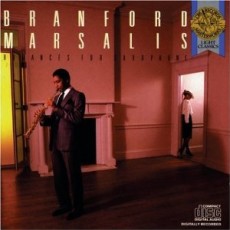
Branford Marsalis was born August 26, 1960 in Breaux Bridge, Louisiana into a musical family led by the patriarch, Ellis. In the summer of 1980, while still at Berklee College of Music, Marsalis toured Europe playing alto and baritone saxophone in an art Blakey large ensemble that led to big band experience with Lionel Hampton and Clark Terry with a return the Art Blakey in the Jazz Messengers with his brother Wynton.
By 1985 he released his first recording, Scenes in the City, as well as guest appearances with Miles Davis and Dizzy Gillespie. In 1985 he joined Sting and The Police along with jazz drummer Omar Hakim, bassist Darryl Jones and keyboardist Kenny Kirkland, recording and performing until 1999.
Branford is primarily known for his work in jazz as the leader of his own quartet, with original member Jeff “Tain” Watts drums, bassist Eric Revis replacing Robert Hurst on bass and pianist Joey Calderazzo replacing Kenny Kirkland after his death. The quartet has toured and recorded extensively, receiving a Grammy in 2001 for its album “Contemporary Jazz”.
After a two-decade association with Columbia Records serving as Creative Consultant and producer for jazz recordings between 1997 and 2001, Marsalis founded his own Marsalis Music label in 2002. producing and releasing his own band along with Harry Connick Jr., Miguel Zenon, Doug Wamble, Alvin Batiste, Michael Carvin, Jimmy Cobb, Bob French and soon to be released Claudia Acuna.
Marsalis has placed great emphasis on his classical music endeavors since the 2001 release of the album “Creation” and symphony orchestra and chamber ensemble performances worldwide became a significant part of his itinerary, touring the U.S. with Philarmonia Brasileira. He has won a 2010 Drama Desk Award for “Outstanding Music in a Play” and was nominated for a 2010 Tony for August Wilson’s Broadway revival of Fences.
Branford has been an educator on the university level at Michigan State, San Francisco State and presently at North Carolina Central University. After Hurricane Katrina he joined forces with Harry Connick Jr. and created the Musician’s Village, undertaken by New Orleans Area Habitat for Humanity in the upper 9th ward, providing dozens of musicians of modest means with the opportunity to own decent, affordable housing. They received the Jefferson Awards for Public Service.
More Posts: saxophone
Daily Dose Of Jazz…
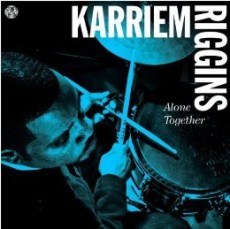
Karriem Riggins was born on August 25, 1975 in Detroit, Michigan and growing up often played drums with his father Emmanuel’s group. He began producing hip hop in middle school and continued through Southfield High School, studying music while attending. At 17 he joined Betty Carter’s band “Jazz Ahead” soon after graduating.
In 1994 when he was 19, Karriem moved to New York City joining the Ray Brown Trio in 1998. He has also recorded and performed with Herbie Hancock, Donald Byrd, Hank Jones, Mulgrew Miller, Diana Krall, Milt Jackson, Oscar Peterson, Cedar Walton, Roy Hargrove and Bobby Hutcherson.
Aside from jazz, Riggins has done production work for hip-hop artists including Erykah Badu, Common, Kanye West, Talib Kweli, The Roots and Dwele among others. He has collaborated with J. Dilla until his death in 2006, finishing the posthumously released album “The Shining”, and with the hip hop multi-instrumentalist Madlib, performing on his 2007 album Yesterday’s Universe. He also produced a portion of the soundtrack for the 2007 film Smokin’ Aces.
His debut album on the Stone Throw label was released in three parts, the first half “Alone” was released digitally and on vinyl on July 31, 2012, the second half “Together” on October 2, with the complete release “Alone Together” later that same year on October 22. Karriem Riggins, jazz drummer, hip hop producer and sometime rapper currently performs, records and tours.
Karriem Riggins: 1975 / Drums

More Posts: drums