

Daily Dose Of Jazz…
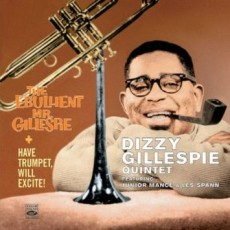
Dizzy Gillespie was born John Birks Gillespie on October 21, 1917 in Cheraw, South Carolina, the youngest of nine children of James and Lottie Gillespie. His father, a local bandleader, made instruments available to the children. He started playing the piano at the age of four and taught himself how to play the trombone as well as the trumpet by the age of twelve. From the night he heard his idol, Roy Eldridge, play on the radio, he dreamed of becoming a jazz musician. Receiving a music scholarship to the Laurinburg Institute in North Carolina, he attended for two years before accompanying his family when they moved to Philadelphia.
Gillespie’s first professional job was with the Frank Fairfax Orchestra in 1935, after which he joined the respective orchestras of Edgar Hayes and Teddy Hill, essentially replacing Roy Eldridge as first trumpet in 1937 and making his first recording as part of the band on King Porter Stomp. He would move on to play with Cab Calloway, alongside Cozy Cole, Milt Hinton and Jonah Jones until an altercation with Calloway got him fired. During his period he started writing big band music for bandleaders like Woody Herman and Jimmy Dorsey while freelancing with a few bands – most notably Ella Fitzgerald’s orchestra, comprised of members of the late Chick Webb’s band, in 1942. Avoiding service in World War II, he joined the Earl Hines band followed by a stint with Billy Eckstine’s big band, got reunited with Charlie Parker and finally left to play with a small combo of quintet size.
A forerunner of the evolution of bebop along with Parker, Monk, Bud Powell, Kenny Clarke, and Oscar Pettiford, Dizzy helped shape a new vocabulary of musical phrases. They jammed at Minton’s Playhouse and Monroe’s Uptown House with compositions like Groovin’ High, Woody ‘n’ You, Salt Peanuts and A Night In Tunisia that also introduced Afro-Cuban rhythms.
As an educator Gillespie taught or influenced many of the young musicians on 52nd Street including Miles Davis, Max Roach, Fats Navarro, Clifford Brown, Lee Morgan, Chuck Mangione and even balladeer Johnny Hartman about the new style of jazz, but after ambivalent or hostile reception in Billy Berg’s Los Angeles club, he decided to lead his own big band, though unsuccessful at his first attempt in 1945. He went on to work with Milt Jackson, John Coltrane, Lalo Schifrin, Ray Brown, Kenny Clarke, James Moody, J.J. Johnson and Yusef Lateef, whole appearing as a soloist for Norman Granz’s Jazz at the Philharmonic.
In 1948 Dizzy lost his ability to hit the B-flat above high C due to an automobile hitting the bicycle he was riding. He won the case, but the jury awarded him only $1000, in view of his high earnings up to that point. Not to be sidelined, he went on tour for the State Department earning himself the title Ambassador of Jazz. His new big band would tour the U.S. and record a live album at the 1957 Newport Jazz Festival and featured pianist Mary Lou Williams.
Dizzy immersed himself in the Afro-Cuban movement and hired Chano Pozo and Mario Bauza to play in his bands on 52nd Street, the Palladium and the Apollo Theater. He co-wrote with Pozo the songs Manteca and Tin Tin Deo, commissioned George Russell’s Cubano Be, Cubano Bop, and discovered Arturo Sandoval while on a music researching trip to Cuba.
As his tone gradually faded in the last years in life his performances often focused more on his protégés, such as, Arturo Sandoval and Jon Faddis, all the while keeping his good-humored comedic routines a part of his live act. Dizzy would go on to give 300 performances in 27 countries, appeared in 100 U.S. cities in 31 states and the District of Columbia, headline three television specials, performed with two symphonies, and recorded four albums.
Gillespie put himself on the ballot as a write-in candidate of the 1964 Presidential election, published his autobiography, To Be or Not To Bop, was a vocal fixture in many of the John & Faith Hubley’s animated films, such as The Hole, The Hat and Voyage to Next. He led the United Nation Orchestra, toured with Flora Purim and David Sanchez in his band, received Grammy nominations, guested on The Muppet Show, Sesame Street and The Cosby Show and had a cameo on Stevie Wonder’s hit Do I Do and Quincy Jones’ Back On The Block.
Inducted into the Down Beat Magazine’s Jazz Hall of Fame, Dizzy was also honored by being crowned a traditional chief in Nigeria, received the Ordre des Arts et des Lettres from France, and was named Regent Professor by the university of California, received fourteen honorary doctorates, received a Grammy Lifetime Achievement Award, the Polar Music Prize, a Hollywood Walk of Fame Star, the Kennedy Center Honors Award, and the Ameican Society of Composers, Authors and Publishers Duke Ellington Award for 50 years of achievement. Composer, performer, bandleader and trumpeter Dizzy Gillespie passed away of pancreatic cancer on January 6, 1993 in Englewood, New Jersey at the age of 75. In 2014, Gillespie was inducted into the New Jersey Hall of Fame.

Inspire A Young Mind
More Posts: trumpet
Daily Dose Of Jazz…
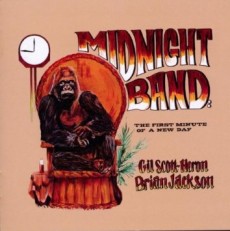
Brian Robert Jackson was born October 11, 1952 in Brooklyn, New York to a New York State parole officer and librarian at the Ford Foundation. Spending the first two years of his life in Bedford-Stuyvesant and later stayed with his uncle in Flatbush until his parents separated when he was five. Then with his mother they moved into a one-bedroom apartment in Crown Heights, Brooklyn until she remarried in 1968.
Jackson studied music in Fort Greene with his mother’s childhood teacher, Hepzibah Ross with whom he took lessons for seven years. From 1965-1969 Jackson attended Brooklyn’s Erasmus Hall High, where he met other musicians and began to form bands on the outside while participating in school music programs.
Brian met Gil Scott-Heron while the two were attending Lincoln University in Pennsylvania. They began a decade-long writing, producing, and recording partnership with Jackson composed most of the music that he and Scott-Heron together performed and recorded. In 1973, the two released their first album together, Pieces of A Man with bassist Ron Carter. Tey would go on to record the landmark albums Free Will and Winter In America. His biggest hit was with Scott-Heron, 1974’s The Bottle. By 1979, they had recorded ten albums, with other unreleased material surfacing on subsequent Scott-Heron releases following their 1980 split.
He remained active in the 1980s and 1990s, switching to R&B to work with Earth, Wind & Fire, Stevie Wonder, Will Downing, Gwen Guthrie, Kool & The Gang and Janis Siegel. Enlisting guest appearances by Gil and Roy Ayers, he recorded his first solo album Gotta Play in 2000. Pianist and flutist Brian Jackson is still actively performing and recording.
Give The Gift Of Knowledge
Daily Dose Of Jazz…
Aaron Parks was born on October 7, 1983 in Seattle, Washington. He studied piano at the University of Washington at the age of 14 through the Transition School and Early Entrance Program as a double major in computer science and music. At 15 he was selected to participate in the GRAMMY High School Jazz Ensembles, which inspired him to move to New York City and transfer to the Manhattan School of Music.
During his final year in school Aaron began touring with Terence Blanchard’s band and recorded three albums with him for Blue Note Records, including the Grammy-winning A Tale of God’s Will (A Requiem for Katrina). He went on to tour with Kurt Rosenwinkel, and he has recorded for Blue Note as a leader. He is a member of James Farm, a quartet with saxophonist Joshua Redman, bassist Matt Penman and drummer Eric Harland.
Parks has seven albums to his credit as a leader, and more the two-dozen as a sideman working with Daisuke Abe, Amanda Baisinger, Walter Smith III, Kendrick Scott, Christian Scott, Gretchen Parlato, Lage Lund and many others. He can be heard on the soundtracks to Their Eyes Were Watching God and Spike Lee films Inside Man, She Hate Me and When The Levees Broke.
He won first place as a Cole Porter Fellow of the American Pianists Association, and third place at the Jas Hennessy Piano Solo Competition at Montreux and in the Thelonious Monk International Jazz Piano Competition. Pianist Aaron Parks continues to compose, record, perform and tour.
Inspire A Young Mind
More Posts: piano
Daily Dose Of Jazz…
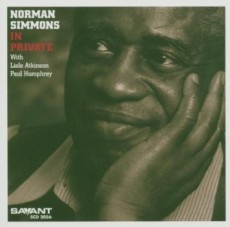
Norman Simmons was born October 6, 1929 in Chicago, Illinois. His childhood was filled with the sound of the big band era and he was captivated by the Duke Ellington Orchestra broadcasts he listened to over a neighbor’s radio. He started teaching himself at the family piano, progressing quickly and by age 16 enrolled in the Chicago School of Music, where he completed his studies in four years.
Simmons kept a steady gig leading the house trio at Chicago’s hottest jazz club, The Beehive, where his group would back touring greats like saxophonists Wardell Gray, Lester Young and Charlie Parker. He formed his own group in 1949 and began recording in 1952. Norman’s composition Jan was a hit for tenor saxophonist Paul Bascomb in 1953. In 1966 his arrangement of Ramsey Lewis’ Wade In The Water became a huge commercial success. Later, after leading a nonet at the C & C Lounge, Simmons began accompanying jazz singers in 1958 and quickly earned a reputation as an exceptional accompanist.
Norman became widely known for his work with vocalists Helen Humes, Carmen McRae, Sarah Vaughan, Anita O’Day, Dakota Staton, Ernestine Anderson, Betty Carter, and Joe Williams, Norman has also performed and recorded nearly two-dozen albums as a sideman with Johnny Griffin, Red Holloway, Roy Eldridge, Harold Ousley, Warren Vache, Eddie “Lockjaw” Davis, Scott Hamilton, Clifford Jordan, Von Freeman, Cy Touff, Victor Sproles, Wilbur Campbell, Al Grey and Bjarne Nerem.
Simmons’ arrangements have been heard through his work with Johnny Griffin on his White Gardenia and The Little Giant albums as well as Teri Thornton’s Devil May Care sessions. His personal catalogue is small only having five albums as a leader or co-leader.
As an educator he has taught at Paterson State College in New Jersey since 1982 and also participated in the Jazzmobile program for 20 years, fostering music education at New York’s public schools. Arranger, composer, educator, and pianist Norman Simmons continues to perform, record and tour and has been a member of the Ellington Legacy Band since 2002.
Dose A Day – Blues Away
More Posts: piano
Daily Dose Of Jazz…
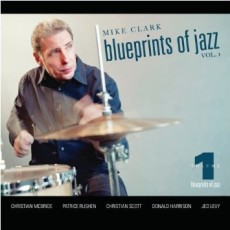
Mike Clark was born on October 3, 1946 in Sacramento, California. Most noted for playing in the Headhunters band headed up by Herbie Hancock since the mid-1970s. His performance on Hancock’s 1974 Thrust album and particularly the song “Actual Proof”, is often cited as one of the finest examples of the linear funk style of drumming.
Clark was also a member of the UK jazz-fusion outfit Brand X alternating behind the kit with Phil Collins between 1978-80. He has performed with Chet Baker, Vince Guaraldi, Fred Wesley, Woody Shaw, Wallace Roney, Eddie Henderson, Michael Wolff, Tony Bennett, Joe Henderson and Charlie Hunter, just to name a few.
Mike is known as one of the most sampled drummers in contemporary music and his beats have appeared on records by Prince, N.W.A., De La Soul and Janet Jackson, among others.
In addition to leading his own group, jazz, funk and fusion drummer Mike Clark is currently co-leader of a two-drummer band with Lenny White and is currently co-leading and touring with The Wolff and Clark Expedition. As an educator he continues to run clinics around the world.
Put A Dose In Your Pocket
More Posts: drums