

Daily Dose Of Jazz…
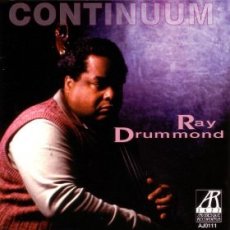
Ray Drummond was born on November 23, 1946 in Brookline, Massachusetts to an Army colonel and through his childhood attended 14 schools around the world. He played trumpet and French horn from the age of eight, then a high-school music teacher encouraged him to switch to the bass.
Briefly settling in northern California he matriculated through Claremont Men’s College and went on to Stanford Business School where he got his Masters in business administration. During those San Francisco years he played with Bobby Hutcherson, Michael White, Ed Kelly, Tom Harrell and Lester Young’s niece, Martha Young.
Moving to New York in 1977, Drummond worked as a session bass player for Betty Carter, the Thad Jones/Mel Lewis Orchestra, Wynton Marsalis, Woody Shaw, Hank Jones, Jon Faddis, Milt Jackson, Johnny Griffin, Kenny Barron, Pharoah Sanders and George Coleman.
In addition to working as a sideman and leading his own bands, Ray is an educator and has taught at the Monterey Peninsula College of Music and the California State University and has conducted master classes at Berklee College of Music, Purdue University, the University of Massachusetts and the Sibelius Academy of Music in Helsinki, Finland.
Bassist Ray Drummond continues to co-lead The Drummonds with Renee Rosnes while recording as a sideman and can be heard on more than three hundred albums with the likes of Kevin Mahogany, Toots Thielemans, David Murray and Benny Golson to name a few.

Dose A Day – Blues Away
More Posts: bass
Daily Dose Of Jazz…
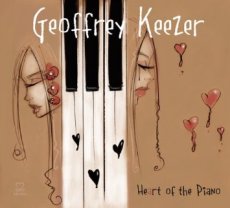
Geoffrey Keezer was born in Eau Claire, Wisconsin on November 20, 1970 to music teachers. He began studying piano at the age of three and by 1989 at 18, after one year of study at Berklee College of Music he joined Art Blakey’s Jazz Messengers.
His professional career has spanned many projects and genres such as performing Gershwin’s Rhapsody In Blue with the Hollywood Bowl Orchestra, composing commissioned pieces for the Carnegie Hall Jazz Band, Saint Joseph Ballet, Mainly Mozart Festival in San Diego, Scottish National Jazz Orchestra, and the Nancy Zeltsman Marimba Festival all while releasing a dozen albums as a leader and touring.
Geoffrey has received the Chamber Music America’s 2007 New Works grant, has appeared as a sideman on countless recording sessions, has played bass in a rock band, contributed artwork to David W. Mack’s comic “Kabuki”, and has performed with world-class musicians Joshua Redman, Diana Krall, Christian McBride, Barbara Hendricks, Kenny Barron, Chick Corea, Benny Green, Joe Locke and Mulgrew Miller.
Keezer’s “Live in Seattle”, a collaboration with vibes player Joe Locke, won the Golden EarShot Award for “Concert of the Year” and his latest musical adventure, Áurea, is a Grammy nominated, multinational Afro-Peruvian jazz recording featuring the hottest players from New York City and Lima, Peru. In 2013 he released his latest solo project Heart Of The Piano, continues to lend his talents to educate at such institutions of higher learning as the New School, the Brubeck Institute, Indiana University, the Thelonious Monk Institute of Jazz and others, all while continuing to arrange, perform, record and tour both as a leader and sideman.
Jazz Is Global – Share
More Posts: piano
Daily Dose Of Jazz…
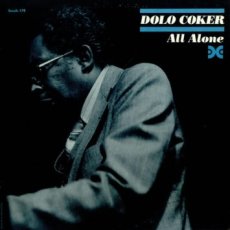
Dolo Coker was born Charles Mitchell Coker on November 16, 1927 in Hartford, Connecticut but was raised in Florence, South Carolina and Philadelphia, Pennsylvania. The first musical instruments Coker played in childhood were the C-melody and alto saxophones, learning them at a school. By age thirteen he was starting to play piano and after moving to Philadelphia he studied piano at the Landis School of Music and at Orenstein’s Conservatory.
During his Philadelphia years Coker played piano with Jimmy Heath, then became a member of Frank Morgan’s quartet, but it wasn’t until 1976 that he recorded as a leader. Signing with Xanadu Records he cut four albums and worked extensively as a sideman for Sonny Stitt, Gene Ammons, Lou Donaldson, Art Pepper, Philly Joe Jones and Dexter Gordon.
For the next several years pianist Dolo Coker continued to work as a sideman until he passed away of cancer at the age of fifty-five on April 13, 1983.
Dose A Day – Blues Away
More Posts: piano
Daily Dose Of Jazz…
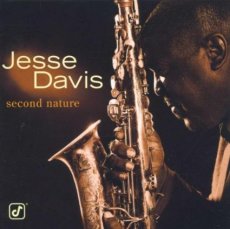
Jesse Davis was born on November 9, 1965 in New Orleans, Louisiana and showed signs of musical talent at a very young age. When he was eleven, his brother Roger, an accomplished tuba player bought Jesse a saxophone and taught him how to play it. He went on to study with Ellis Marsalis, whose teachings inspired him to become a music student at North-Eastern Illinois University on a full scholarship. He eventually transferred to William Patterson College in New Jersey, then to the New School in New York City, enrolling in their Jazz and Contemporary Music Program under the tutelage of Ira Gitler.
After graduating, alto saxophonist Jesse Davis embarked on a productive jazz career and has recorded eight albums on the Concord Jazz label. He has collaborated with such artists as Jack McDuff, Major Holley, Cecil Payne, Jay McShann, Cedar Walton, Benny Golson, Illinois Jacquet Kenny Barron and Roy Hargrove amongst a long list of notables.
Davis has received a “Most Outstanding Musician award” from magazine, won several awards at jazz festivals for outstanding soloist, toured Europe several times fronting his quartet and a member of the Sax Machine and made his debut as an actor in the celebrated Robert Altman movie “Kansas City”.
Jesse was equally influenced by Charlie Parker, Cannonball Adderley and Sonny Stitt and contributes a flawless technique and a natural feeling for the blues to every one of his performances as he continues to perform, record and tour.
Dose A Day – Blues Away
More Posts: saxophone
Daily Dose Of Jazz…
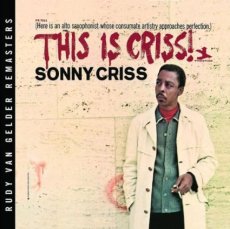
William “Sonny” Criss was born on October 23, 1927 in Memphis, Tennessee and at the age of 15 moved to Los Angeles. Developing a concise, bluesy tone he easily fit into the bands he drifted between such as Howard McGhee’s playing alongside Charlie Parker, Johnny Otis and Billy Eckstine.
As his ability continued to increase his first major break came in 1947 with Norman Granz, playing on a number of jam sessions. In 1956 he was signed to Imperial Records, recorded a number of underground classics like “Jazz U.S.A.”, “Go Man” and “Sonny Criss Play Cole Porter” that featured Sonny Clark on piano.
He would go on to record for Muse, Impulse and Prestige record labels, worked with Wynton Kelly, rooted himself in the hard bop tradition recording charts by Horace Tapscott and also several well-acclaimed albums like Sonny’s Dream.
Alto saxophonist Sonny Criss settled in Los Angeles and continued to perform and record but by 1977 had contracted stomach caner. Unable to bear the pain, he committed suicide by gunshot on November 19, 1977. after contracting stomach cancer earlier that year and unable to bear the painful condition he was experiencing.
Give The Gift Of Knowledge