

Daily Dose Of Jazz…
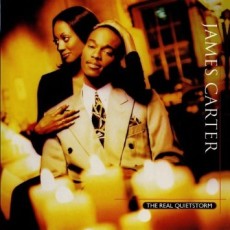
James Carter was born January 3, 1969 in Detroit, Michigan and learned to play under the tutelage of Donald Washington, becoming a member of his youth jazz ensemble Bird-Trane-Sco-NOW!! As a young man, he attended Blue Lake Fine Arts Camp and become the youngest faculty member at the camp. He first toured Europe (Scandinavia) with the International Jazz Band in 1985 at the age of 16.
By 1988, while at the Detroit Institute of Arts, Carter was a last-minute addition for guest artist Lester Bowie, which turned into an invitation to play with his new quintet in New York that following November at the now defunct Carlos 1 jazz club. This New York invite was pivotal in his career, putting him in musical contact with the world, and he moved to the city two years later.
James has won Down Beat magazine’s Critics and Readers Choice award for baritone saxophone several years in a row. He has performed, toured and played on albums with Lester Bowie, Julius Hemphill, Frank Lowe & the Saxemble, Kathleen Battle, the World Saxophone Quartet, Cyrus Chestnut, Wynton Marsalis, Dee Dee Bridgewater and the Mingus Big Band. On his 2000 album Chasin’ the Gypsy, he recorded with his cousin, jazz violinist Regina Carter.
An authority on vintage horns, Carter owns an extensive collection of them. He continues to be a prominent force as a performer and recording artist on the jazz scene since the late 1980s, playing saxophones, flute and clarinets.

Jazz Is Global – Share
Daily Dose Of Jazz…
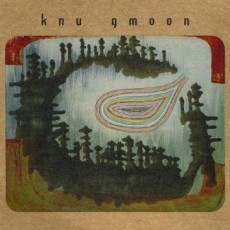
Noah Jarrett was born on January 2, 1978 and raised between New Jersey and New York City. He began studying the electric bass at age nine, after five years of violin. His initial interest was in the many forms of rock and spent most of his days after school playing in his basement with friends.
His taste would evolve and he would lean towards jazz, reggae, Indian, African and Gnawan music while also studying the classical traditions. For nine years he primarily has studied the double bass but still plays his electric bass, ultimately graduating from the New England Conservatory. Jarrett plays in a variety of groups around New York and Boston including current group Fat Little Bastard and The InBetweens. He accompanies virtuosic Malian kora player Mamadou Diabatein a variety of music settings.
In addition, Noah plays with a 14-piece band, the Brooklyn Qawwali Party, which commemorates the late Sufi singer Nusrat Faeh Ali Khan. The group uses Pakistani qawwali melodic and propulsive rhythms as a basis for further improvisations.
Double bassist Noah Jarrett has played with John Abercrombie, George Garzone, Bob Gulotti, Bill Goodwin and numberous other New York City musicians. He continues to perform and record.
Jazz Is Global – Share
More Posts: bass
Daily Dose Of Jazz…
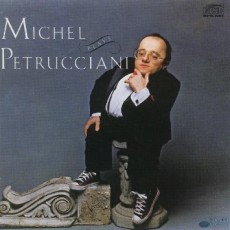
Michel Petrucciani was born on December 28 1962 in Orange, Vaucluse, France into a musical family with father playing guitar and brothers playing bass and guitar. He came into the world with a genetic disease that caused brittle bones and short stature. Due to this illness, throughout his career Michel was often carried to and from the piano when he performed.
Enthusiastic of Duke Ellington, his desire to be a pianist was driven by his main interest in jazz but trained for years as a classical musician giving his first professional concert at the age of 13. By the age of 18 he was part of a successful trio and in 1982 he moved to the US where he successfully encouraged Charles Lloyd to resume playing actively. Three years later, on February 22, 1985, with Petrucciani cradled in his arms, Lloyd walked onto the stage at Town Hall in New York City and sat him on his piano stool for what would be an historic evening in jazz history: the filming of One Night with Blue Note.
The following year Petrucciani recorded a live album with Wayne Shorter and Jim Hall and throughout his career has played with other greats like Dizzy Gillespie, Stephane Grappelli, Joe Lovano, Stanley Clark, Lenny White, Gil Goldstein and many others. He has recorded over thirty albums, wrote a biography, has a mosaic in the 18th district of Paris and in 1994 was granted a Legion d’honneur.
Michel Petrucciani, whose style is reminiscent of Bill Evans and Keith Jarrett, died on January 6, 1999 from a pulmonary infection, nine days after his 36th birthday. He was posthumously honored in 2009 with a special broadcast event on the French music channel Mezzo.
Inspire A Young Mind
More Posts: piano
Daily Dose Of Jazz…
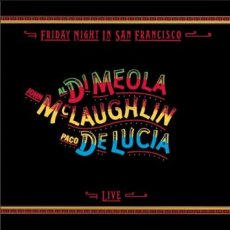
Paco de Lucía was born Francisco Sánchez Gómez in Algeciras, Cadiz, Spain on December 21, 1947. His father introduced him to the guitar at a very young age and was extremely strict in his upbringing, forcing him to practice up to 12 hours a day, every day. Combined with natural talent, he soon excelled and in 1958, at age 11, he made his first public appearance on Radio Algeciras. A year later he was awarded a special prize in the Jerez flamenco competition.
At age 14 Paco was touring with the flamenco troupe of dancer Jose Greco and in 1964 he recorded the first of three albums with guitarist Ricardo Modrego. From 1968 to 1977 he would record 10 albums with flamenco singer Camaron de la Isla.
In 1979, de Lucía along with John McLaughlin and Larry Coryell formed The Guitar Trio, briefly toured Europe and released Meeting of the Spirits, a video recorded at London’s Royal Albert Hall. Al Di Meola later replaced Coryell and since 1981 the trio has recorded three albums.
Over the course of his career, Paco De Lucia, considered one of the finest guitarist in the world, has appeared in the western film Hannie Caulder, recorded on the soundtrack of Don Juan DeMarco, led his own sextet with brothers Ramón and Pepe, continues to record jazz, classical and flamenco albums, has won the Prince of Austrias Award, and has been awarded doctorates from the University of Cadiz and Berklee College of Music. On February 25, 2014 he passed away of a heart attack at age 66 in Playa de Carmen, Mexico. He was posthumously award a Latin Grammy for Album of the Year for his album Canción Andaluza the same year.
Inspire A Young Mind
More Posts: guitar
Daily Dose Of Jazz…
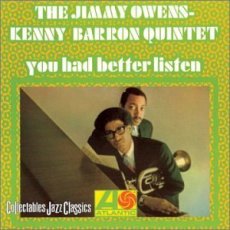
Jimmy Owens was born December 9, 1943 in New York City. In the 1960s, he was a member of the hybrid classical and rock band Ars Nova, and then became a member of the New York Jazz Sextet playing with at times were Sir Roland Hanna, Ron Carter, Billy Cobham, Benny Golson, Hubert Laws, and Tom McIntosh.
Between 1969 and 1972, Jimmy was a sideman on the David Frost Show under musical director Dr. Billy Taylor. During this stint he played alongside Frank Wess, Seldon Powell Barry Galbraith and Bob Cranshaw.
As an educator Jimmy is an active member of the jazz education community, sitting on the board of the Jazz Foundation of America and the Jazz Musicians’ Emergency Fund to help individual musicians.
Over the course of his career the trumpeter, composer, arranger, lecturer and music education consultant has performed and recorded as a leader and sideman with Lionel Hampton, Charles Mingus, Archie Shepp, Joe Zawinul, Gerald Wilson, Duke Ellington, Hank Crawford, Dizzy Gillespie, Count Basie and Herbie Mann among many others. Since 1969, he has led his own group, Jimmy Owens Plus.
Give The Gift Of Knowledge
More Posts: flugelhorn,trumpet