

Daily Dose Of Jazz…
Eric Revis was born on May 31, 1967 in Los Angeles, California. He grew up listening mostly to funk and rock music and it was not until when he was 14 years of age that he picked up an electric bass and taught himself how to play. He attended Southern University as biology major for a year, Eric relocated to San Antonio, TX where he got a regular gig playing 6 nights a week.
While working the gig Revis got turned onto jazz, notably Kind Of Blue, which influenced him to switch to acoustic bass. He studied under Ellis Marsalis at the University of New Orleans but came to prominence attending the legendary school of Betty Carter in the mid-1990s.
In 1997, Eric met Branford Marsalis at a recording session with Russell Gunn. So impressed with the young bassist asked he Eric to join him on his recording, Bug Shot along with Kenny Kirkland and Jeff “Tain” Watts. The rest is history and the jazz bassist and composer has been a member of Branford Marsalis’s ensemble since 1997.
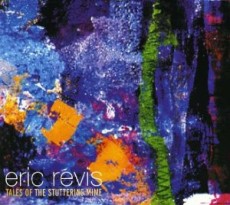
He released his debut album as a leader in 2004 titled Tales of the Stuttering Mime, has a sideman catalogue of thrity albums performing with Branford Marsalis, Kurt Rosenwinkel, Jeff “Tain” Watts, Joe Locke, Ralph Peterson, Orrin Evans, Frank McComb, J.D. Allen, Winard Harper, Sherman Irby and Russell Gunn among others. He has directed the Jazz Ensemble at Trinity University, in San Antonio, Texas from 2007/2008. He continues to perform, record and tour.

Put A Dose In Your Pocket
More Posts: bass

Daily Dose Of Jazz…
Ralph Peterson, Jr. was born on May 20, 1962 in Pleasantville, New Jersey into a family of drummers, having four uncles and a grandfather as drummers. He began on percussion at age three and was raised in Atlantic City where he played trumpet in high school and worked locally in funk groups. He applied to Livingston College Rutgers for drums but failed the percussion entrance exam and enrolled as a trumpeter instead.
In 1983 he joined Art Blakey’s Jazz messengers as the second drummer, playing with him for several years. He has worked with Terence Blanchard. Donald Harrison, Walter Davis, Tom Harrell, Out of the Blue, Branford Marsalis, David Murray, Craig Harris, James Spaulding, Roy Hargrove, Jon Faddis, Dewey Redman, George Colligan, Stanley Cowell, Mark Shim, Betty Carter, Charles Lloyd, Wynton Marsalis and many, many others.
After living in Canada for some time he returned to Philadelphia where he worked further with Fo’Tet and also recorded as Triangular Too with Uri Caine. He also led a group Hip Pocket with whom he played trumpet. He has recorded 15 albums as a leader and another six with Uri Caine and David Murray.
Drummer Ralph Peterson has taught at Philadelphia’s University of the Arts, currently teaches at Berklee College of Music in Boston, Massachusetts and continues to perform, record and tour.
Inspire A Young Mind
More Posts: drums

Daily Dose Of Jazz…
Julian Joseph was born May 11, 1966 in London, England. As a jazz pianist, bandleader, composer, arranger and broadcaster he has worked solo, in his all-star big band, trio, quartet, forum project band or electric band.
Joseph’s style combines a respect for the modern developments in jazz piano with its history and works in both contemporary and traditional situations with his music. He is also active in jazz education helping to form the jazz syllabus for the Associated Board of the Royal Schools of Music in Great Britain.
Starting with his first album The Language of Truth in 1991, Julian has a total of seven albums to date, one single, and a soundtrack to his credit, and a baker’s dozen as a sideman. He has focused on live performance such as, at the London Jazz Festival, also broadcasting as he hosts several radio shows on BBC Radio 3, including Jazz Line-up and the celebrated Jazz Legends as well as composing and teaching.
He has also made two jazz television series for Meridian, a jazz series for Sky TV’s Artsworld Channel and the documentary A Festival of Jazz Piano for the BBC in Wales directed by Celia Lowenstein. He continues to perform and record.
Jazz Is Global – Share
More Posts: arranger,broadcaster,composer,educator,piano
Daily Dose Of Jazz…
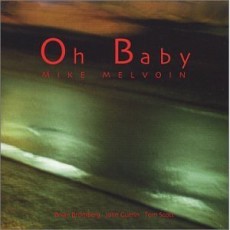
Mike Melvoin was born on May 10, 1937 in Oshkosh, Wisconsin and began playing piano at age three. He studied English at Dartmouth College but after graduating decided to pursue a career in music.
In 1961 he moved to Los Angeles and began playing with Frank Rosolino, Leroy Vinnegar, Gerald Wilson, Paul Horn, Terry Gibbs, Joe Williams, Peggy Lee, Tom Waits and others.
He worked extensively as a studio musician, in addition to playing Los Angeles clubs, accompanying singer Bill Henderson and playing with Herb Ellis and Plas Johnson on concord Jazz releases. As a composer he lent his scoring talents to the Partridge Family, Fame and MacGyver.
Pianist, composer and arranger Mike Melvoin served as chairman and president of The Recording Academy, was nominated for a Grammy for Best Jazz Instrumental Solo from his album It’s Always You, played between the jazz, rock and pop genres. A prolific studio musician he associated with among numerous others Frank Sinatra, Natalie Cole, The Jackson 5, The Beach Boys, Barbra Streisand, John Lennon, and The Wrecking Crew, passed away at the age of 74 in Burbank, California on February 22, 2012.
Put A Dose In Your Pocket
Daily Dose Of Jazz…
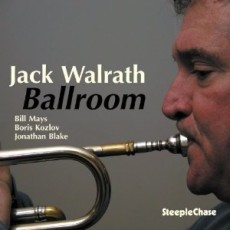
Jack Walrath was born on May 5, 1946 in Stuart, Florida and began playing the trumpet at the age of nine while living in Edgar, Montana. He graduated from Joliet High School in 1964 and attended the Berklee College of Music. Pursuing a composition diploma program instead of a full degree program, he concentrated specifically upon music classes. During his Berklee years he backed a number of R&B singers in the Boston and Cambridge areas, gigged with his fellow students and worked in the band Change with bassist Gary Peacock.
In 1969 Jack relocated to the West Coast, found work in the Los Angeles jazz scene, became a member of the band Revival, joined the West Coast Motown Orchestra, toured with Ray Charles and by the next year was back in New York City working with mainstream and Latin jazz bands. By 1974 he met and joined Charles Mingus’ quintet that broke new ground in free jazz and non-chordal improvisation. He continues the legacy working with Mingus Dynasty and the Charles Mingus Big Band.
Walrath has been a sideman for such luminaries as Miles Davis, Quincy Jones, Larry Willis, Bobby Watson, Hal Galper, Sam Rivers, Mike Longo, Elvis Costello, Richie Cole and others. He has worked with the WDR Big Band, the Jazz Tribe and the Charlie Persip Superband. He has led ensembles under the names of The Jack Walrath Group, Wholly Trinity, Hard Corps, The Masters of Suspense, and The Jack Walrath Quintet.
Post-bop jazz trumpeter Jack Walrath has amassed a catalogue of twenty-six albums as a leader and 28 as a sideman; has been nominated for a Grammy, received composition grants from the National Endowment for the Arts, has been commissioned to compose for symphony to solo piano and continues to conduct seminars, master classes, music camps and clinics around the world. He has also written an instruction book, 20 Melodic Jazz Studies for Trumpet, and is currently working on an autobiography, CD and record guide.
More Posts: trumpet