

Daily Dose Of Jazz…
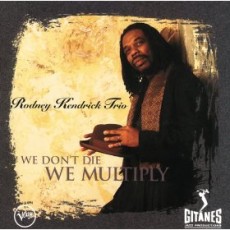
Rodney Kendrick was born April 30, 1960 in Philadelphia, Pennsylvania and grew up in Miami, Florida where his parents moved soon after his birth. Growing up in a musical and Pentecostal church-going family, his mother is a gospel singer named Juet and his father is pianist James “Jimmy Kay” Kendrick, who worked with saxophonist Illinois Jacquet for seven years and played with saxophonist Sonny Stitt and Sam Rivers.
At eighteen Rodney turned professional, touring and playing keyboards with R&B and funk bands, traveling internationally with Harold Melvin & the Blue Notes, James Brown and George Clinton. Three years later Kendrick began to primarily focus on jazz and moved to New York in 1981. He played keyboards for Freddie Hubbard, Terence Blanchard, Stanley Turrentine, Clark Terry, J.J. Johnson and numerous others.
Studying with pianist Barry Harris, who remained his teacher and mentor for over 20 years, Kendrick cites Randy Weston and Sun Ra as influences. In the early Nineties he served as Abbey Lincoln’s musical leader for seven years. In 1994 he signed a contract with Verve Records and released his debut album “The Secrets of Rodney Kendrick”, and a year later his sophomore project “Dance World Dance”. Both recordings showcase his arranging skills as well as his compositions and feature Houston Person, Graham Haynes, Arthur Blythe and Bheki Mseleku among his guests.
He went on to record his next album “We Don’t Die, We Multiply” with his wife Rhonda composing “Led Astray” and several tracks featuring saxophonist Dewey Redman. Rodney has produced several albums, including a solo piece titled “Thank You”, a duo-piano piece with his mentor Randy Weston, an album with his wife titled “Rhonda Ross Live: Featuring Rodney Kendrick”, as well as a project with his father, Jimmy Kay, titled “Black is Back”.
Rodney Kendrick, jazz pianist, bandleader, composer and producer who has been described as one who swings hard with a Monkish wit and drive, continues to perform, compose and record.

Give The Gift Of Knowledge
More Posts: bandleader,piano
Daily Dose Of Jazz…
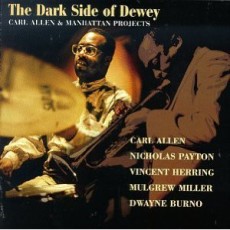
Carl Allen was born on April 25, 1961 in Milwaukee, Wisconsin and grew up on gospel, R&B, and funk, but later turned to jazz after hearing a record by saxophonist Benny Carter. While in high school he studied drums with Roy Sneider and his band director Robert Siemele.
His first hometown gigs were with Sonny Stitt and James Moody prior to attending the University of Wisconsin at Green Bay for two years, then graduating from William Patterson College. Allen joined trumpeter Freddie Hubbard a year before his graduation, serving as his Musical Director for eight years, and recorded several recordings.
With over 150 sessions to his credit Carl has worked with a wide variety of musicians including Jackie McLean, George Coleman, Christian McBride, Benny Green, Michael Brecker, Sammy Davis Jr., Jennifer Holiday, J. J. Johnson, Branford Marsalis, Donald Harrison, Kenny Garrett, Lena Horne, Ruth Brown, Wayne Shorter, Herbie Hancock, Bobby Hutcherson, Terence Blanchard, Phil Woods, Benny Green, Cyrus Chestnut, Joe Henderson, Billy Childs, Rodney Whitaker and many others.
Carl Allen, drummer, sideman, bandleader, entrepreneur, producer and educator has a profound and propulsive percolation that provides soulful and syncopated support. One of the jazz world’s in-demand drummers, he currently serves on the faculty of The Julliard School as Artisan Directum of Jazz Studies.
Jazz Is Global – Share
More Posts: drums
Daily Dose Of Jazz…
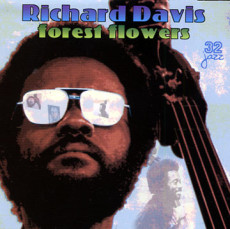
Richard Davis was born in Chicago, Illinois on April 15, 1930 who began his musical career as a singer with his brothers. Davis sang bass in his family vocal trio in addition he began studying the double bass in high school with his music theory and band director, Captain Walter Dyett. After graduation, he went on to study the double bass with Rudolf Fahsbender of the Chicago Symphony Orchestra while attending Vandercook College.
After college, Davis performed in dance bands making a name for himself around Chicago, making connections that led him to pianist Don Shirley. In 1954 he and Shirley moved to New York City, performed together until 1956, when he began playing with the Sauter-Finegan Orchestra.
Richard then toured and recorded as part of Sarah Vaighan’s band, worked with Dorothy Ashby, Jaki Byard, Booker Ervin, Charles Lloyd, Candido Camero, Jimmy Forrest and Thad Jones/Mel Lewis Jazz Orchestra among others. Some of his most famous contributions were Eric Dolphy’s 1964 “Out To Lunch”, Andrew Hill’s “Point Of Departure” and Van Morrison’s “Astral Weeks”, Laura Nyro’s “Smile” and Bruce Springsteen’s “Born To Run”.
He has recorded fifteen albums as a leader and over a hundred as a sideman. A long-time educator, he has been a professor at the University of Wisconsin-Madison since 1977 where he teaches bass, jazz history, and improvisation. Bassist Richard Davis received the 2014 NEA Jazz Masters award.
Take A Dose On The Road
More Posts: bass
Daily Dose Of Jazz…
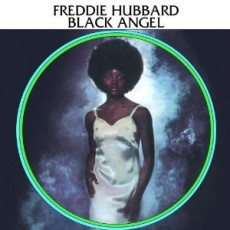
Frederick Dewayne Hubbard was born on April 7, 1938 in Indianapolis, Indiana and started playing the mellophone and trumpet in his school band at Arsenal Technical High School. Upon the recommendation of one-time Stan Kenton sideman, trumpeter Lee Katzman, he began studies at the Arthur Jordan Conservatory of music. During his teens he played with Wes and Monk Montgomery, bassist Larry Ridley and James Spaulding.
1958 saw a 20-year old Hubbard in New York working with the likes of Philly Joe Jones, Sonny Rollins, Slide Hampton, Eric Dolphy, J. J. Johnson and Quincy Jones. Three years later in ’61 he recorded his debut as a leader, Open Sesame with Tina Brooks, McCoy Tyner, Sam Jones and Clifford Jarvis. That same year he replaced Lee Morgan in Art Blakey’s Jazz Messengers and for the next five years played and recorded on a succession of albums. Leaving Blakey in 1966 he formed the first of several small groups with among others Kenny Baron and Louis Hayes.
Throughout his hard bop and post bop career he recorded profusely for Blue Note, Atlantic, CTI, Columbia and a host of subsidiaries and smaller labels playing with the likes of Ornette Coleman, John Coltrane, Wayne Shorter, Eric Dolphy, Don Cherry, Herbie Hancock, Oliver Nelson, Stanley Turrentine, George Benson, Richard Wyands, Eric Gale, Ron Carter, Jack DeJonette, Dexter Gordon, Curtis Fuller and the list goes on.
Freddie Hubbard, NEA Jazz Master, had an unmistakable and influential tone that greatly contributed to new perspectives for modern jazz and bebop. He passed away from a heart attack on December 29, 2008.
More Posts: cornet,flugelhorn,french horn,mellophone,trumpet
Daily Dose Of Jazz…
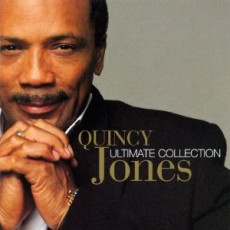
Quincy Delight Jones, Jr. was born on March 14, 1933 in Chicago, Illinois. When he was ten, his family moved to Bremerton, Washington, a suburb of Seattle. He first fell in love with music when he was in elementary school, and tried nearly all the instruments in his school band before settling on the trumpet. While barely in his teens attending Garfield High, Quincy befriended then-local singer-pianist Ray Charles and the two youths formed a combo, eventually landing small club and wedding gigs.
At 18, the young trumpeter won a scholarship to Berklee College of Music in Boston, Massachusetts but dropped out abruptly when he received an offer to go on the road with bandleader Lionel Hampton. The stint with Hampton led to work as a freelance arranger and settling in New York, throughout the 1950s he wrote charts for Tommy Dorsey, Gene Krupa, Sarah Vaughan, Count Basie, Duke Ellington, Dinah Washington, Cannonball Adderley and Ray Charles.
In 1964 Quincy won his first Grammy for Best Instrumental Arrangement of “I Can’t Stop Loving You”, in 1968 he won his second Grammy for Best Instrumental Performance with “Walking In Space” and that same year along with his songwriting partner Bob Russell became the first African Americans to be nominated for an Academy Award for Best Original Song for “The Eyes Of Love” and he became the first African American to be nominated twice within the same year when for Best Original Score for the 1967 film In Cold Blood.
His firsts would continue in 1971 when named musical director/conductor of the Academy Awards ceremony, being first to win the Academy’s Jean Hersholt Humanitarian Award, and He is tied at 7 with sound designer Willie D. Burton as the most Oscar-nominated African American.
His musical achievements are too numerous to list as they span the gambit from film scores such as The Pawnbroker, In The Heat of the Night, The Italian Job, MacKenna’s Gold, The Getaway and The Color Purple to his jazz works “Body Heat” and “Big Band Bossa Nova” from which Soul Bossa Nova was used in the Austin Powers movies to his crowning glories with Miles Davis last release “Live at the Monteux Jazz Festival”, his work with Michael Jackson’s “Thriller” and the charity song “We Are The World”. He continues to produce, conduct, arrange and compose.
More Posts: drums,french horn,piano,synthesizer,trumpet,vocal