Daily Dose Of Jazz…
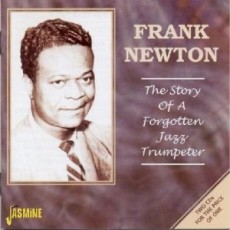
Frankie Newton was born William Frank Newton on January 4, 1906, growing up in Emory, Virginia. The trumpeter’s mellow and thoughtful style sometimes seemed out of place in during the swing era, however, he played in several New York bands in the 1920s and 1930s, including bands led by Lloyd Scott, Elmer Snowden, Cecil Scott, Sam Wooding, Chick Webb, Charlie Barnet, Andy Kirk and Charlie “Fess” Johnson.
In the 40s he played with bands led by Lucky Millinder, Pete Brown and Mezz Mezzrow. He played in clubs in New York and Boston, with musicians such as pianist James P. Johnson, drummer Sid Catlett and clarinetist Edmond Hall.
He accompanied Bessie Smith on her final recordings (November 24, 1933), Maxine Sullivan on “Loch Lomond” and several of Billie Holiday’s Café Society recordings, most notably Strange Fruit in 1939.
Although the lyrical trumpeter had a relatively brief but artistically rewarding career producing a couple of recordings, “At The Onyx Club” and “At The Cotton Club”, by the end of the 40’s he became less interested in music and gradually faded from the scene and concentrating more on painting.
Politically, Newton was known to be a communist and as an homage, historian Eric Hobsbawn has written jazz criticism for the New Statesmen under the pen name “Francis Newton”. Trumpeter Frankie Newton passed away on March 11, 1954 in New York City.

More Posts: trumpet
Daily Dose Of Jazz…
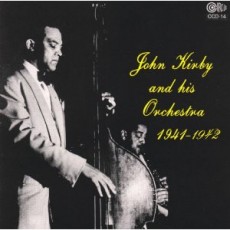
John Kirby was born in Winchester, Virginia on December 31, 1908 though some sources say he was born in Baltimore, Maryland orphaned, and adopted. He hit New York at 17, but after his trombone got stolen, he switched to tuba.
Kirby joined Fletcher Henderson’s orchestra as a tuba player in 1929. In the early 1930s, he performed some amazingly complicated tuba work on a number of Henderson’s recordings. He picked up on the double bass at the time when tuba was falling out a favor as the primary bass instrument of jazz bands.
About 1933 Kirby left Henderson to go with Chick Webb, went back with Henderson, then with Lucky Millinder and briefly led a quartet in 1935 but generally kept busy as bassist in others’ groups. Securing a gig at the Onyx Club and really got going as a bandleader in 1937. Soon the sextet was known as the Onyx Club Boys.
“The Biggest Little Band in the Land,” as it was called began recording in August 1937 and immediately had a hit with a swing version of “Loch Lomond” and though the group’s name would vary with time this would become one of the more significant “small groups” in the Big Band era and was also notable for making the first recording of the Shavers song “Undecided”. He recorded with Maxine Sullivan for Vocalion Records and accompanied Billie Holiday.
John tended toward a lighter, classically influenced style of jazz, often referred to as chamber jazz. He kept trying to lead a group in clubs and in the studio, occasionally managing to attract such talents as Dizzy Gillespie, Benny Carter, Ben Webster, Clyde Hart, Budd Johnson and Zutty Singleton and Sarah Vaughan.
As John Kirby’s career declined, he drank too much, was beset by diabetes and moved to Hollywood, California, where he died on June 14, 1952 just before a planned comeback.
Daily Dose Of Jazz…
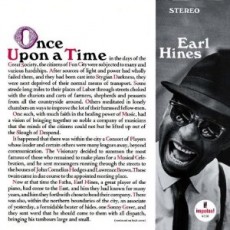
Earl “Fatha” Hines was born Earl Kenneth Hines on December 28, 1903 in Duquesne, Pennsylvania. The youngster took classical piano lessons and by eleven was playing organ in his local Baptist church. Having a “good ear and a good memory” he could re-play songs and numbers he heard in theaters and park concerts. At 17, with his father’s approval, Hines moved away from home to take a job playing piano in a Pittsburgh nightclub with baritone Lois Deppe & his Symphonian Serenaders. He would accompany Deppe on his concert trips to New York and record his first four sides for Gennett Records in 1923 that included Hines’ composition Congaine.
In 1925 Hines moved to Chicago, Illinois, then the world’s “jazz” capital, home to Jelly Roll Morton and King Oliver. He started in The Elite no. 2 Club but soon joined Carroll Dickerson’s band, touring with him on the Pantages Theatre Circuit to Los Angeles. He met Louis Armstrong in the poolroom at Chicago’s Musicians’ Union and becoming good friends played together Louis was astounded by Hines’s avant-garde “trumpet-style” piano playing. They played together in Dickerson’s band, Louis’ Hot Five and The Unholy Three.
Hines joined clarinetist Jimmy Noone, recorded his first piano solos for QRS Records in 1928, then for Okeh in Chicago. In Chicago he lead his own big band at the Capone controlled Grand Terrace Café, working continuously through the Great Depression. He influenced or taught Nat “King” Cole, Jay McShann and Art Tatum. Fatha brought along in his band Dizzy Gillespie, Budd Johnson, Ray Nance, Trummy Young, Harry “Pee Wee” Jackson, Charlie Parker, Scoops Carry, Teddy Wilson, Omer Simeon and Nat “King” Cole, along with vocalists Sarah Vaughan and Billy Eckstine among others.
He laid the seeds for bebop bringing modern players like Gene Ammons, Benny Carter Wardell Gray, Bennie Green and shadow Wilson to name a few. Earl would hire and all-women group during WWII, fronted Duke Ellington’s band when he was ill, and had a serious head injury from a car crash that affected his eyesight for the rest of his life.
Earl “Fatha” Hines was one of the most influential figures in the development of modern jazz piano and according to one major source, is “one of a small number of pianists whose playing shaped the history of jazz”. To name a few would be an injustice to those unmentioned as his list of recordings with jazz notables runs endlessly.
Over the course of his career Earl joined up again with Armstrong in what became the hugely successful “Louis Armstrong and his All-Stars small-band”, he won Downbeat Magazine’s Hall of Fame “International Critics Poll” and elected him the world’s “No. 1 Jazz Pianist”, made a hour long documentary at Blues Alley in Washington, DC, played solo at the White House and for The Pope, and played and sang his last show in San Francisco a few days before he died in Oakland, California on August 22.1983. On his tombstone is the inscription: “Piano Man”.
More Posts: piano
Daily Dose Of Jazz…
Eddie Wilcox was born in Method, North Carolina on December 27, 1907. He studied at Fisk University, where he met Jimmie Lunceford and played with him in college bands and then professionally in the mid-1920s. In 1929 he became the main arranger for the ensemble, and remained so until Lunceford’s death in 1947.
Wilcox was named co-leader with Joe Thomas after Lunceford died, and became sole leader in January 1949, where he remained until the group disbanded early in the 1950s.
His 1952 recording of the Bennie Benjamin and George David Weiss composition “Wheel of Fortune” became a hit in the U.S., peaking at #14. Following this Wilcox played solo at the Cafe Riviera in New York City for nearly a decade.
He and Teddy McRae founded the Raecox record label in the 1950s that produced and released R&B music. He also worked as an executive for Riviera and Derby record labels. Working with jazz trombonist Big Chief Russell Moore shortly before his death, pianist and arranger Eddie Wilcox passed away on September 29, 1968.
Daily Dose Of Jazz…
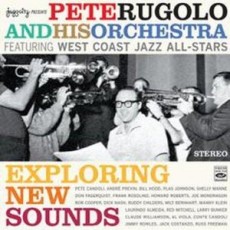
Pete Rugolo was born Pietro Rugolo in San Piero Patti, Sicily, Italy on December 25, 1915. His family emigrated to the U.S. in 1920 and settled in Santa Rosa, California. He began his career in music playing the baritone saxophone, like his father, but he quickly branched out into other instruments, notably the French horn and the piano. He received a bachelor’s degree from San Francisco State College and then went on to study composition at Mills College in Oakland, earning his master’s degree.
After graduation, he was hired as an arranger and composer by guitarist and bandleader Johnny Richards and spent World War II playing with altoist Paul Desmond in an army band. After WWII, Rugolo worked for Stan Kenton, providing arrangements and original compositions that drew on his knowledge of 20th century music, sometimes blurring the boundaries between jazz and classical music.
While Rugolo continued to work occasionally with Kenton in the 1950s, he spent more time creating arrangements for pop and jazz vocalists, most extensively with former Kenton singer June Christy and others like Ernestine Anderson, Harry Belafonte, Nat King Cole, Billy Eckstine, Peggy Lee, The Four Freshman, Mel Torme to name a few.
He would work on MGM film musicals, serve as A&R director for Mercury Records and produce a handful of self-titled albums. Pete’s scores for television and film on The Fugitive, Leave It To Beaver, Run For Your Life and Where The Boys Are often demanded that he suppress his highly original style. However, there are some striking examples of his work in both TV and film such as the soundtrack for his last movie, This World, Then the Fireworks demonstrates his gift for writing music that is both sophisticated and expressive. Pete Rugolo, jazz composer and arranger, died, aged 95, on October 16, 2011 in Sherman Oaks, California.