

Daily Dose Of Jazz…
Bill Trujillo was born on July 7, 1930 in Los Angeles, California and started clarinet lessons at the age of four, then switched to tenor saxophone after seeing Lester Young perform with Count Basie in Los Angeles. His mother, a dance teacher at the famous Palomar Ballroom, regularly took him and his older brother to hear big bands when they were in residence at the Palomar, the Paramount, and other popular LA show places.
Learning to read music before he could read words and after Lincoln High School, where his friend and classmate was Lennie Niehaus played, Trujillo started his long professional career at the age of 16 with the West Coast based Glenn Henry Band. The band also boasted a young trombone player named Jimmy Knepper. During the ’40s, Bill played with Alvino Rey and other West Coast groups. In 1953, he joined Woody Herman with whom he remained until the following year when Bill Russo beckoned he joined the quintet but then playing in Chicago. Eventually finding the Windy City too cold, he returned to L.A. where he played in the orchestras of Charlie Barnet and Jerry Gray, and gigged with small groups.
At the behest of his longtime friend Lennie Niehaus, Trujillo joined Stan Kenton band in 1958, however, road trips often lasting a year or more put too much of a strain on his young family. Moving to Las Vegas, Nevada in 1960 he played with Nat Brandywynne and he has been there ever since. He became a mainstay in show orchestras at the Tropicana, Flamingo, Thunderbird and the Dunes playing behind Frank Sinatra, Ella Fitzgerald, Peggy Lee and many other. After a labor dispute in 1989 dried up this source of work, he returned to playing in big bands and small groups throughout the country.
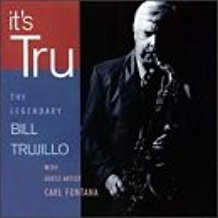
In 1999 he led his debut album It’s Tru followed by his 2006 It’s Still Tru with Carl Fontana on the TNC label. As an educator, saxophonist Bill Trujillo teaches clarinet, flute, and all saxophones while continuing to perform in Las Vegas.
Sponsored By


#preserving genius
Daily Dose Of Jazz…
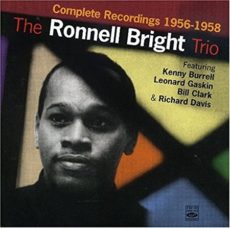
Ronnell Bright was born July 3, 1930 in Chicago, Illinois. Wanting to be a classical pianist, at age nine he won a prize and played with the Chicago Youth Piano Symphony Orchestra. He went on to study at the Juilliard School, completing his studies in the early 1950s. His first encounter with jazz was in a United States Navy band. After his discharge he went back home and worked and recorded with bassist Johnny Pate and it was in the mid 1950s that he became the pianist for singer Carmen McRae.
1955 saw Bright moving to New York City where he performed and recorded with Rolf Kühn, and with Buddy Tate on the Swingville Sessions. Two years later he joined the Dizzy Gillespie big band and formed his own trio with Richard Davis and drummer Art Morgan. From 1958 he was pianist and music director of the orchestra for Sarah Vaughan, Lena Horne and Gloria Lynne. In 1964, he became Nancy Wilson’s arranger, pianist and musical director and moved to Los Angeles, California.
Working mainly in the Hollywood studios, in 1972 Ronnell became a member of the Supersax formation for two years, taught at high school for a year and worked as a composer with lyricist Johnny Mercer. He also composed songs performed by Sarah Vaughan, Cal Tjader, Horace Silver and Blue Mitchell and was involved in recordings by Coleman Hawkins, Anita O’Day, Shirley Scott and Frank Wess.
By the beginning of the 1990s he settled in Denver, Colorado and gave himself the title of “Doctor of Divinity” and with his wife Reverend Dianne Bright, he produced jazz programs for their own church community, the Harmony Church, where local musicians often performed as guests of the Harmony Orchestra.
Pianist, arranger and composer Ronnell Bright who recorded four albums as a leader grooved to modern jazz and swing, continued to play and produce occasionally until he passed away at 91 years old on August 12, 2021.
Sponsored By

Voices From The Community
#preserving genius
More Posts: piano
Daily Dose Of Jazz…
Lem Davis was born Lemuel A. Davis on June 22, 1914 in Tampa, Florida. His career began in the 1940s during the small jazz combo era with pianist Nat Jaffe. He became best known for playing with the Coleman Hawkins Septet as well as Eddie Heywood and Rex Stewart and a variety of jazz groups.
After recording with jazz vocalist Billie Holiday as a member of Heywood’s band in 1944, Davis went on to record with John Kirby, Joe Thomas, and Eddie Safranski. Although he reached his apex in the 1940s, Davis continued to perform in the New York area during the 1950s , leading his own band featuring Emmett Berry on trumpet, trombonist Vic Dickerson and pianist Dodo Marmarosa.
By 1953 Lem appeared soloing on Buck Clayton’s Huckle-buck recording. He continued to play in New York City throughout the 1950s, but as bebop surpassed swing in popularity, he recorded little thereafter.
Unable to make the transition from swing to bebop, he faded into obscurity. Swing and jazz alto saxophonist Lem Davis passed away on January 16, 1970 in New York City.
Sponsored By

#preserving genius
More Posts: saxophone
Daily Dose Of Jazz…
Melvin Moore was born on June 15, 1923 in Chicago, Illinois. In 1944 the trumpeter began his career playing with Lucky Millinder, then joined Duke Ellington’s Orchestra from 1948 to 1950. This he followed with performance in rhythm and blues bands. By 1951 he was recording with Dizzy Gillespie and singing on such titles as The Champ and Swing Low, Sweet Cadillac.
At the end of 1951 he was recording some vocal titles for King Records with Terry Gibbs, Billy Taylor, Mundell Lowe and Charles Mingus. In 1957 he was a member of Don Redman’s orchestra, the following year he recorded with John Pisano and with Billy Bean. Between 1964 and 1966 he worked with Gerald Wilson and he also accompanied Johnny Hartman. During the Sixties he performed on separate dates at the Monterey Jazz Festival with Mingus, Thelonious Monk and Dizzy Gillespie.
By 1967 he was playing in B.B. Kings band followed by the Seventies bands of Esther Phillips, T – Bone Walker, Don Sugarcane Harris, Johnny Otis, Jerry Garcia and Shuggie Otis and in the early 1980s with Ted Hawkins. Moore is not to be confused with the singer born in 1917, who sang with Jimmie Lunceford and Ernie Fields .
Trumpeter, violinist and singer of swing and bebop Mel Moore passed away on February 26, 1989 in New York City.
Sponsored By
#preserving genius
Daily Dose Of Jazz…
John Simmons was born June 14, 1918 in Haskell, Oklahoma and played trumpet at first, but a sports injury prevented him from continuing on the instrument. He picked up bass instead, landing his first professional gigs a mere four months after starting on the instrument. Early on he played with Nat King Cole and Teddy Wilson in 1937 before moving to Chicago, Illinois where he played with Jimmy Bell, King Kolax, Floyd Campbell, and Johnny Letman.
1940 saw him playing with Roy Eldridge and then spent 1941 to 1942 playing at various times with Benny Goodman, Cootie Williams, and Louis Armstrong. From 1942 to 1943 John played in the CBS Blue Network Orchestra, then played with Duke Ellington, Eddie Heywood and Illinois Jacquet through 1946, in addition to doing much studio work.
Simmons recorded with Lester Young, James P. Johnson, Hot Lips Page, Ben Webster, Billie Holiday, Sidney DeParis, Sid Catlett, Coleman Hawkins, Don Byas, Benny Carter, Bill DeArango, Al Casey, Ella Fitzgerald, Charles Thompson, Milt Jackson, Buddy Rich, Tadd Dameron, Matthew Gee, Maynard fErguson and Thelonious Monk among numerous others.
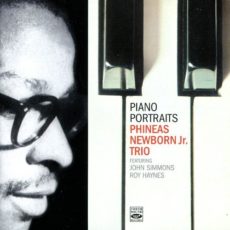
Much of the 1950s Simmons continued to work as a studio musician recording with Erroll Garner, Harry “Sweets” Edison, Art Tatum, and the Rolf Ericson/Duke Jordan band. One of his last associations was with Phineas Newborn in 1960 before ill health forced his retirement not long afterwards. Bassist John Simmons passed away on September 19, 1979 in Orange, New York.
Sponsored By

#preserving genius
More Posts: bass