

Daily Dose Of Jazz…
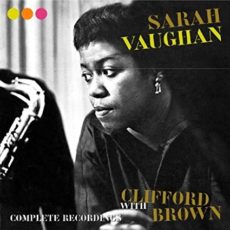
John Malachi was born on September 6, 1919 in Red Springs, North Carolina and grew up in Durham, North Carolina. At the age of ten he moved with his family to Washington, D.C., and was a self-taught musician.
Malachi was a member of the Billy Eckstine Bebop Orchestra in 1944 for a year and then again in 1947. He worked with Illinois Jacquet in 1948, Louis Jordan in 1951, and a series of singers including Pearl Bailey, Dinah Washington, Sarah Vaughan, Al Hibbler, and Joe Williams.
Opting out of the traveling life of the touring jazz musician in the 1960s, he lived approximately the last decade and a half of his life in Washington, D.C. freelancing, playing with touring bands and artists when they stopped in the city, and leading music workshops at clubs like Jimmy MacPhail’s Gold Room and Bill Harris’s Pig’s Foot. Malachi’s generosity towards younger musicians was legendary. His workshops with young musicians was referred to as The University of John Malachi.
He is credited with creating the nickname “Sassy” for Sarah Vaughan, with whom he worked with the Eckstine Orchestra and later directly with her. Pianist John Malachi, who was fond of categorizing jazz pianists into acrobats and poets, and considered himself among the latter, passed away on February 11, 1987 at the age of 67 in Washington, DC.

More Posts: piano
Daily Dose Of Jazz..
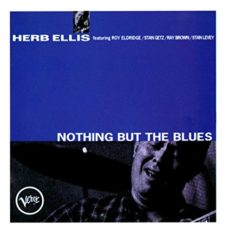
Herb Ellis was born Mitchell Herbert Ellis in Farmersville, Texas on August 4, 1921 and raised in the suburbs of Dallas, Texas. He first heard the electric guitar performed by George Barnes on a radio program which inspired him to take up the guitar. He became proficient on the instrument by the time he entered North Texas State University, majored in music, but with no guitar program he studied string bass. With a lack of funds he dropped out in 1941 and toured for six months with a band from the University of Kansas.
In 1943, he joined Glen Gray and the Casa Loma Orchestra and it was here that he got his first recognition in the jazz magazines. Leaving Gray for the Jimmy Dorsey band, he got his initial opportunities to recorded solos. Ellis remained with Dorsey through 1947, traveling and recording extensively, but with a six-week hole in the schedule, he John Frigo and Lou Carter took a gig in Buffalo that lasted six months and where the group Soft Winds was born he wrote the classic jazz standard Detour Ahead.
The group fashioned themselves after the Nat King Cole Trio. and stayed together until 1952. Herb then replaced Barney Kessel in the Oscar Peterson Trio in 1953. His prominence not only with his performing with the trio alongside Ray Brown until 1958 but also because he was the only white person in the group in a time when racism was still very much widespread.
With the addition of a drummer, the Oscar Peterson Trio, served as the house rhythm section for Norman Granz’s Verve Records. They supported the likes of Ben Webster, Stan Getz, Dizzy Gillespie, Roy Eldridge, Sweets Edison, Buddy Rich, Lester Young, Benny Carter, Victor Feldman, Mel Brown, Ella Fitzgerald and Louis Armstrong among numerous others.
The trio were a mainstay of Jazz at the Philharmonic concerts as they swept the jazz world, from 957 to 1960 Ellis toured with Ella Fitzgerald, and along with fellow jazz guitarists Barney Kessel, Charlie Byrd and Tal Farlow, he created another ensemble, the Great Guitars.
In 1994 he was inducted into the Arkansas Jazz Hall of Fame, received an Honorary Doctorate from the University of North Texas College of Music. Guitarist Herb Ellis, released twenty-two albums as a leader before passing away from Alzheimer’s disease at his Los Angeles home on the morning of March 28, 2010, at the age of 88.
Sponsored By
www.whatissuitetabu.com

#preserving genius
More Posts: guitar

Daily Dose Of Jazz…
Cedric Wallace was born August 3, 1909 in Miami, Florida. He moved to New York City in the 1930s, where he first started playing in a band led by Reggie Johnson at the Saratoga Club.
Later in the decade Wallace worked with Jimmie Lunceford before joining Fats Waller’s band from 1938-1942, the association for which he is best known. He played with Waller at the peak of his popularity and plays on many of his biggest hits.
He also recorded with Una Mae Carlisle, Maxine Sullivan, Champion Jack Dupree, Pat Flowers, Gene Sedric, and Dean Martin. Cedric led his own ensemble in New York in the 1940s which featured Eddie Gibbs on bass for a time, and continued to perform well into the 1970s.
Double-bassist Cedric Wallace passed away on August 19, 1985 in New York City.
Sponsored By

#preserving genius
More Posts: bass

Daily Dose Of Jazz…
Karel Krautgartner was born on July 20, 1922 in Mikulov, Moravia and began to play piano at the age of eight. In 1935, after moving to Brno, he found interest mainly in the radio broadcasting and especially in jazz. He began to study clarinet privately with Stanislav Krtička, acquiring necessary skills and inherited a fanatic passion for clarinet construction and its components.
In 1936 Krautgartner founded the student orchestra Quick Band and six years later signed his first professional contract as a saxophonist in the Gustav Brom Orchestra in the hotel Passage in Brno. In 1943 he gradually created Dixie Club and started to arrange in the Benny Goodman and Glenn Miller styles. During 1945 – 1955, the core of the Dixie Club moved gradually to Prague and became a part of Karel Vlach orchestra. Karel became leader of the saxophone section and started to contributing his own compositions.
1956 saw him founding the Karel Krautgartner Quintet along with Karel Velebný. The group played in various line-ups modern jazz, swing, dixieland and accompanied popular singers. From 1958 to 1960 he performed with the All star band, an orchestra playing in west-coast style, and dixieland with Studio 5. Between 1960 and 1968 he became the head of the Taneční Orchestr Československého Rozhlasu (Dance Orchestra of Czechoslovakia Radio), renamed to Karel Krautgartner Orchestra in 1967.
Following the Soviet invasion of Czechoslovakia, he emigrated to Vienna, Austria in 1968 and became the chief conductor of the 0RF Bigband. Later he moved to Cologne, Germany. Clarinetist, saxophonist, arranger, composer, conductor and teacher Karel Krautgartner passed away on September 20, 1982 in Germany.
Sponsored By

#preserving genius
Daily Dose Of Jazz…
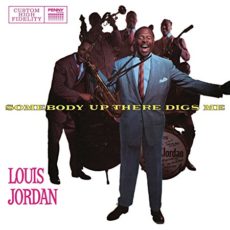
Louis Thomas Jordan was born on July 8, 1908 in Brinkley, Arkansas where his father was a music teacher and bandleader for the Brinkley Brass Band and the Rabbit Foot Minstrels. Losing his mother young, he studied music under his father, starting out on the clarinet, then piano and ultimately landed on the saxophone as his primary instrument. In his youth he played in his father’s bands instead of doing farm work when school closed. During his early career period he played the piano professionally, but alto saxophone became his main instrument. However, he would become even better known as a songwriter, entertainer and vocalist.
He briefly attended and majored in music at Arkansas Baptist College in Little Rock, but after a period with the Rabbit Foot Minstrels and with other local bands like Bob Alexander’s Harmony Kings, he went to Philadelphia and then New York. By 1932, Jordan was performing with the Clarence Williams band, and when he was in Philadelphia he played clarinet in the Charlie Gaines band.
1936 saw him joining the Savoy Ballroom orchestra, led by the drummer Chick Webb. A vital stepping-stone in his career, Louis introduced songs as he began singing lead, and often singing duets with up and comer Ella Fitzgerald. They would later reprise their partnership on several records, by which time both were major stars. In 1938, Webb fired Jordan for trying to persuade Fitzgerald and others to join his new band.
He became famous as one of the leading practitioners, innovators and popularizers of jump blues, a swinging, up-tempo, dance-oriented hybrid of jazz, blues and boogie-woogie. Jordan’s band also pioneered the use of the electronic organ.
Jordan was a talented singer with great comedic flair, and he fronted his own band for more than twenty years. He duetted with some of the biggest solo singing stars of his time, including Bing Crosby, Ella Fitzgerald and Louis Armstrong. An actor and a major black film personality, he appeared in dozens of “soundies” or promotional film clips, made numerous cameos in mainstream features and short films, and starred in two musical feature films made especially for him.
With his dynamic Tympany Five bands, Jordan mapped out the main parameters of the classic R&B, urban blues and early rock-and-roll genres with a series of highly influential 78-rpm discs released by Decca Records. These recordings presaged many of the styles of black popular music of the late 1940s, 1950s and 1960s and exerted a strong influence on many leading performers in these genres.
Known as The King of the Jukebox for his crossover popularity with both black and white audiences of the swing era, Louis was a prolific songwriter who wrote or co-wrote many songs that stayed in the top of the Billboard charts and that were influential classics of 20th-century popular music.
Pioneering alto saxophonist, pianist, clarinetist, singer, actor, songwriter and bandleader Louis Jordan, one of the most successful black recording artists of the 20th century, passed away on February 4, 1975 at age 66 in Los Angeles, California.
Sponsored By
#preserving genius