

Daily Dose Of Jazz…
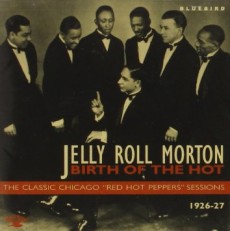
Jelly Roll Morton was born Ferdinand Joseph LaMothe on October 20, 1890 into a common-law creole of color family in the Faubourg Marigny neighborhood of downtown New Orleans, Louisiana. He started playing music as a child, showing early talent. After his parents separated, his mother married a man named Mouton and anglicizing it changed it to Morton.
At the age of fourteen, Morton began working as a piano player in a Storyville brothel, then known as a sporting house. In that atmosphere he often sang smutty lyrics and it was there he took the nickname “Jelly Roll”, which was African American slang for female genitalia. While working there, he was living with his religious, church-going great-grandmother; he had her convinced that he worked as a night watchman in a barrel factory. After Morton’s grandmother found out that he was playing jazz in a local brothel, she kicked him out of her house. However, Tony Jackson, also a pianist at brothels and an accomplished guitar player, was a major influence on his music.
Around 1904, Jelly Roll started touring in the American South, working with minstrel show, gambling and composing. He moved to Chicago in 1910 and New York City the following year where future stride greats James P. Johnson and Willie “The Lion” Smith caught his act, years before the blues were widely played in the North. His works Jelly Roll Blues, composed in 1915, has arguably become the first jazz song ever published. New Orleans Blues, Frog-I-More Rag, Animus Dance and King Porter Stomp followed as they were composed during this period. In 1917, he followed bandleader William Manuel Johnson Johnson’s sister Anita Gonzalez to California, where his tango The Crave, made a sensation in Hollywood. Returned to Chicago in 1923 to claim authorship of his recently published rag, “The Wolverines”, which had become a hit as “Wolverine Blues” in the Windy City. He released the first of his commercial recordings, first as piano rolls, then on record, both as a piano soloist and with various jazz bands.
In 1926, Morton succeeded in getting a contract to record for the largest and most prestigious company in the United States, Victor. This gave him a chance to bring a well-rehearsed band to play his arrangements. These recordings by Jelly Roll Morton & His Red Hot Peppers are regarded as classics of 1920s jazz. They featured Kid Ory, Omer Simeon, George Mitchell, Johnny St. Cyr, Barney Bigard, Johnny Dodds, Baby Dodds and Andrew Hilaire. And the group became one of the first acts to be booked on tour by MCA. Moving to New York City in 1928 he continued to compose and record for Victor with the aforementioned in addition to George Baquet, Albert Nicholas, Wilton Crawley, Russell Procope, Lorenzo Tio, Artie Shaw, Bubber Miley, Johnny Dunn, Henry “Red” Allen, Sidney Bechet,, Paul Barnes and Bud Freeman, Pops Foster, Paul Barbarin, Cozy Cole and Zutty Singleton.
During the Great Depression Morton lost his contract with Victor, struggled financially and took a job with a traveling burlesque show for steady income. In 1935, his 30-year-old composition King Porter Stomp arranged by Fletcher Henderson became Benny Goodman’s first hit and swing standard but Jelly Roll received no royalties from its recordings.
A move to Washington, DC saw him becoming the manager, piano player, master of ceremonies, bouncer and bartender of a bar located at 1211 U Street in the NW Black section of town called Shaw. Unable to make it a success due to the owner’s bad business decisions and being stabbed by a friend of the owner, Morton’s wife demanded they leave DC. Before his departure folklorist Alan Lomax invited him to record music and interviews at the Library of Congress, which ended after eight hours, though Lomax conducted longer interviews but only to notes without recording.
When Morton was stabbed and wounded, a nearby whites-only hospital refused to treat him, as the city had racially segregated facilities. Transported to a black hospital farther away it was several hours before being attended to and his recovery suffered, often he became short of breath. Worsening asthma sent him to a New York hospital for three months at one point and although he continued to suffer from respiratory problems when visiting Los Angeles, California with manuscripts of new tunes and arrangements, planning to form a new band and restart his career, pianist and composer Jelly Roll Morton passed away on July 10, 1941, after an eleven-day stay in Los Angeles County General Hospital. He was inducted into the Rock and Roll Hall of Fame, the Louisiana Hall of Fame and is a charter member of the Gennett Records Walk of Fame.

Dose A Day – Blues Away
More Posts: piano
Daily Dose Of Jazz…
Charles Parker, Jr. was born on August 29, 1920 in Kansas City, Kansas but was raised in Kansas City Missouri, the only child of Adelaide and Charles Parker. He began playing the saxophone at age 11 and by age 14 he joined his school’s band using a rented school instrument. His father, a pianist, dancer and singer on the Theater Owners Booking Association (T.O.B.A.) circuit, was often absent but provided some musical influence. His biggest influence at that time was a young trombone player who taught him the basics of improvisation.
By the late 1930s Parker began to practice diligently. During this period he mastered improvisation and developed some of the ideas that led to bebop. He played with local bands in jazz clubs around his hometown perfecting his technique, with the assistance of Buster Smith, whose dynamic transitions to double and triple time influenced the young man’s developing style.
In 1938, he joined pianist Jay McShann’s territory band touring nightclubs and other venues in the Southwest, Chicago and New York City. During this stint with McShann he made his professional recording debut. As a teenager, Charlie developed a morphine addiction while hospitalized after an automobile accident, and subsequently became addicted to heroin.
In 1939 Parker moved to New York City, to pursue a career in music. He held several other jobs as well. He worked for nine dollars a week as a dishwasher at Jimmie’s Chicken Shack, where pianist Art Tatum performed. In 1942 he left McShann and played with Earl Hines for one year alongside Dizzy Gillespie. A strike by the American Federation of Musicians unfortunately resulted in few recordings documenting this period of his playing. He played in after-hours clubs in Harlem with other young cats at the time, such as, Thelonious Monk, Charlie Christian, Mary Lou Williams and Kenny Clarke, creating a music that white bandleaders couldn’t usurp and profit from like they did with swing.
It was while playing Cherokee in a jam session with William “Biddy” Fleet that he hit upon a method for developing his solos that enabled one of his main musical innovations, the 12 semitones of the Chromatic scale could lead melodically to any key, breaking some of the confines of simpler jazz soloing.
By 1945 after the lifting of the recording ban that Charlie’s collaboration with Dizzy Gillespie, Max Roach, Bud Powell and others would have a substantial effect on the jazz world beginning with their June 22, 1945 Town Hall performance. Bebop soon gained wider appeal among musicians and fans alike.
On November 26th of that same year he led a record date for Savoy Records that is arguably the “greatest jazz session ever” with Miles Davis, Curly Russell, and Max Roach. Shortly afterward, the Parker/Gillespie band traveled to an unsuccessful engagement at Billy Berg’s club in Los Angeles. However staying in California he spiraled down into great hardship due to his heroin addiction, ultimately being committed to Camarillo State Mental Hospital for six months.
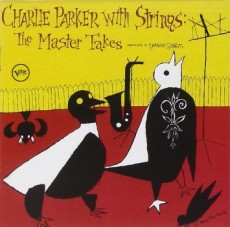
Although he produced many brilliant recordings during this period, Parker’s addiction led to increasingly erratic behavior. Recording sessions were hard, but he recorded the classic Relaxin’ at Camarillo before his return to New York. He would record a series of sessions with Savoy and Dial record labels, innovate by fusing jazz and classical elements into what would become known as Third Stream, releasing Charlie Parker with Strings.
The influential jazz musician who was at the gate of bebop and the man affectionately known as Yardbird or simply Bird, Charlie Parker died on March 12, 1955, in the suite of his friend and patroness Baroness Pannonica de Koenigswarter at the Stanhope Hotel in New York City while watching The Dorsey Brothers Stage Show on television. The official causes of death were lobar pneumonia and a bleeding ulcer but also an advanced case of cirrhosis and he had suffered a heart attack. The coroner who performed his autopsy mistakenly estimated Parker’s 34-year-old body to be between 50 and 60 years of age. His friend Dizzy Gillespie paid for the funeral arrangements and organized a lying-in-state, a Harlem procession officiated by Congressman and Reverend Adam Clayton Powell Jr., as well as a memorial concert.
He left the world classic jazz compositions, arrangements and versions of tunes such as Ornithology, How High The Moon, Yardbird Suite, Billie’s Bounce, Now’s The Time, Au Privave, Barbados, Relaxin’ at Camarillo, Bloomdido, Blues for Alice, Laird Baird, Si Si, Constellation, Donna Lee, Scrapple From The Apple, Cheryl, Ah-Leu-Cha, Anthropology and Cool Blues among others.
He was posthumously awarded a Grammy for Best Performance by a Soloist in 1974, a Grammy Lifetime Achievement Award in 1984, had two albums Jazz At Massey hall and Charlie Parker with Strings and two singles Ornithology and Billie’s Bounce inducted into the Grammy Hall of Fame. He has been inducted into the Big Band and Jazz Hall of Fame and the Jazz at Lincoln Center: Nesuhi Ertegun Jazz Hall of Fame and had a 32 cent stamp commissioned and issued by the United State Post Office.
Put A Dose In Your Pocket
More Posts: saxophone
Daily Dose Of Jazz…
Eddie Shu was born Edward Shulman on March18, 1918 in New York City and learned violin and guitar as a child before picking up the saxophone as a teenager. He began his professional career in 1935 in Brooklyn and for the seven years leading up to his service in the U.S. Army, he performed in vaudeville and night clubs as a ventriloquist and played harmonica with the Cappy Barra harmonica Band.
While serving in the Army from 1942 to 1945 with Stan Harper, the two were assigned to a special unit to entertain the troops. He also played in various bans including with Maurice Evans in the Pacific. After the war and through the 1950s Eddie performed with Tadd Dameron, George Shearing, Johnny Bothwell, Buddy Rich, Les Elgart, Lionel Hampton, Charlie Barnet, Chubby Jackson, and Gene Krupa.
By the 1960s Shu moved to Florida, playing locally as well as with the Louis Armstrong All-Stars, Lionel Hampton and Gene Krupa once again. He was a member of the vocal jazz group Rare Silk in 1980. During this period, he performed with this group in and around Boulder, Colorado and also performed a 6-week Department of Defense tour. He would record his final date on the Island Jazz Label “Shu-Swings” With The Joe Delaney Trio, playing tenor and alto saxophones, clarinet, trumpet and also revisit’s his 1954 78 single “Ruby” on chromatic harmonica.
Eddie Shu died on July 4, 1986 in St. Petersburg, Florida while living in Tampa. The swing and jazz multi-instrumentalist also had a high proficiency on the accordion and was a popular comedic ventriloquist.
Dose A Day – Blues Away
Daily Dose Of Jazz…
Rahsaan Roland Kirk was born Ronald Theodore Kirk on August 7, 1935 in Coumbus, Ohio and grew up in the neighborhood called Flytown. He felt compelled by a dream to transpose two letters in his first name to make Roland. He became blind at an early age as a result of poor medical treatment. In 1970 he added “Rahsaan” to his name after hearing it in a dream.
Rahsaan preferred to lead his own bands and rarely did he perform as a sideman, although he did record lead flute and solo on Soul Bossa Nova with arranger Quincy Jones in 1964, as well as drummer Roy Haynes and had notable stints with bassist Charles Mingus. His playing was generally rooted in soul jazz or hard bop but his knowledge of jazz gave him the ability to draw from ragtime to swing to free jazz. In additional to classical influences he borrowed elements from composers like Smokey Robinson and Burt Bacharach, Duke Ellington and John Coltrane.
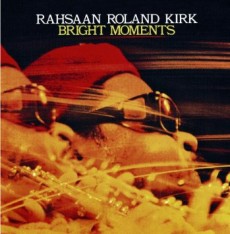
His main instrument was the tenor saxophone and two obscure saxophones: the stritch, a straight alto sax lacking the instrument’s characteristic upturned bell and a manzello, a modified saxello soprano sax, with a larger, upturned bell. Kirk modified these instruments himself to accommodate his simultaneous playing technique. He also played flute, clarinet, harmonica, English horn, recorder and trumpet, as well as incorporating an interesting array of common items such as garden hose, alarm clocks and sirens.
At times Rahsaan would play a number of these horns at once, harmonizing with himself, or sustain a note for lengthy durations by using circular breathing or play the rare, seldom heard nose flute. Many of Kirk’s instruments were exotic or homemade, but even while playing two or three saxophones at once the music was intricate, powerful jazz with a strong feel for the blues. Politically outspoken, he would often talk about issues of the day in between songs at his concerts, such as Black history and the civil rights movement and lacing them with satire and humor. According to comedian Jay Leno, when he toured with him as his opening act, Kirk would introduce him by saying, “I want to introduce a young brother who knows the black experience and knows all about the white devils… Please welcome Jay Leno!”
In 1975, Kirk suffered a major stroke that led to partial paralysis of one side of his body. However, he continued to perform and record, modifying his instruments to enable him to play with one arm. He died from a second stroke on December 5, 1977 after performing in the Frangipani Room of the Indiana University Student Union in Bloomington, Indiana.
His influence went well beyond jazz to include such rock musicians as Jimi Hendrix, Ian Anderson of Jethro Tull, Eric Burdon and War, T.K. Kirk, Hope Clayburn, Jonny Greenwood and Ramon Lopez, all who idolized or paid tribute to, and David Jackson, George Braith and Dick Heckstall-Smith who took to playing multiple saxophones, and Steve Turre, Courtney Pine who utilizing his circular breathing during play. He left to us nearly four-dozen albums as a leader and another eleven with aforementioned Jones, Mingus and Haynes, and Tubby Hayes, Tommy Peltier, Jaki Byard and Les McCann.
Jazz Is Global – Share
Daily Dose Of Jazz…
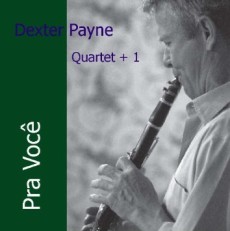
Reedman Dexter Payne was born on July 5, 1951 in Denver, Colorado. The clarinet was his first instrument and went on to master the alto and baritone saxophones adding them to his arsenal. His early influences were Artie Shaw, Buddy DeFranco, Benny Goodman, Stan Getz, Zoot Sims, Gerry Mulligan,Benny Carter, Johnny Hodges and Lester Young.
A very lyrical and melodic player, Dexter plays swing, bop, cool jazz, and Brazilian jazz as well as other forms of music including Latin. In 2000 he played with Brazilian musician Thiago de Mello, recorded the album Inspiration in 2003, with Brazilian guitarist Antonio Mello,
He followed with his sophomore release in 2005 release Another Feeling with producer Arnaldo De Souteiro on his Jazz Station label. He recorded again in 3006 and 2007 which de Mello produced and released Our Time to Remember. Clarinetist and saxophonist Dexter Payne continues to perform, record and tour.
Put A Dose In Your Pocket