

Daily Dose Of Jazz…
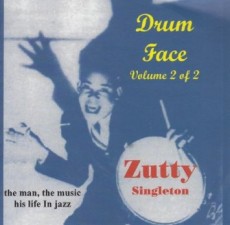
Born Arthur James Singleton on May 14, 1898 in Bunkie, Louisiana, Zutty” Singleton was raised in New Orleans. By the time he was seventeen he was working professionally with Steve Lewis in 1915. He served with the Navy during World War I and after returning to New Orleans he worked with Papa Celestin, Big Eye Louis Nelson, John Robichaux and Fate Marable.
Leaving for St. Lois, Missouri, he played in Charlie Creath’s band before moving on to Chicago, Illinois. There he played with Doc Cooke, Dave Peyton, Jimmy Noone as well as theater bands. He joined Louis Armstrong’s band with Earl Hines and between 1928-1929 performed on the landmark recordings Louis Armstrong and His Hot Five. He then moved to New York City with Armstrong.
During the next decade he would play with Armstrong and also Bubber Miley, Tommy Ladnier, Fats Waller, Jelly Roll Morton and Otto Hardwick. He also played in the band that backed Bill Robinson. In 1934, Singleton returned to Chicago but by 1937 was back in New York playing with Mezz Mezzrow and Sidney Bechet.
1943 saw Zutty moving to Los Angeles, where he led his own band, played for motion pictures, and in 1944 was featured on Orson Welles’s CBS radio series, The Orson Welles Almanac. He later worked with Slim Gaillard, Wingy Manone, Eddie Condon, Nappy Lamare, Art Hodes, Oran “Hot Lips” Page and Max Kaminsky.
Between 1943 and 1950 he appeared in the films Stormy Weather, New Orleans and Young Man With A Horn. Retiring after suffering a stroke in 1970, drummer Zutty Singleton passed away in New York City on July 14, 1975, aged 77.

Give The Gift Of Knowledge

More Posts: drums
Daily Dose Of Jazz…
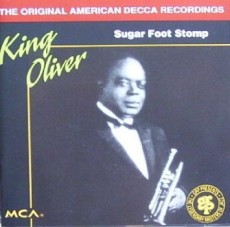
King Oliver was born Joseph Nathan Oliver on May 11, 1885 in Aben, Louisiana. He was also known as Joe Oliver and moved to New Orleans in his youth. He first studied the trombone and then changed to cornet. From 1908 to 1917 he played cornet in New Orleans brass and dance bands, and also in the city’s red-light district known as Storyville.
Oliver co-led a band with trombonist Kid Ory that was considered to be New Orleans’ hottest and best in the late 1910s. He gained great popularity in New Orleans across economic and racial lines, and was in demand for music jobs from rough working-class black dance halls to white society debutante parties.
With the closing of Storyville, Joe packed up his wife and child and moved to Chicago, Illinois in 1918. There he found work with clarinetist Lawrence Duhé, bassist Bill Johnson, trombonist Roy Palmer and drummer Paul Barbarin, eventually becoming the leader. By 1922 he was billing himself as King Oliver and his Creole Jazz Band at the Royal Gardens cabaret. His band included Louis Armstrong, Baby Dodds, Johnny Dodds, Lil Hardin, Honoré Dutrey and William Manuel Johnson. The following year they recorded for Gennett, Okeh, Paramount and Columbia record labels, bringing Dixieland to the attention of a much wider audience.
The mid-Twenties saw King enlarging his band to nine musicians, began performing more written arrangements with jazz solos, disbanding to do more freelance work in New York, Over the course of his career Oliver pioneered the use of mutes, including the rubber plumber’s plunger, derby hat, bottles and cups but his favorite mute was a small metal mute made by the C.G. Conn Instrument Company. He performed mostly on cornet, but like many cornet players he switched to trumpet in the late 1920s.
Oliver was also a talented composer, and wrote many tunes that are still regularly played, including Dippermouth Blues, Sweet Like This, Canal Street Blues, and Doctor Jazz. His recording Wa Wa Wa with the Dixie Syncopators can be credited with giving the name wah-wah to such techniques.
As an educator he influenced young New Orleans and Chicago players like Tommy Ladnier, Paul Mares, Muggsy Spanier, Johnny Wiggs Frank Guarente, Louis Panico and Louis Armstrong. The latter he taught, gave him his job in Kid Ory’s band and then summoned him to Chicago to play in his band.
As a businessman his acumen was often less than his musical ability losing jobs at the Savoy Ballroom and the Cotton Club by holding out for moe money than they were willing to pay. Ellington took the Cotton Club job and catapulted to fame
Oliver’s managers stole money from him and then the Great Depression hit losing his life savings to a failed Chicago bank, and bookings became lean.Oliver also had health problems, suffering from the gum disease pyorrhea, caused by his love of sugar sandwiches. He began employing younger musicians to play solos like up-and-coming trumpeter Henry “Red” Allen. Coupled with health problems suffering from periodontitis and his diminished capacity to play left him no choice but to stop playing by 1937.
Cornetist and bandleader King Oliver died in poverty of arteriosclerosis in a Savannah rooming house on April 10, 1938 at age 52, too broke to afford treatment. His sister spent her rent money to have his body brought to New York, where he was buried at Woodlawn Cemetery in the Bronx. In attendance were his friends Louis Armstrong, Clarence Williams, Coleman Hawkins, Lionel Hampton, W.C. Handy, Milt Jackson, and Max Roach. In 2007 he was inducted as a charter member of the Gennett Records Walk of Fame in Richmond, Indiana.
Jazz Is Global – Share
Daily Dose Of Jazz…
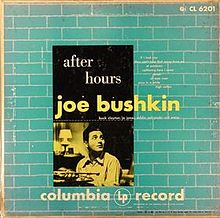
Sid Weiss was born April 30, 1914 in Schenectady, New York and learned clarinet, violin, and tuba when young. He switched to bass in his teens. He moved to New York City around 1931 and worked the following decade with Louis Prima, Bunny Berigan, Wingy Manone, Artie Shaw, Tommy Dorsey, Charlie Barnet and Adrian Rollini.
He was with Benny Goodman from 1941–1945, then played in the second half of the 1940s and the early 1950s with Muggsy Spanier, Pee Wee Russell, Cozy Cole, Bud Freeman, Duke Ellington and Eddie Condon. He quit full-time performing in the mid-1950s and in 1968 was an executive of the musicians’ union in Los Angeles, California. Bassist Sid Weiss passed away on March 30, 1994.
Dose A Day-Blues Away
More Posts: bass
Daily Dose Of Jazz…
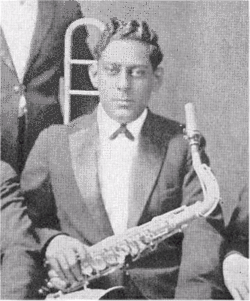
Lorenzo Tio Jr. was born on April 21, 1893 in New Orleans, Louisiana and raised in Bay St. Louis, Mississippi. Following in the footsteps of his father Lorenzo Sr. and his uncle Louis “Papa”, he also became a master clarinetist. Their method of playing the instrument, which involved the Albert system, a double-lip embouchure and soft reeds, was seminal in the development of the jazz solo.
Tio Jr.was instrumental in bringing classical music theory to the ragtime, blues and jazz musicians of New Orleans and he eventually played jazz himself. His main instrument was clarinet also played the oboe and joined Manuel Perez’s band in Chicago, Illinois in 1916 and Armand J. Piron’s from 1918 to 1928, recording with Piron, Bechet, Jelly Roll Morton and Clarence Williams.
As an educator among the reed players to impact early jazz who studied under Lorenzo’s direction were Sidney Bechet, Barney Bigard, Johnny Dodds, Omer Simeon, Louis Cottrell Jr., Jimmie Noone and Albert Nicholas. He taught Bigard what would become the main theme to the famous Ellington tune Mood Indigo.
Tio gigged in legendary New Orleans large ensembles such as the Lyre Club Symphony Orchestra during the late 19th century. He played in smaller combos, traditional brass bands, had a standing collaboration with Papa Celestin whenever he was in the Big Easy, and performed with the Tuxedo Brass Band.
Despite his strong ties to New Orleans, he regularly played the New York jazz scene on steamboats running between the state capitol in Albany and the Big Apple. During the late ’20s and early ’30s, He had a regular stint at The Nest Club in New York City. Clarinetist and educator Lorenzo Tio Jr., who also played oboe and tenor saxophone, passed away on December 24, 1933.
Dose A Day-Blues Away
Daily Dose Of Jazz…
Casper Reardon was born on April 15, 1907 in New York City. He studied classical harp at the Curtis Institute of Music before going on to play for the Philadelphia Orchestra and then the Cincinnati Symphony Orchestra.
Before Reardon the harp had been used in dance music for the occasional flourish, but he is considered the first for using harp as a jazz instrument for solos and performances. By 1936 he was hailed as the World’s Hottest Harpist, and the following year he played Cousin Caspar in the film You’re a Sweetheart.
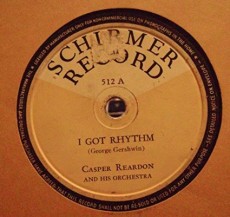
1938 saw him playing harp for the Broadway musical I Married An Angel. As a jazz musician Reardon can be heard performing on albums by Jack Teagarden and Paul Whiteman. As a leader Casper recorded a handful of records for Liberty Music Shops and Schirmer.
Classical and jazz harpist Casper Reardon passed away in New York City on March 9, 1941 at the age of 33.
Give A Gift Of Jazz – Share
More Posts: harp