

Daily Dose Of Jazz…
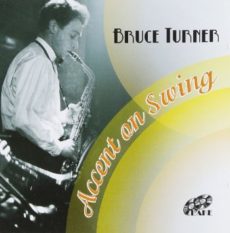
Bruce Turner was born Malcolm Bruce Turner on July 5, 1922 in Saltburn, England. Educated at Dulwich College, he learned to play the clarinet as a schoolboy and began playing alto sax while serving in the Royal Air Force in 1943 during World War II. He played with Freddy Randall from 1948–53, and worked on the Queen Mary in a dance band and in a quartet with Dill Jones and Peter Ind.
He briefly studied under Lee Konitz in New York City in 1950 then joined Humphrey Lyttelton’s outfit from 1953 to 1957. After leaving Lyttelton he led his own Jump Band from 1957–65 and was featured and arranged the music in the 1961 film Living Jazz. In 1961, Turner and his band recorded the LP Jumpin’ At The NFT (National Film Theatre) coinciding with the film’s release. Two years later he took part in the largest trad jazz event to be staged in Britain with George Melly, Diz Disley, Acker Bilk, Chris Barber, Kenny Ball, Ken Colyer, Monty Sunshine, Bob Wallis, Alex Welsh and Mick Mulligan.
He returned to work with Randall from 1964–66, and played with Don Byas in 1966 and Acker Bilk from 1966 to 1970. He continued to work with Lyttelton and Ind in the 1960s, 1970s and 1980s, and played with the Jump Band every so often. He worked with Wally Fawkes, John Chilton, Stan Greig, Alex Welsh, and Dave Green through the Seventies. He led his own small ensembles in the 1990s, up until his death.
He was noted for his very quiet voice and his autobiography Hot Air, Cool Music was published in 1984. He also wrote a column on jazz for the Daily Worker. Saxophonist, clarinetist, and bandleader Bruce Turner passed away on November 28, 1993 in Newport Pagnell.
Sponsored By

www.whatissuitetabu.com

Daily Dose Of Jazz…
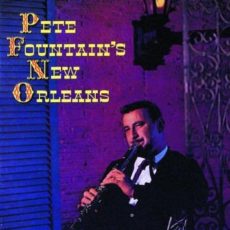
Pete Fountain was born Pierre Dewey LaFontaine, Jr. in a Creole cottage style frame house on July 3, 1930 in New Orleans, Louisiana. His father later changed his name to Peter and added Junior. He started playing clarinet as a child due to suffering from weakened lungs from a respiratory infection. Choosing the clarinet, his lungs became strengthened after receiving a doctor’s advice to play an instrument that he would have to blow into.
He took private lessons but also learned to play jazz by playing along with phonograph records of first Benny Goodman and then Irving Fazola. Early on he played with the bands of Monk Hazel and Al Hirt. Fountain founded The Basin Street Six in 1950 with his longtime friend, trumpeter George Girard . Four years later the band broke up and he was hired to join the Lawrence Welk orchestra and became well known for his many solos on the television show, The Lawrence Welk Show.
Post Welk, Pete was hired by Decca Records A&R head Charles “Bud” Dant and went on to produce 42 hit albums with Dant. He returned to New Orleans, played with The Dukes of Dixieland, then began leading bands under his own name. On the Sixties and Seventies he owned his own club in the French Quarter and later acquired Pete Fountain’s Jazz Club at the Riverside Hilton. He would lead a quintet comprised of bassist Don Bagley, vibist Godfrey Hirsch, pianist Merle Koch, and double bass drummer Jack Sperling. He played the Hollywood Bowl and appeared on The Tonight Show Starring Johnny Carson 56 times.
Over the course of his career his club would host Cliff Arquette, Jonathan Winters, Frank Sinatra, Phil Harris, Carol Lawrence, Robert Goulet, Keely Smith, Robert Mitchum, Brenda Lee, among many others. He would play and/or record with Oliver “Sticks” Felix, John Probst, Paul Guma, Godfrey Hirsch, Jack Sperling, Don Bagley, Morty Corb, Godfrey Hirch, Merle Kock, Stan Wrightsman and Al Hirt, who had a club down the street. He performed his last show at the Hollywood Casino in 2010.
He is a founder and the most prominent member of the Half-Fast Walking Club, one of the best known marching Krewes that parade in New Orleans on Mardi Gras Day. He has been honored with induction into the Louisiana Music Hall of Fame, given a star on the Delta Music Museum Walk of Fame, and received an honorary degree from Loyola University New Orleans. Clarinetist Pete Fountain, who played jazz, Dixieland, pop jazz, honky-tonk jazz, pop, and Creole music, passed away in his hometown on August 6, 2016 from heart failure at the age of 86.

Take A Dose On The Road
More Posts: clarinet
Daily Dose Of Jazz…
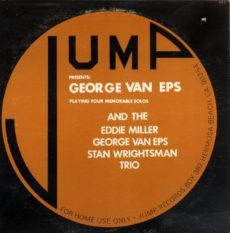
Stanley Aubrey Wrightsman was born on June 15, 1910 in Gotebo, Oklahoma. He began playing professionally in a Gulfport, Mississippi hotel, and in territory bands in Oklahoma. In 1930, he moved to New Orleans, Louisiana where he played with Ray Miller. From 1935–1936 he worked with Ben Pollack in Chicago, Illinois.
His career was interrupted by an illness, but then worked in California with the Seger Ellis Orchestra in 1937. He made his debut recordings were made soon thereafter with Spike Jones and his City Slickers. In the Forties and Fifties, Stan played with various big bands and ensembles in the traditional jazz genre, including Artie Shaw, Wingy Manone, Eddie Miller, Rudy Vallee, Nappy Lamare, Johnny Mercer, Harry James, Bob Crosby, Matty Matlock, Pete Fountain, The Rampart Street Paraders, Ray Bauduc, Wild Bill Davison, and Bob Scobey.
Wrightsman appeared in films and on the soundtrack of Blues in the Night, in which he stood in for Richard Whorf on piano, Syncopation, the Jack Webb film Pete Kelly’s Blues, the Red Nichols biopic The Five Pennies and in the feature film The Crimson Canary he appeared as a pianist.
During the 1960s, Wrightsman reunited with Pete Fountain and continued his work with Hollywood film studios. At the end of the decade, he moved to Las Vegas, Nevada where he played as a sideman for Wayne Newton and Flip Wilson.
From 1937 to 1971 he recorded 174 sessions that included Louis Armstrong, Eartha Kitt, George Van Eps, and Peggy Lee, whom he accompanied on the celesta for the song That Old Feeling in 1944. On December 17, 1975 pianist Stan Wrightsman passed away in Palm Springs, California.
Give A Gift Of Jazz – Share
More Posts: piano
Daily Dose Of Jazz…
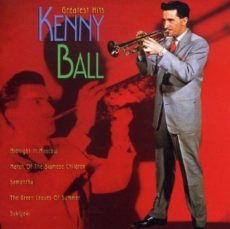
Kenny Ball was born Kenneth Daniel Ball on May 22, 1930 in Ilford, Essex, England. At the age of 14 he left school to work as a clerk in an advertising agency, but also started taking trumpet lessons. He began his career as a semi-professional sideman in bands in addition to being a salesman and continued working at the ad agency.
Turning professional in 1953 Kenny played the trumpet in bands led by Sid Phillips, Eric Delaney, Charlie Galbraith and Terry Lightfoot before forming his own trad jazz band, Kenny Ball and his Jazzmen in 1958. His Dixieland band was at the forefront of the early 1960s UK jazz revival.
Ball’s 1961 recording of Cole Porter’s Samantha became a hit and they reached No. 2 by the end of the year on the UK Singles Chart. The following year they hit the Hot 100 with Midnight In Moscow, selling over a million copies, earning them a gold record. Further hits followed such as March of the Siamese Children from the King and I, however crossing to the U.S. though making the cover of New Musical Express along with Cliff Richards, Brenda Lee, Joe Brown, Craig Douglas and Frank Ifield, they remained a one-hit wonder.
By 1963 Ball became the first British jazzman to become an honorary citizen of New Orleans and appeared in the film Live It Up!, featuring Gene Vincent. In 1968 the band appeared with Louis Armstrong during his last European tour and later appeared on BBC Television’s review of the 1960s music scene Pop Go the Sixties. His continued success was aided by guest appearances on every edition of the first six series of the BBC’s Morecambe and Wise Show and performed at the wedding of Prince Charles and Lady Diana.
Kenny enjoyed one of the longest unbroken spells of success for trad bands and over the course of his career he charted fourteen Top 50 it singles, reached Number 1 collaborating with Acker Bilk and Chris Barber on a joint album, The Best of Ball, Barber and Bilk. In 2001 he recorded on the album British Jazz Legends Together that also featured Bilk, Don Lusher, John Chilton & The Feetwarmers, John Dankworth, Humphrey Littleton and George Melly.
Trumpeter Kenny Ball continued to tour until shortly before his death, performing his last concert with Bilk and Barber at Manchester’s Bridgewater Hall on February 21st, two weeks before he passed away on March 7, 2013 at age 82 in Basildon Hospital in Essex, where he was being treated for pneumonia.
Put A Dose In Your Pocket
More Posts: trumpet
Daily Dose Of Jazz…
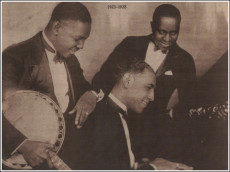
Louis Stanley Hooper was born on May 18, 1894 in North Buxton, Ontario, Canada but was raised in Ypsilanti, Michigan and studied piano at the Detroit Conservatory, playing locally in dance orchestras in the 1910s. Around 1920 he moved to New York City and recorded frequently with Elmer Snowden and Bob Fuller in the middle of the decade. He was known to perform with both of them in Harlem as well as with other ensembles.
Lou served for some time as the house pianist for Ajax Records, accompanying many blues singers on record, including Martha Copeland, Rosa Henderson, Lizzie Miles, Monette Moore and Ethel Waters. He was a participant in the Blackbirds revue of 1928.
In 1932 Hooper returned to Canada, where he played in Mynie Sutton’s dance band, the Canadian Ambassadors. Working locally as a soloist and in ensembles for the next two decades, he was brought back into the limelight by the Montreal Vintage Music Society in 1962.
Lou recorded a two-LP set with Bill Coleman titled UK LIve:Satin Doll, Vol. 1 & 2 in 1967 and released an album as a leader of ragtime piano tunes in 1973 titled Lou Hooper, Piano.
Wearing the educator hat, he taught at the University of Prince Edward Island late in his life and appeared regularly on CBC television in Halifax. Pianist Lou Hooper passed away on September 17, 1977 in Charlestown, Prince Edward Island. His papers, which include unpublished compositions and an autobiography, are now held at the National Library of Canada in Ottawa.
Give A Gift Of Jazz – Share
More Posts: piano