


Daily Dose Of Jazz…
Magni Wentzel was born on June 28, 1945 in Oslo, Norway, the daughter of musicians Odd Wentzel-Larsen and Åse Wentzel. She began her career at the tender age of 6 in 1951 in Totenlaget Barneteater. She trained under opera singers Erna Skaug, Almar Heggen and professor Paul Lohmann in Wiesbaden. She took guitar lessons from 1956 and released her debut jazz album That Old Feeling in 1959.
Instead of attending the first year of the newly established Statens Operahøgskole in Oslo, by 1963 Wentzel took another path, choosing to study classical guitar in Spain, Switzerland and England. She was also taught the art of jazz song under Tete Montoliu.
Strongly influenced by Aretha Franklin, she was a member of the Geir Wentzel Band playing Club 7 in Oslo. Magni collaborated extensively with a series of Oslo based musicians, such as the quartets and quintets including Einar Iversen and Egil Kapstad. Peter Gullin dedicated the album Far, Far Away Where Longing Live to her and later she worked for Opera Mobile, then portrayed the mother in The Tales of Hoffmann by Offenbach.
She has performed and recorded with Niels-Henning Ørsted Pedersen, Roger Kellaway, Halvard Kausland, Ole Jacob Hansen, Carl Morten Iversen, Terje Venaas, Egil Johansen, Åse Wentzel, Art Farmer, Red Mitchell, Mads Vinding and many others.
Vocalist, guitarist and composer Magni Wentzel, the recipient of the Gammleng-prisen in 1988 and the Buddyprisen in 1998, continues to perform, compose and record at the age of 71.

Jazz Is Global – Share

Daily Dose Of Jazz…
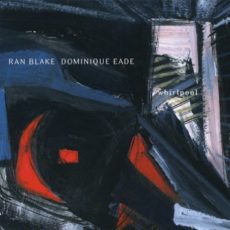
Dominique Frances Eade (was born on June 16, 1958 in London, England. The daughter of an American Air Force officer and a Swiss mother, she grew up in a musical household and spent much of her childhood moving within the US and in Europe. She studied piano as a child and decided she was going to be a singer in the second grade. She picked up guitar in her teens, learning folk, pop and jazz songs and writing some of her own.
She played her first gigs in the coffee houses of Stuttgart while there in high school. Later, as an English major at Vassar, Eade sang for a time with a jazz group, Naima, which also included Poughkeepsie native Joe McPhee. Eade transferred briefly to Berklee College of Music, and then finished her degree at New England Conservatory (NEC), where pianist Ran Blake became an important mentor and performing colleague. Staying in Boston after graduation she soon began teaching at NEC.
Dominique was an active performer on the vibrant Boston jazz scene during the 80’s, forming groups with Boston-based artists including Mick Goodrick, Donald Brown and Bill Pierce. She toured the United States and Europe as a clinician and performer and in addition to her own groups, she performed contemporary classical music and was a featured soloist with Boston Musica Viva, Composers in Red Sneakers, NuClassix and jazz big bands Orange Then Blue and the Either/Orchestra.
By 1987 she became the first jazz artist to be accepted into the NEC Artist Diploma program, where she studied for two years with Dave Holland and Stanley Cowell, and in 1989 she became the first jazz performer to be awarded the New England Conservatory’s NEC Artist Diploma. In 1990, Dominique moved to New York City and released her first CD, The Ruby and the Pearl, featuring Alan Dawson and Stanley Cowell. During this time she maintained her teaching position at NEC, and performed in a variety of contexts including soloist roles in two Anthony Braxton operas, duo restaurant performances with Gene Bertoncini, and an adventurous trio with Ben Street and Kenny Wollesen.
She performed with various groups around the East Village with Mark Helias, Peter Leitch, Larry Goldings, John Medeski, Fred Hersch, Kevin Hays, James Genus, Gregory Hutchinson, and Tom Rainey. She recorded her second CD, My Resistance is Low with Bruce Barth, George Mraz, and Lewis Nash.
Prior to returning to Boston in 1996 she recorded two critically acclaimed CDs for RCA Victor, When the Wind Was Cool featuring Benny Golson, Fred Hersch, James Genus, Matt Wilson, and many others, and The Long Way Home with Dave Holland and Victor Lewis, highlighted her arranging and songwriting. She has toured the United States and Europe, then focused on composing, recording and local performances around Boston.
Dominique eventually began to reemerge in New York, first with Ran Blake, then in duos and quartets with Jed Wilson, Ben Street, Matt Wilson and Brad Shepik, all receiving critical recognition. She continues to perform, record and compose, teach at the New England Conservatory and give private lessons to the likes of Luciana Souza, Kate McGarry, Sara Lazarus, Lisa Thorson, Julie Hardy, Patrice Williamson, Kris Adams, David Devoe, Aoife O’Donovan, Roberta Gambarini and many others.
Sponsored By

Voices From The Community
#preserving genius
More Posts: vocal
Daily Dose Of Jazz…
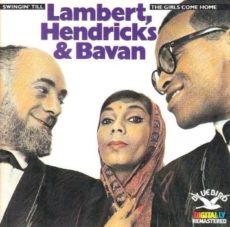
Yolande Bavan was born on June 1, 1942 in Ceylon, now known as Sri Lanka. She toured Australia and Asia as a singer with Graeme Bell’s band early in her career. She is best known for replacing Annie Ross in the legendary jazz vocal group Lambert, Hendricks & Ross after Ross was forced to leave the group due to poor health in 1962. She recorded three albums, all live recordings, with the group under the name of Lambert, Hendricks & Bavan. In 1964, she and Dave Lambert left the group, effectively ending the trio.
She appeared on “To Tell the Truth” in 1962 and in a rare feat, the singing group appeared and sang This Could Be The Start (of something big). In 1969,Peter Ivers and she made an album for Epic Records, called Knight of the Blue Communion. Bavan provided vocals for Weather Report’s 1972 album I Sing The Body Electric, and has made several recorded appearances in musicals including Salvation, Snow White and the Seven Dwarfs, and Bernarda Alba. She has performed in films, and continues to plays and currently continues to perform.
Take A Dose On The Road
More Posts: vocal

Daily Dose Of Jazz…
Carmen Souza was born in Lisbon, Spain on May 20, 1981 of Cape Verdean heritage speaking Creole, the Cape Verde dialect and Portuguese. In her teens she sang professionally in a Lusophone Gospel Choir. Musicians like Luis Morais, Ella Fitzgerald, Joe Zawinul, Herbie Hancock, Keith Jarrett and Diana Krall were some of her inspirations. Theo Pas’cal, her producer and mentor and one of the best bass players in Portugal, discovered her talent and introduced her to jazz, fusion and other contemporary sounds that markedly influenced her musical development.
Working with Theo in 2003, two years later Carmen released to critical acclaim her debut album Ess ê nha Cabo Verde that combined Creole, African and Cape Verde rhythms like Batuke, Morna, and Cola djon with her jazz contemporary influences. The album led to her international breakthrough performance at the WOMAD at Reading Festival of the same year.
Her sophomore album Verdade she co-produced and is featured on Wurlitzer and guitar. She returned in 2010 with the impressive Protegid (Protected) that continued to push the limits of what constitutes the Cape Verdean music, world music and jazz. The expressive voice, versatile style of vocalist Carmen Souza continues to perform, record and tour.
Jazz Is Global – Share
More Posts: vocal
Daily Dose Of Jazz…
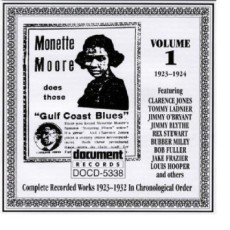
Monette Moore was born May 19, 1902 in Gainesville, Texas but was raised in Kansas City, Missouri. She taught herself piano in her teens and worked as a theater pianist in Kansas City in the early Twenties. In 1923–24 she recorded for Paramount Records in New York City and Chicago, in addition working Dallas and Oklahoma City and eventually settling in New York City.
Monette played with Charlie Johnson’s ensemble at Smalls Paradise and recorded with him in 1927–28. Her output from 1923–27 amounts to 44 tunes, some recorded under the name Susie Smith. Her sidemen included Tommy Ladnier, Jimmy O’Bryan, Jimmy Blythe, Bob Fuller, Rex Stewart, Bubber Miley, Lou Hooper and Elmer Snowden.
In the 1930s, Moore recorded with Fats Waller, filled in for Ethel Waters as an understudy, and in 1937 sang with Zinky Cohn in Chicago. She would perform at her own club, Monette’s Place, in New York City in 1933. Around 1940 she sang in New York with Sidney Bechet and Sammy Price, then moved to Los Angeles in 1942, performing often in nightclubs. She appeared in James P. Johnson’s revue Sugar Hill in 1949 and in numerous films in minor roles.
Monette recorded again from 1945-47, performed with the Young Men of New Orleans at Disneyland in 1961–62. Vocalist and pianist Monette Moore passed away of a heart attack on October 21, 1962 in Garden Grove, California.
More Posts: vocal