

Daily Dose Of Jazz…
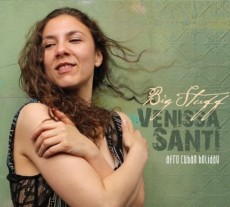
Venissa Santi was born on May 10, 1978 in Ithaca, New York. As a child she grew up listening to the sounds of Ravel, Celia Cruz and Michael Jackson as well as theatrical productions and jazz. But it was her grandfather, Cuban composer Jacobo Ros Capablanca, who instilled in her a connection to her roots through his compositions and a life-long passion for music. So after completing high school, she moved to Philadelphia, where she enrolled at the University of the Arts and majored in Jazz Vocal Performance.
After graduation, she became actively involved in Philadelphia’s Latin community and music scene and began her career as a vocal instructor with the Asociación de Músicos Latino Americanos, better known as AMLA. Over time she performed with a variety of Latin, jazz and World music groups. It was from the support and encouragement of this community that inspired Venissa to embark on the first of four life changing visits to Cuba, where she conducted research and studied Afro Cuban song, dance and percussion.
It was while under the tutelage of Master Gregorio “El Goyo” Hernandez and master dancers from Yoruba Andabo, Arturo Clave y Guaganco, Afro-Cuba de Matanzas and Irosso Oba, that she reconnected with her relatives in Cuba. Santi began to compose the soundtrack of her life’s journey thus far, resulting in an audacious new sound that defies borders, language and categorization.
In 2008 Venissa won the Pew Fellowship for Folk and Traditional Arts. 2009 saw her signed to Sunnyside Records, releasing Bienvenida, and has been praised by Ruben Blades and pianist Danilo Perez. Vocalist Venissa Santi has released her sophomore project Big Stuff and is currently performing at venues and festivals and preparing new material for her next project.

Give A Gift Of Jazz – Share

More Posts: vocal
Daily Dose Of Jazz…
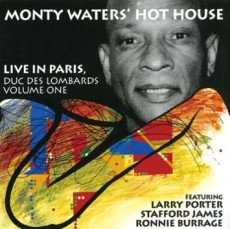
Monty Waters was born on April 14, 1938 in Modesto, California. He received his first musical training from his aunt and first played in the church. After college, he was a member of a rhythm & blues band and in the late 1950s he worked with musicians like B.B. King, Lightnin’ Hopkins, Little Richard and James Brown on tour.
In San Francisco Monty played with King Pleasure and initiated in the early 1960s a “Late Night Session” at Club Bop City. There he came into contact with musicians such as Miles Davis, John Coltrane, Art Blakey, Red Garland and Dexter Gordon, who visited this club after their concerts. In addition, he and Pharoah Sanders, Dewey Redman and and Donald Garrett formed a big band.
By 1969 Waters had made a move to New York City and toured with Jon Hendricks. During the 1970s he participated in the Loft Jazz scene and recorded as a sideman with Billy Higgins, Joe Lee Wilson, Sam Rivers, and Ronnie Boykins. Like many other jazz musicians, he eventually left the States in the 1980s for Paris, where he worked with Chet Baker, Johnny Griffin and Sanders again.
Following Mal Waldron and Marty Cook to Munich, he continued to work with musicians such as Embryo, Gotz Tanferding, Hannes Beckmann, Titus Waldenfels, Suchredin Chronov and Joe Malinga. Saxophonist, flautist and singer Monty Waters passed away on December 23, 2008 in Munich, Germany.
Inspire A Young Mind
Daily Dose Of Jazz…
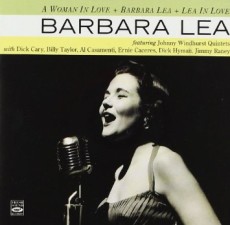
Barbara Lea was born Barbara Ann LeCocq on April 10, 1929 in Detroit, Michigan. A musical family, her musical heritage is traceable to a great uncle, Alexandre Charles LeCocq, an important nineteenth-century composer of French light opera. Her father changed their surname to Leacock and she shortened it to Lea when she began working professionally.
Boston was a hotbed of jazz in the late 1940s and early 1950s, allowing Lea to sing with major instrumentalists including as Marian McPartland, Bobby Hackett, Vic Dickenson, Frankie Newton, Johnny Windhurst and George Wein. She worked with small dance bands there before majoring in music theory at Wellesley College on scholarship. She also sang in the college choir, worked on the campus radio station and newspaper, and arranged for and conducted the Madrigal Group and brass choir concerts.
Barbara’s professional career started upon graduation with her early recordings for Riverside and Prestige. They were met with immediate critical acclaim that led to her winning the DownBeat International Critics’ Poll as the Best New Singer of 1956. She appeared in small clubs in New York and throughout the eastern U.S. and Canada, as well as on radio and TV.
With the near-demise of classic pop in the early 60s, Lea turned to the legitimate theatre, performing an impressive list of leading and feature roles in everything from Shakespeare to Sondheim. Moving to the West Coast received her M.A. in drama at Cal State Northridge and then returned to New York and taught speech at the American Academy of Dramatic Arts and acting at Hofstra University.
By the 1970s, with the resurgence of interest in show tunes and popular standards, Lea performed on NPR’s “American Popular Song with Alec Wilder & Friends”, appeared in two shows featuring the songs of Willard Robison and Lee Wiley, and received lengthy features in the New Yorker magazine. With her singing career was renewed she would consistently play the JVC, Kool and Newport Jazz Festivals as well as cabarets and concerts.
Jazz singer Barbara Lea, who also sang Dixieland, swing and cabaret, passed away on December 26, 2011 in Raleigh, North Carolina from complications of Alzheimer’s disease.
Put A Dose In Your Pocket
More Posts: vocal
Daily Dose Of Jazz…
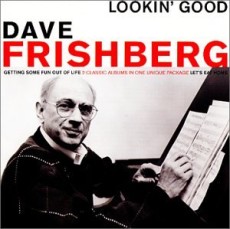
David Frishberg was born March 23, 1933 in Saint Paul, Minnesota. Resisting learning classical piano as a boy, he developed an interest in blues and boogie-woogie by listening to recordings of Pete Johnson and Jay McShann. As a teenager he played in the house band at the Flame in St. Paul where Art Tatum, Billie Holiday and Johnny Hodges appeared. After graduating from the University of Minnesota as a journalism major in 1955, he spent two years in the Air Force.
In 1957, Dave moved to New York City where he played solo piano at the Duplex in Greenwich Village. He first became known for his work with Carmen McRae, Ben Webster, Gene Krupa, Bud Freeman, Eddie Condon, Al Cohn and Zoot Sims.
He later found celebrity writing and performing his own, frequently humorous, songs, including his most famous My Attorney Bernie, and favorites I’m Hip, lyrics only, in collaboration with Bob Dorough, Blizzard of Lies, Do You Miss New York, Peel Me a Grape, Quality Time, Slappin’ the Cakes on Me, and Van Lingle Mungo, the lyrics of which entirely consist of the names of old-time baseball players.
Citing songwriter Frank Loesser as an influence, Frishberg has also worked strictly as a lyricist on a number of occasions collaborating with Johnny Mandel, Alan Broadbent, Al Cohn, Blossom Dearie, David Shire, Julius Wechter, Dan Barrett, Bob Brookmeyer, Gerry Mulligan and Johnny Hodges.
Dave’s tunes have been performed and/or recorded by Blossom Dearie, Rosemary Clooney, Shirley Horn, Anita O’Day, Michael Feinstein, Irene Kral, Diana Krall, Stacey Kent, John Pizzarelli and Mel Torme, among other.
He is also noted for composing the music and lyrics for I’m Just A Bill, the song about the forlorn legislative writ in the ABC Schoolhouse Rock series, as well as Walkin’ on Wall Street, a song that describes how the stock market works, and $7.50 Once a Week, a song about saving and balancing a budget.
Pianist, vocalist, composer and lyricist Dave Frishberg has recorded three albums as a leader, one solo project and has sat in the sideman chair with Jim Goodwin and Rebecca Kilgore on the Arbor Records label.
Uplift Someone’s World
Daily Dose Of Jazz…
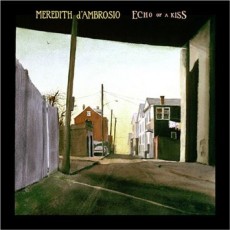
Meredith D’Ambrosio was born into a musical family in Boston, Massachusetts on March 20, 1941. She studied piano and voice from age six and ultimately studied at the Boston Museum School in 1958-59, pursuing a career in painting as well as music.
Meredith was offered the chance to tour Japan with John Coltrane but turned down the offer. Her first major recording for Spring Records didn’t happen for more than a decade later with her husband Eddie Higgins. Two more albums followed her debut recording three years later in the early Eighties for Shiah and Palo Alto Records. She has since released a dozen albums on the Sunnyside Records label from 1985 to 2006. During this period she recorded with Lee Konitz, Fred Hersch, Ben Riley, Erik Friedlander, Jay Leonhart and Gene Bertoncini among others.
She was voted in the Top Five for Talent Deserving Wider Recognition category for Female Vocalist in Down Beat International Critics Jazz Poll from 1982 to 1985 and from 1987-1991. In 1994, D’Ambrosio was the featured guest on Marian McPartland’s syndicated radio program Piano Jazz. Although she worked primarily as a jazz singer and pianist, she is also well known as a composer, lyricist, and teacher.
A respected visual artist, watercolorist, creator of eggshell mosaics and calligrapher, she took off from recording to concentrate on painting, touring, performing at festivals and teaching. She re-emerged in 2012 recording By Myself, a collection of 14 songs by the late composer Arthur Schwartz, her only album of 19 dedicated to a single composer and her solo piano accompaniment. Vocalist Meredith D’Ambrosio continues to perform, record, tour, teach and paint.
Inspire A Young Mind