

Daily Dose Of Jazz…
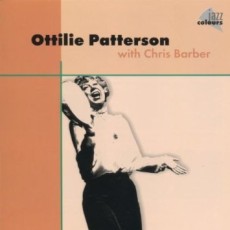
Ottilie Patterson was born Anna Ottilie Patterson on January 31, 1932 in Comber, County Down, Northern Ireland, the youngest of four children. With both sides of the family musical, she trained as a classical pianist from the age of eleven, but never received any formal training as a singer.
In 1949 Ottilie went to study art at Belfast College of Technology where a fellow student introduced her to the music of Bessie Smith, Jelly Roll Morton and Meade Lux Lewis. By 1951 she began singing with Jimmy Compton’s Jazz Band, and in 1952 she formed the Muskrat Ramblers with Al Watt and Derek Martin.
The summer of 1954, while on holiday in London, Ottilie met Beryl Bryden who introduced her to the Chris Barber Jazz Band. She joined the Barber band full-time in December of that year and her first public appearance was at the Royal Festival Hall the following January. Between 1955 and 1962 she extensively toured with Barber and issued many recordings both as a leader and vocalist with Barber, and whom she would marry and divorce 24 years later.
From approximately 1963 she began to suffer throat problems and ceased to appear and record regularly with her husband until officially retiring from the band in 1973. During this period she recorded some non-jazz/blues material and in 1969 issued a now sought after collectible solo LP, 3000 Years With Ottilie.
During her recording period she released nineteen singles, five EPs, four solo LPs, twenty albums with Barber, and performed on twenty-five other CD projects. Traditional jazz and blues singer Ottilie Patterson passed away June 20, 2011.

Give The Gift Of Knowledge
More Posts: vocal
Daily Dose Of Jazz…
José James was born January 20, 1978 in Minneapolis, Minnesota and has been referenced as a jazz singer for the hip-hop generation. Blending modern jazz and hip-hop, his influences come from John Coltrane, Marvin Gaye and his “musical mother” Billie Holiday.
José attended The New School for Jazz and Contemporary Music and in 2008 he released his debut album, The Dreamer, on the Brownswood label. Blackmagic followed in 2010 and the same year For All We Know came out on the Impulse label, winning both the Edison Award and L’Académie du Jazz Grand Prix for best Vocal Jazz Album of 2010. His styling on his early singles and in live performances borrowed from the soul jazz of Terry Callier and the crossover of Gil Scott-Heron to make his sound distinct.
2012 was the year James signed to Blue Note Records issuing Trouble, his first single for the label. His fourth album, No Beginning, No End, followed and he began composing while on the road, reflecting the music of Nirvana and Radiohead that he grew up with as well as newer artists like Frank Ocean and James Blake. This led him to a recording session for While You Were Sleeping, blending rock, R&B and jazz.
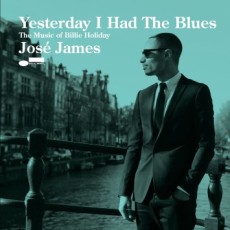
In commemoration of Billie Holiday’s 100th birthday, he recorded nine songs written or associated with Billie Holiday, titled Yesterday I Had The Blues and utilizing the talents of Jason Moran, John Patitucci and Eric Harland. To date he has six albums as a leader and seven collaborations with Junior Mance, Jef Neves, J.A.M., Kris Bowers and the Soil & Pimp Sessions. Vocalist José James continues to compose and perform, record and tour.
Inspire A Young Mind
More Posts: vocal
Daily Dose Of Jazz…
Thelma Carpenter was born January 15, 1922 in Brooklyn, New York. As a child performer she had her own radio show on WNYC in New York and won an amateur night at the Apollo Theatre in 1938. She would go on to play such 52nd Street clubs as Kell’s Stables and the Famous Door and was discovered by John Hammond.
Carpenter subsequently made her debut as a band vocalist with Teddy Wilson’s short-lived orchestra in 1939, recording Love Grows On the White Oak Tree and This Is The Moment on the Brunswick label. She joined Coleman Hawkins’ orchestra in 1940 and recorded the RCA/Bluebird Records classic album He’s Funny That Way. She followed Helen Humes as Count Basie’s vocalist and over two years recorded several sessions with the band such as More Than You Know, Do Nothing Till You Hear From Me and My Ideal.
Thelma replaced Dinah Shore as vocalist on Eddie Cantor’s radio show for the 1945-46 season, marking the first time that a black artist had become a permanent member of an all-white show without playing a character. She would also sing with Duke Ellington in concerts and on television. She was a top nightclub and major theater attraction for most of her career, performing regularly at such chic clubs as Chez Bricktop in Paris and Rome and the Capitol and Palace Theater on Broadway among others.
As a Broadway performer she appeared with Bill “Bojangles” Robinson, replaced Pearl Bailey in Hello Dolly!, performed along with Avon Long in Shuffle Along, co-starred in Barefoot In The Park and created the role of Irene Paige in Bubbling Brown Sugar. She toured nationally in Bob fosse’s Pippin and was the Good Witch of The North in Sidney Lumet’s film The Wiz. So in demand was she that Fosse and Lumet arranged their schedules so she could do both projects simultaneously. She was the mother of Maurice and Gregory Hines in the film The Cotton Club.
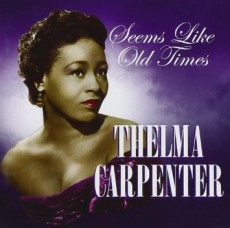
She also had a critically acclaimed album Thinking of You Tonight and Sepia Records posthumously released a 26-song compilation title Seems Like Old Times. Carpenter performed on television with Jackie Gleason, Eddie Condon, Duke Ellington, Diana Ross, Sammy Davis Jr. and Eric Clapton, as well as appearing on the Ed Sullivan, Merv Griffin, Paul Lynde and Cosby shows. Jazz vocalist and actress Thelma Carpenter passed away of cardiac arrest on May 14, 1997 in New York City.
Jazz Is Global – Share
More Posts: vocal
Daily Dose Of Jazz…
Roger Guérin was born on January 9, 1926 in Saarbrücken, Germany and initially studied violin, followed by cornet and trumpetat the Paris Conservatory. It was there as a teenager that he won first prize.
Roger began working professionally in 1947, playing with Aime Barelli, Django Reinhardt, Don Byas, Hubert Fol, James Moody, Benny Golson, Bernard Peiffer, Fats Sadi, Lucky Thompson, Kenny Clarke, Blossom Dearie, Martial Solal, Michel Legrand and Andre Hodeir.
Playing at the 1958 Newport Jazz Festival l with a youth ensemble, Guérin also played in Les Double Six in 1959, later returning to this group. He replaced Clark Terry in Quincy Jones’s Big Band in 1960. He worked on the soundtrack to the film Paris Blues in 1961 with Duke Ellington and went on to work extensively as a vocalist for Michel Legrand.
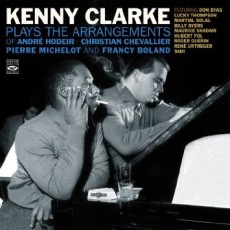
He has over 150 album credits to his name including recording with the Kenny Clarke/Francy Boland Big Band, and has won the Prix Django Reinhardt in 1959. Trumpeter and vocalist Roger Guérin passed away on February 6, 2010 in Nimes, France.
Put A Dose In Your Pocket

Daily Dose Of Jazz…
Paolo Conte was born January 6, 1937 in Asti, Piedmont, Italy. He began performing as a vibraphonist in local jazz bands and started songwriting with his brother, guitarist Giorgio, eventually writing songs of his own. As a poet, painter and lawyer as well as a musician, he first earned attention during the late ’60s and early ’70s as the creative force behind hits from Adriano Celentano and Patty Pravo.
Beginning his solo career with a 1974 self-titled LP, with subsequent efforts enjoyed considerable success throughout Europe. His 1998’s Paolo Conte, a greatest-hits collection, was his first U.S. release. He had hits used in movies like I Am David, Mickey Blue Eyes, French Kiss and No Reservations, as well as the Fritz Coca Cola commercial.
Paolo has recorded and released fifteen studio, five live and seven compilation albums, has been honored with handprints on the Rotterdam Walk of Fame, and awarded the Knight Grand Cross of the Order of Merit of the Italian Republic for Outstanding Cultural Achievements. He has been given the Chevalier dans l’Ordre des Arts et des Lettres from France and has received honorary doctorates from several universities. Singer, pianist, and composer Paolo Conte continues to perform, composer, record and tour.
Inspire A Young Mind