

Requisites
That’s Where It’s At ~ Stanley Turrentine | By Eddie Carter
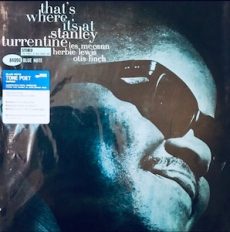
Stanley Turrentine was an exceptionally prolific tenor saxophonist who garnered numerous admirers throughout his career. He is widely recognized as a key contributor to the evolution of blues-inspired hard bop and soul jazz, as well as a trailblazer in smooth jazz. This morning’s featured album submitted for your approval is a 1962 release, That’s Where It’s At (Blue Note BLP 4096/BST 84096). This record was his second collaboration with pianist Les McCann and bassist Herbie Lewis, coming on the heels of their live performance at the Village Gate just a week prior. Drummer Otis Finch completes this dynamic quartet. The copy in my library is the 2020 Blue Note Tone Poet Series stereo reissue, which maintains the original catalog number.
The album opener, Smile, Stacey by Les McCann, begins with a brief dialogue between Stanley and Les that leads into the foursome’s theme. Stanley takes charge first, delivering a driving energy and brisk articulation. Les then swings in for the second interpretation. Herbie takes a short, sharply executed walk next, which Les finishes, then
Stanley and Les share a brief exchange with Otis before the ensemble’s soft fadeout. The quartet then cools down for Soft Pedal Blues by Stanley Turrentine, which starts with the trio’s slow-burning, soulful intro. Turrentine’s notes are placed with thoughtful precision during the melody and opening statement. McCann caresses each note of the second solo, and Turrentine delicately shapes a final comment into the theme’s restatement and slow fade.
Pia by Les McCann begins with the quartet easing into a mellow groove as the melody is introduced. Les initiates the solos with some good down-home cooking. Stanley steps in next, maintaining the calm atmosphere with a thoughtful message before the ensemble reunites for the closing chorus, which gently fades away. We’ll See Yaw’ll After While, Ya Heah by Les McCann is the pianist’s lively composition with a distinctly Southern flavor. After the quartet’s theme gets things off to a good start, Turrentine leads off the first solo, delivering each verse with precise articulation. McCann responds with a spirited interpretation that gets listeners tapping their feet and grinning along until the group’s return for the ending theme.
The tempo slows down again for Dorene, Don’t Cry, I, by Les McCann, a haunting ballad that begins with the ensemble’s beautiful melody. Stanley fully embraces the opening statement by gently attending to every note with careful lyricism and sensitivity. Les follows with something significant to say in a gorgeous performance preceding the tender reprise and close. Light Blue, by Stanley’s brother, Tommy Turrentine, brings this entertaining album to a close with a lightly swinging melody that invites listeners to sit back and enjoy the ride. McCann takes the lead with a loose, relaxed reading, then Lewis provides a few moments of pure joy. Turrentine offers the final memorable moment ahead of the group’s out chorus.
Alfred Lion produced the initial session of That’s Where It’s At, and Rudy Van Gelder was behind the dials of the recording. Joe Harley supervised the audiophile reissue, and Kevin Gray mastered the album from the original analog tapes at Cohearant Audio. The album’s sound quality is outstanding, with a stunning soundstage that transports the musicians to the sweet spot in your listening room with superb fidelity. The record was pressed on 180-gram Virgin Vinyl at RTI and is dead silent until the music begins. You’re also getting high-definition gatefold photos and superb cover packaging worthy of hanging on the wall. If you’re already a member of the Stanley Turrentine or Les McCann fan club, I highly recommend That’s Where It’s At on your next record hunt. If you aren’t already familiar with either musician, this record is an excellent introduction to their extensive discographies!
~ Les McCann Ltd. In New York (Pacific Jazz PJ-45/ST 45) – Source: Discogs.com © 2025 by Edward Thomas Carter

More Posts: choice,classic,collectible,collector,history,instrumental,jazz,music,saxophone