

Daily Dose Of Jazz…
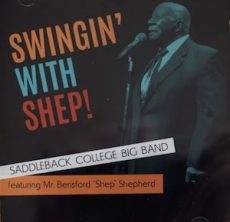
Shep Shepherd was born Berisford Shepherd on January 19, 1917 in Honduras while his mother was enroute from the West Indies to Philadelphia, Pennsylvania. Arriving in the city she first settled and raised him in a Jewish neighborhood before moving to a Black neighborhood.
An early fascination with marching bands he drummed on tables and chairs until his mother bought him a toy drum to save wear and tear on the furniture. He attended the Jules E. Mastbaum Area Conservatory and Vocational School where he trained as a percussionist on timpani, vibraphone, xylophone, snare and bass drums. Students were required to have a secondary instrument, and he chose the trombone.
Initially hoping for a career in the Philadelphia Orchestra, he shifted his interest to jazz. He formed a friendship with drummer Jimmy Crawford, who was able to help his career in New York City. During the Thirties performed with Jimmy Gorham’s band in Philadelphia. In 1941, Benny Carter contacted Shep and he moved to New York City, where he also worked with Artie Shaw the same year. He became heavily in demand and the phrase “Get Shep!” became a phrase among area musicians.
Four years in the Army saw him serving in the entertainment corps, and working there he played trombone and improved his skills as a composer and arranger. He met Billy Butlet and in 1952 after his discharge he began working with Butler as part of Bill Doggett’s group. In 1956, Shepherd helped write Doggett’s signature song, Honky Tonk. He left Doggett’s group in 1959 and returned to New York City where he worked in pit orchestras for Broadway shows, and as a music copyist and arranger.
When the nationwide tour of the Broadway show Here’s Love ended, Shepherd found himself in San Francisco, California and he became a freelance musician there. He continued to play drums through the Sixties and Seventies working with Patti Page, Lionel Hampton, Lena Horne, The Ward Singers, Earl Bostic, Buck Clayton, Odetta, Cab Calloway, Sy Oliver, Big Maybelle, and Erskine Hawkins. At 80 years old, he switched his primary focus from drums to trombone, and with organist Art Harris and drummer Robert Labbe formed the group Blues Fuse.
Drummer, trombonist, vocalist and composer Shep Shepherd, who is listed in The Biographical Encyclopedia of Jazz and Who’s Who Among Black Americans, transitioned on November 25, 2018 at the age of 101.

More Posts: bandleader,drums,history,instrumental,jazz,music,trombone,vocal
Daily Dose Of Jazz…
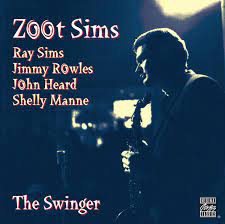
Ray C. Sims was born on January 18, 1921 in Wichita, Kansas. He played in territory bands during the early 1940s, then shortly after the end of World War II he recorded with Anita O’Day and Benny Goodman.
From 1947 to 1957 he worked with Les Brown and with Dave Pell from 1953-1957. Sims would go on to work with Harry James from the late Fifties to 1969, and also worked as a sideman with Charlie Barnet, Bill Holman, and Red Norvo.
The 1970s saw Ray playing with James again and with Corky Corcoran. Near the end of the decade he recorded with his younger brother Zoot. Trombonist Ray Sims transitioned on March 14, 2000.
More Posts: history,instrumental,jazz,music,trombone
Daily Dose Of Jazz…
Nathan Peck was born on January 13, 1925 in New York City and began playing the trombone as a teenager. After leaving high school he was drafted into the army and became part of Glenn Miller’s band. He remained with the band until after World War II ended.
He played with Don Redman in 1947 and studied classical music at the Paris Conservatory from 1949 to 1951, while playing and recording with leading jazz musicians such as Coleman Hawkins, James Moody, and Roy Eldridge. During the 1950s Peck played on television in New York, and in 1953 he recorded with Dizzy Gillespie. He shuttled between Paris and New York until 1957, when he married dancer Vera Tietz, then settled in France.
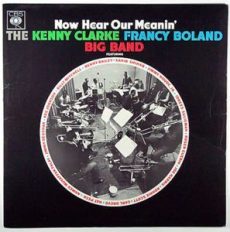
In France, he played with Michel Legrand, André Hodeir and Duke Ellington. Spending some time in England and Germany, Nathan worked as a staff musician at Sender Freies Berlin and played with Quincy Jones and the Clarke-Boland Big Band from 1963 to 1969. Relocating to London, England in 1965, he became active in the studios, film, and television. He played with Benny Goodman in the early Seventies and with Peter Herbolzheimer by the end of the decade.
Later he worked mainly as a contractor with his company, London Studio Orchestras. While this led to him ending his playing career, he shifted his talents to putting together the best blend of session musicians that he could find. ‘The Italian Job’, ‘Yentl’, ‘The 3 Muskateers’, and many more great films, especially with French composers Michel Legrand and Philippe Sarde.
Trombonist Nathan Peck transitioned on October 24, 2015.
More Posts: history,instrumental,jazz,music,trombone
Daily Dose Of Jazz…
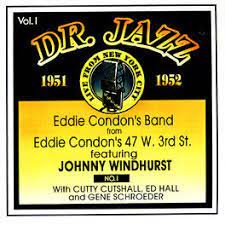
Cutty Cutshall was born Robert Dewees Cutshall on December 29, 1911 in Huntingdon County, Pennsylvania. Early in his career he played in Pittsburgh, Pennsylvania, making his first major tour in 1934 with Charley Dornberger. He joined Jan Savitt’s orchestra in 1938, then played with Benny Goodman in the early 1940s.
Later in the decade he worked frequently with Billy Butterfield and did some freelance work in New York City. He started working with Eddie Condon in 1949, an association which lasted over a decade. Cutshall’s credits include work with Peanuts Hucko, Bob Crosby, Ella Fitzgerald, and Louis Armstrong.
While touring with Condon in Toronto, trombonist Cutty Cutshall suffered a heart attack in his hotel room and transitioned on August 16, 1968.

More Posts: history,instrumental,jazz,music,trombone
Daily Dose Of Jazz…
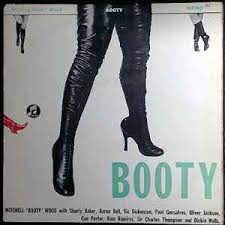
Booty Wood was born Mitchell W. Wood on December 27, 1919 in Dayton, Ohio. He began playing professionally on trombone in the late 1930s. The following decade he worked with Tiny Bradshaw and Lionel Hampton before joining the Navy during World War II. While there he played in a band with Clark Terry, Willie Smith, and Gerald Wilson.
After his service ended he returned to play with Hampton, then worked with Arnett Cobb, Erskine Hawkins and Count Basie. After spending a few years outside music, Booty returned to play with Duke Ellington in 1959-60 and again in 1963. He returned once more early in the 1970s.
Wood once again played with the Count Basie Orchestra from 1979 into the middle of the following decade. Trombonist Booty Wood transitioned on June 10, 1987 in Dayton.
More Posts: history,instrumental,jazz,music,trombone