


The Jazz Voyager
So the Jazz Voyager is going international and thankfully is in a city with an international airport. Georgia to Argentina is 5,015 miles and ten hours later I will be landing at Ministro Pistarini International Airport. Situated in Ezeiza about 20 miles from the city center, a forty minute cab ride will take me to the exclusive Recoleta neighborhood. The cool thing is I’ll be staying at the Meliá Recoleta Plaza Hotel and inside is the club, Jazz Voyeur. So it will be an elevator ride downstairs to hear some great music.
After speniding the day exploring the city on tap for listening is vocalist and trumpeter Mike Sinagra, joined by Manuel Fraga on piano and vocals, Pablo Motta on double bass and drummer Oscar Giunta. They’ll be paying tribute to the Rat Pack, recreating the eternal classics and the wide repertoire of Frank Sinatra, and his hit songs by Sammy Davis Jr., Dean Martin, Nat King Cole, Louis Armstrong, Ray Charles, Charles Aznavour, Neil Diamond, Joe Cocker, Carlos Gardel.
Cover: $13,000 ARS ($12.22) ~ $15,000 ARS ($14.10)
Jazz Voyeur is situated at Posadas 1557, C1112ADA Cdad Buenos Aires,. For more information visit https://jazzvoyeur.com.ar.

More Posts: adventure,club,genius,jazz,music,preserving,travel,trumpet,vocal
Daily Dose Of Jazz…
Bernie Glow was born on February 6, 1926 in New York, New York. During the Second World War while attending The High School of Music & Art he played in bands with Stan Getz, Tiny Khan, Shorty Rogers and George Wallington. Early on his influences were Snooky Young with the Jimmie Lunceford band, and Billy Butterfield with Benny Goodman.
At just sixteen and out of high school, Glow spent a year on the road with the Richard Himber Orchestra. Two years later he performed first with Xavier Cugat and then Raymond Scott on CBS radio. At the end of the war he played lead trumpet with the Artie Shaw band. Following that stint, he worked with Boyd Raeburn.
1949 saw the twenty-three year old retiring from the road after more than a year with Woody Herman and his famous Second Herd. Bernie worked as a trumpet player in big bands, Latin bands and dance orchestras. He performed in theaters, dance halls, night clubs and on the radio around Manhattan. This was the final preparation that launched him into the burgeoning commercial and studio scene.
During the last years of the big-band era his first-call studio work included Miles Davis, Frank Sinatra, Ella Fitzgerald and did thousands of radio and television recording sessions. Many of these studio big-band sessions were led by composer/arrangers Nelson Riddle, Quincy Jones and Oliver Nelson.
Trumpeter and sideman Bernie Glow, who played on the seminal Miles Davis and Gil Evans collaborations Miles Ahead, Porgy and Bess, Sketches of Spain, and Quiet Nights, died of a blood disorder in Manhasset, New York at the age of 56 on May 8, 1982.

More Posts: history,instrumental,jazz,music,trumpet

Requisites
The Summer Knows ~ Art Farmer | By Eddie Carter
This past week was particularly rough, and I eagerly looked forward to the weekend. This morning’s album offered for your consideration is The Summer Knows (East Wind EW-8047). It was one of my mom’s favorites, and the music brought back fond memories of when I was younger. This underrated gem is an excellent quartet date by Art Farmer, one of five albums he released in 1977. Art’s exclusively heard on flugelhorn and shares the spotlight with a stellar rhythm section: Cedar Walton on piano, Sam Jones on bass, and Billy Higgins on drums. My copy is the Japanese Stereo release.
Side One starts with the title track, The Summer Knows, by Alan and Marilyn Bergman and Michel Legrand. A gentle piano introduction transitions to Art’s sweet melody and a captivating, touching opening statement with a nostalgic and soothing vibe. Cedar follows with a delicately heartfelt performance. Art’s final enchanting choruses flow smoothly before the ensemble’s theme is softly revisited. Manhã Do Carnaval by Luiz Bonfá, Antônio Maria, and François Llenas springs to life with the trio’s introduction. Art follows them with an infectiously charming melody and opening solo. Cedar carries the festivities into the second reading until Art’s closing statement leads to the theme’s reprise.
Alfie by Burt Bacharach and Hal David starts with a piano introduction that grows into Art’s delicately sensitive theme and opening statement. Cedar’s solo creates a deep emotional resonance that is genuinely moving. Art’s concluding thoughts are hauntingly tender, preceding the closing theme. When I Fall In Love by Victor Young and Edward Heyman gets Side Two underway with Art’s solo introduction ahead of the foursome’s exquisite melody. The leader’s first solo embraces the song’s essence and intimacy. Cedar delivers enchanting beauty in the following reading; then, Art takes over the spotlight again for a short expression of love that dissolves into nothingness.
Ditty by Art Farmer starts with an energetic introduction by Sam and Cedar, setting the stage for the ensemble’s lively melody. Art begins the opening statement with a brisk and confident lead, followed by Cedar’s impressively spirited solo. Billy concludes with a concise yet impactful comment, leading back to the restated theme and climax. The album concludes with a beloved classic, I Should Care, by Axel Stordahl, Paul Weston, and Sammy Cahn. The group’s easygoing groove sets the mood for the introduction and melody. Art commences with a beautifully rendered interpretation, and Sam’s brief yet engaging solo complements it perfectly, leading into the heartfelt closing chorus.
Kiyoshi Itoh and Yasohachi Itoh produced The Summer Knows, with David Baker and Yoshihiro Suzuki behind the dials as the recording engineers. The album boasts exceptional sound quality, capturing an outstanding soundstage that places the musicians perfectly in your listening space with crystal-clear fidelity. For jazz aficionados seeking an ideal album perfect for unwinding after a long day or those only familiar with Art’s work with the Jazztet, I highly recommend The Summer Knows by Art Farmer for your library. It’s a remarkable release no jazz lover should overlook on their next record-shopping adventure!
~ I Should Care, When I Fall In Love – Source: JazzStandards.com
~ Alfie, Manhã Do Carnaval, The Summer Knows – Source: Wikipedia.org
© 2025 by Edward Thomas Carter

More Posts: choice,classic,collectible,collector,history,instrumental,jazz,music,trumpet
Daily Dose Of Jazz…
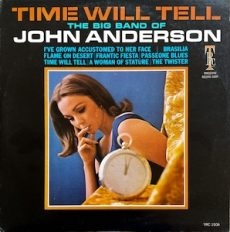
John Anderson was born January 31, 1921 in Birmingham, Alabama. He studied at the Los Angeles Conservatory of Music and the Westlake College of Music.
He was a part of the West Coast jazz scene with Stan Kenton and others. He went on to work with Tiny Bradshaw, Jerry Fielding, Perez Prado, Earl Bostic, Charles Mingus, Buddy Collette, Curtis Counce, Britt Woodman, Count Basie, Chico Hamilton, J. W. Alexander, Dee Williams & The California Playboys, and Sam Cooke and many others.
During his career he performed with his own orchestra as well as many others like Georgie Auld And His Orchestra, Jack Costanzo & His Afro Cuban Band and Orchestra, Johnny Mandel Orchestra, and Russell Jacquet And His All Stars.
Trumpeter and composer John Anderson died in Birmingham on August 18, 1974.

More Posts: bandleader,composer,history,instrumental,jazz,music,trumpet
Daily Dose Of Jazz…
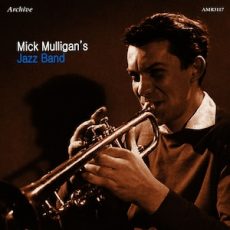
Peter Sidney Mulligan who was known by Mick, was born on January 24, 1928 in Harrow, Middlesex, England. He began playing trumpet while a student at Merchant Taylors’ School, Northwood and entered into the family wine company, but became an alcoholic and eventually was pushed out of the business by his relatives.
Forming his Magnolia Jazz Band in 1948, he met George Melly soon afterwards and they became close associates who performed together for many years. Mulligan’s orchestra included Roy Crimmins, Ian Christie, and Archie Semple that rivalled Humphrey Lyttelton’s band in popularity on the British trad jazz circuit.
While he booked excellent side men, Mick was not a top-flight musician and his own playing was often hampered by intoxication; their recording legacy is spotty because their releases were irregular and generally for small labels. He and Melly’s antics were drunken and scandalous outings, making them regular tabloid figures in the 1950s.
Breaking up his band in 1953 he reformed it a year and a half later, continuing with the new group into 1962 and was part of the biggest trad jazz event to be staged in Britain at Alexandra Palace. By the early 1960s, rock and roll had whittled the enthusiasm for trad jazz to nearly nothing and Mulligan disbanded the Magnolia Jazz Band. He went on to manage Melly, who was launching a solo career. He played occasionally into the 1970s, but mostly retired to run a grocery store. Later in life he became interested in horse racing, and owned or part-owned several race horses, including the prize-winning horse, Forever My Lord.
Trumpeter and bandleader Mick Mulligan, who was best known for his presence on the trad jazz scene, suffered a stroke at age 78 and died in Chichester, West Sussex, England on December 20, 2006.
More Posts: bandleader,history,instrumental,jazz,music,trumpet