

Requisites
Club Date ~ Yusef Lateef | By Eddie Carter
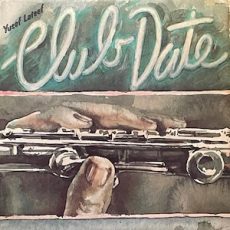
A few nights ago, I spent time with an album I hadn’t listened to in a while and thought it deserved discussing. Club Date (ABC Impulse ASD-9310), by multi-instrumentalist Yusef Lateef, was released in 1976 and showcases his live performance at Pep’s Lounge on June 29, 1964, first heard on Live at Pep’s. My introduction to Lateef’s artistry came through his work on Cannonball Adderley Sextet in New York, Nippon Soul, and Jazz Workshop Revisited. The tracks on Club Date were not available before this release. The group includes Richard Williams on trumpet; Yusef Lateef on flute (tracks B1, B3), oboe (track B1), and tenor saxophone (tracks A1 to A3, B2); Mike Nock on piano; Ernie Farrow on bass; and James Black on drums. The copy I own is the 1976 U.S. Stereo release.
The set opens with Oscarlypso by Oscar Pettiford, a lively tune featuring a Caribbean groove from the start of Ernie’s introduction to the quintet’s theme. Yusef takes the opening solo, as smooth as velvet. Richard follows with a cheerfully festive performance. Mike enters the spotlight last, with a relaxing reading, before both horns share a short exchange leading to the reprise and a vibrant finish. Gee Sam Gee by Yusef Lateef is a slow-moving ballad that begins with the saxophonist stating a hauntingly dreamy theme and opening solo. Williams and Nock follow with two delicately gentle statements preceding Lateef’s return for the closing chorus.
Richard Williams’ Rogi brings the beat way up to end the first side with the group’s collective melody. Yusef steps up first with a spirited performance, then Richard vigorously launches into the following solo. Mike has the last word with an energetic statement ahead of the theme’s return and climax. Brother John, Yusef Lateef’s tribute to John Coltrane, opens the second side with the rhythm section’s trio to Lateef’s switching to oboe for the melody and adventurous opening statement. Williams takes flight next in a scintillating solo. Nock keeps the listener captivated, sailing smoothly until the final note, while Yusef’s flute comments shadow him, before the quintet returns to take the song out.
Yusef Lateef introduces P-Bouk, a speedy original by the saxophonist that the ensemble takes out of the gate at a vigorous pace. Yusef soars upward into the sky on the opening solo with joyful exhilaration. Richard comes in cooking hard next, then Mike meets the challenge with a robust reading, leading to the theme’s restatement and the introduction of Nu-Bouk, also by Yusef Lateef, which he describes as a new blues. He’s back on the flute as he glides over the rhythm section for the soulful melody and lead solo. Williams makes his case in a short statement, returning to the theme and the group’s down-home ending.
Bob Thiele produced the initial session for Club Date, and Esmond Edwards supervised this release, but the identity of the engineer who recorded it remains unknown. The sound quality is very good for a ‘60s live date, with an excellent soundstage that transports the listener to the club’s audience. If you’re new to the music of Yusef Lateef, or are in the mood for a wonderful live album to listen to after a long day or week, I offer for your consideration Club Date by Yusef Lateef. It gives a glimpse into an incredible musician who transcended hard bop through music inspired by exotic locales. While the recording’s live atmosphere adds raw authenticity, it’s the interplay among the players that truly shines, making this record a rewarding listen for both longtime fans and newcomers to Lateef’s work!
~ Cannonball Adderley Sextet in New York (Riverside RLP-404/RLP-9404), Jazz Workshop Revisited (Riverside RM 444/RS 9444), Live at Pep’s (Impulse! A-69/AS-69), Nippon Soul (Riverside RM 477/RS 9477) – Source: JazzStandards.com
© 2026 by Edward Thomas Carter

More Posts: choice,classic,collectible,collector,history,instrumental,jazz,music,saxophone