

Daily Dose Of Jazz…
Edgar Melvin Sampson was born on October 31, 1907 in New York City, New York. He began playing violin aged six and picked up the saxophone in high school, then started his professional career in 1924 in a violin piano duo with Joe Colman. Through the rest of the 1920s and early 1930s, he played with many big bands, including those of Charlie “Fess” Johnson, Duke Ellington, Rex Stewart and Fletcher Henderson.
In 1934, Sampson joined the Chick Webb outfit and during his period he created his most enduring work as a composer, writing Stompin’ at the Savoy and Don’t Be That Way. Leaving Webb in 1936, his reputation as a composer and arranger led to freelance work with Benny Goodman, Artie Shaw, Red Norvo, Teddy Hill, Teddy Wilson and Webb.
Becoming a student of the Schillinger System in the early 1940s, Edgar continued to play saxophone through the late 1940s and started his own band at the end of the decade. He worked with Latin performers such as Marcelino Guerra, Tito Rodríguez and Tito Puente as an arranger.
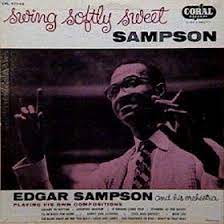
He recorded one album under his own name, Swing Softly Sweet Sampson, in 1956. Due to illness, he stopped working in the late Sixties. Composer, arranger, saxophonist, and violinist Edgar Sampson, nicknamed The Lamb, transitioned on January 16, 1973.

More Posts: arranger,bandleader,composer,history,instrumental,jazz,music,saxophone,violin
Daily Dose O fJazz…
Bill Stegmeyer was born October 8, 1916 in Detroit, Michigan. He attended Transylvania College in Lexington, Kentucky from 1934 to 1936, and following his studies he played through the rest of the decade with Austin Wylie, Glenn Miller, and Bob Crosby.
In the 1940s, he did arrangement work and played clarinet and occasionally, saxophone with Billy Butterfield, Yank Lawson, Bobby Hackett, Will Bradley, and Billie Holiday from 1945 to 1947. He arranged for WXYZ, a Detroit radio station, for two years starting in 1948, then followed this with arranging Your Hit Parade for eight years.
In the 1950s he also continued to play jazz with Lawson, Butterfield, Bob Haggart, Jimmy McPartland, and Ruby Braff. He went to work for CBS in the early 1960s.
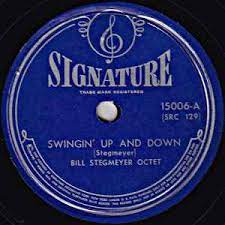
Clarinetist and arranger Bill Stegmeyer, whose only recordings as a leader were five tunes for Signature Records in 1945 and some V-Discs, transitioned from cancer in Long Island, New York on August 19, 1968 at the age of 51.
More Posts: arranger,bandleader,clarinet,history,instrumental,jazz,music
Daily Dose Of Jazz…
Alicia Cunningham was born Alicia Rodriguez of Mexican heritage on October 5, 1946 in Los Angeles, California. A classically trained vocalist and pianist, she worked in the L.A. studios and as an educator at Loyola University in her early years.
Meeting her husband Don was fortuitous when he moved to Los Angeles in the early 70s. Their combination of his jazz-influenced energetic singing style and Alicia’s fluid, clear and lyrical sound, established a solid reputation. This would lead to a tour with Count Basie in Europe for five months at major events and jazz festivals in England and Switzerland.
She was an intricate and melodic harmonizer and arranger and paired with the Cunningham stage presentation, they offered enormous panache. They not only kept her hometown audiences satisfied but they traveled around the country and the world thrilling listeners in Europe, Canada, Singapore, Brazil, Japan, Indonesia and South Korea.
In 2012, they released their final album together titled Sao Paulo Lights that was recorded in Brazil. In the autumn of 2014, Alicia made her last performance in St. Louis when Don received a St. Louis Jazz Hall of Fame Award.
Vocalist Alicia Cunningham, who sang hard jazz, transitioned in Las Vegas, Nevada on December 23, 2014 at the age of 68 after battling cancer for a year.
More Posts: arranger,bandleader,history,instrumental,jazz,music,vocal
Daily Dose Of Jazz…
William Luther Johnson was born on September 30, 1912 in Jacksonville, Florida and studied piano as a child and began playing the alto saxophone at the age of 16. After working with lesser-known bands he studied in conservatories in Wisconsin and Illinois before attending Marquette University.
While in Milwaukee, Wisconsin he played with Jabbo Smith and others. He worked with Baron Lee and Tiny Bradshaw, and in 1936 joined Erskine Hawkins, with whom he performed into the early 1940s, recording with him from 1939 to 1942. He composed Tuxedo Junction with Hawkins and appeared with the band in the short film Deviled Hams in 1937.
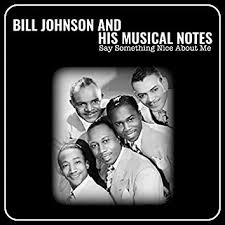
Around mid-1946 he recorded under Bill Johnson and Orchestra, with several of the members becoming the Musical Notes. Bill Johnson and the Musical Notes recorded for Harlem, RCA, King, Regal, Tru-Blue.He recorded for Ronnex as the Bill Johnson Quartet, and the Bill Johnson Quintet for Baton. Over the years, there were many personnel changes, but Bill and Gus Gordon were on all the recordings.
In the Fifties failing health caused the breakup of the group, although he re-formed it on a couple of occasions. Alto saxophonist, clarinetist, and arranger Bill Johnson, who was diagnosed with lung cancer in 1957, transitioned on July 5, 1960 at 47 years old in New York City.

More Posts: arranger,bandleader,clarinet,history,instrumental,jazz,music,saxophone
Daily Dose Of Jazz…
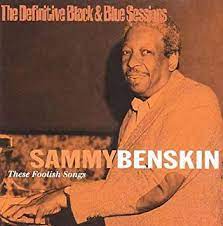
Samuel Benskin was born in The Bronx, New York on September 27, 1922 and made his professional debut around 1940 as piano accompanist to singer and guitarist Bardu Ali. He worked throughout the 1940s with among other jazz musicians Stuff Smith, Benny Morton and Don Redman. The 1950s witnessed Sammy leading his own piano trio, appearing as a soloist and accompanying singers Roy Hamilton, Dinah Washington and Al Hibbler. In 1954 he also joined a group, The Three Flames, which also featured Tiger Haynes.
By the end of the decade with a band credited as The Spacemen, Sammy recorded an instrumental, The Clouds, written and produced by Julius Dixson for his Alton record label. A departure from jazz, the song’s original vocals were removed and presented as an instrumental. It went to No. 1 on the Billboard R&B chart, and No. 41 on the pop chart. The song was the first number one on any chart released by an African-American owned independent record label, predating Motown’s first No. 1 by a year.
From the 1960s Benskin worked primarily as a vocal coach, arranger and producer. In 1986, he recorded an album in Paris, France for Black & Blue Records, These Foolish Songs. Pianist Sammy Benskin transitioned in Teaneck, New Jersey on August 26, 1992 at 69.
More Posts: arranger,bandleader,history,instrumental,jazz,music,piano,producer