

Daily Dose Of Jazz…
Arif Mardin was born on March 15, 1932 in Istanbul, Turkey into a family of privilege that included statesmen, diplomats, leaders and business owners of the Ottoman Empire and the Turkish Republic. He grew up listening to Bing Crosby and Glenn Miller, met jazz critic Cuneyt Sermet, who turned him onto this music and eventually became his mentor. After graduating from Istanbul University in Economics and Commerce, he studied at the London School of Economics. Though never intending to pursue a career in music, influenced by his sister’s music records and jazz, he became an accomplished orchestrator and arranger.
In 1956 fate took him down a different path when he met Dizzy Gillespie and Quincy Jones at a Ankara concert. He sent three demo compositions to his radio friend Tahir Sur who subsequently took these compositions to Jones and Mardin became the first recipient of the Quincy Jones Scholarship at the Berklee College of Music in Boston, Massachusetts. Two years later with fiancé Latife, he relocated to Boston. After graduating in 1961, he taught at Berklee for one year and then moved to New York City to try his luck.
His career began at Atlantic Records in 1963 as an assistant to Nesuhi Ertegün. He rose through the ranks quickly, becoming studio manager, label house producer and arranger. In 1969, Arif became the Vice President and later served as Senior Vice President until 2001. He worked closely on many projects with co-founders Ertegün and Jerry Wexler, as well as noted recording engineer Tom Dowd. The three of them, Dowd, Mardin, and Wexler, became legendary and were responsible for establishing the Atlantic Sound.
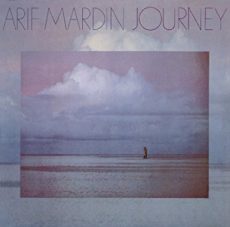
He recorded two solo albums in the Seventies, Glass Onion and Journey, the latter wearing the hats of composer, arranger, electric pianist and percussionist. Mardin performed with Randy and Michael Brecker, Joe Farrell, Gary Burton, Ron Carter, Steve Gadd, Billy Cobham and many others. He composed, arranged, conducted and produced The Prophet in 1974, an interpretation of Kahlil Gibran’s The Prophet voiced by Richard Harris.
Arif produced George Benson, The Manhattan Transfer, Vince Mendoza, and the Modern Jazz Quartet, but not limited to jazz he also produced, among others, Margie Joseph, Roberta Flack, Donny Hathaway, Raul Midón, Patti Labelle, Aretha Franklin, Barbra Streisand, Bette Midler, Diana Ross, Queen, Jeffrey Osborne, and numerous others. In 1975 he discovered Barry Gibb’s distinctive falsetto that became the Bee Gees trademark.
Over a 40 year career Mardin produced forty gold and platinum albums, 11 Grammy Awards, was inducted into the National Academy of Recording Arts and Sciences Hall of Fame, and was a trustee of Berklee and awarded an honorary doctorate
Pianist, percussionist, producer, arranger, studio manager and vice president Arif Mardin passed away at his home in New York City on June 25, 2006 following a lengthy battle with pancreatic cancer.
Sponsored By


#preserving genius
More Posts: arranger,percussion,piano,producer
Daily Dose Of Jazz…
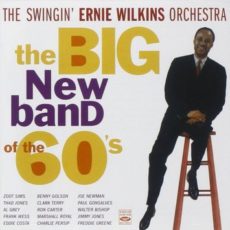
Ernest Brooks Wilkins Jr. was born on July 20, 1922 in St. Louis, Missouri. In his early career he played in a military band, before joining Earl Hines’s last big band. By 1951 he began working with Count Basie but after four years, in 1955 he began freelancing as a jazz arranger and writer of songs and was much in demand at that time.
By the Sixties Ernie’s success declined but revived after working with Clark Terry. This led to his touring Europe and his eventual settling in Copenhagen, Denmark, where he would live for the rest of his life. There he formed the Almost Big Band so he could write for a band of his own. The idea was partly inspired by his wife Jenny as the city had a thriving jazz scene with several promising jazz musicians as well as an established community of expatriate American jazz musicians that formed in the 1950s and included Kenny Drew and Ed Thigpen who joined the band along with Danish saxophonist Jesper Thilo.
The band released four albums, but after 1991 he became too ill to do much with it. He was responsible for orchestral arrangements on 1972’s self-titled album by Alice Clark, on Mainstream Records, that is a highly sought-after collectible today. He has a street named after him in southern Copenhagen, Ernie Wilkins Vej.
Tenor saxophonist, arranger and songwriter Ernie Wilkins, who wrote for Tommy Dorsey, Harry James, and Dizzy Gillespie, in addition to being the musical director for albums by Cannonball Adderley, Dinah Washington, Oscar Peterson, and Buddy Rich, passed away on June 5, 1999 of a stroke in Copenhagen.

Uplift Someone’s World

More Posts: arranger,saxophone,songwriter
Daily Dose Of Jazz…
Gary McFarland was born in Los Angeles, California on October 23, 1933. An influential composer, arranger, vibraphonist and vocalist, he made a name for himself on Verve and Impulse Records during the Sixties, making one of the more significant contributors to orchestral jazz. He attained a small following after working with Bill Evans, Gerry Mulligan, Johnny Hodges, John Lewis, Stan Getz, Bob Brookmeyer and Anita O’Day.
His debut as a leader came in 1961 with the Jazz Version of How To Succeed In Business Without Really Trying. Gary recorded for Skye, Buddah and Cobblestone Records through the 1960s into the early Seventies. As well as eighteen of his own albums as a leader and arrangements for other musicians such as Lena Horne, Steve Kuhn, Gabor Szabo, John Lewis, Shirley Scott, Zoot Sims and Gary Burton, he composed the scores to the films Eye of the Devil in 1968 and Who Killed Mary What’s ‘Er Name in 1971.
By the end of the 1960s McFarland was moving away from jazz towards an often wistful or melancholy style of instrumental pop, as well as producing the recordings of other artists on his Skye Records label, run in partnership with Szabo and Cal Tjader until its bankruptcy in 1970.
Gary McFarland and Louis Savary wrote the classic song Sack Full Of Dreams that was first released by Grady Tate in 1968. He was considering a move into writing and arranging for film and stage when on November 3, 1971 he was poisoned with methadone in a New York City bar at the tender age of 38. In tribute Bill Evans performed Gary’s Waltz in 1979, shortly before his own death.
Jazz Is Global – Share
More Posts: arranger,composer,vibraphone,vocal
Daily Dose Of Jazz…
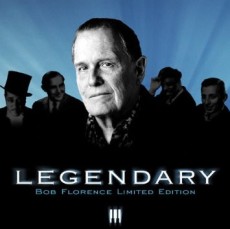
Bob Florence was born on May 20, 1932 in Los Angeles, California. He began taking piano lessons at five and initially intended to be a concert pianist. His direction changed when he was exposed to jazz while attending Los Angeles City College.
At the beginning of his career Bob worked as a pianist and arranger with Dave Pell. He went on to found his first band in the late 1950s, working with, amongst others, Herb Geller, Bud Shank, Frank Capp and Enevoldsen.
Florence later participated in big band projects in the Los Angeles area, working mainly with session musicians and as an accompanist to various singers. Throughout his career he worked as an arranger for Harry James, Louis Bellson, Stan Kenton, Buddy Rich, Count Basie and Doc Severinsen.
In 2000, Florence won a Grammy for Best Large Ensemble Performance. He died of pneumonia in Los Angeles, California on May 15, 2008 at the age of 75.
Put A Dose In Your Pocket
Daily Dose Of Jazz..
Matso Limtiaco was born May 2, 1963 and majored in music education as an undergraduate. After a brief period teaching public school music, he earned his MA in music theory/composition at Washington State University in 1990. After spending six years teaching music at all levels from junior high band to university jazz ensembles, arranging music for groups he led and for a variety of local performers.
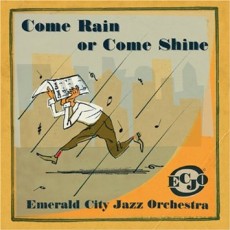
Limtiaco gained his first notoriety as a marching band arranger for Washington State University, and then for the University of Washington. Matso quit teaching music full-time and is active as a freelance composer, arranger, and performer in the Seattle area. His baritone saxophone work has anchored the Emerald City Jazz Orchestra saxophone section since 1994, and the band’s two recordings “Alive and Swinging” and “Come Rain or Come Shine” feature his charts.
After spending several years in music education, he left teaching and now works as an independent composer/arranger, with a “day job” as a technical writer for a large manufacturing company. Among jazz arrangers and composers Matso is not the most well-known nor the most prolific but he rapidly established himself as one of the most polished and professional writers anywhere.
Inspire A Young Mind