

Daily Dose Of Jazz…
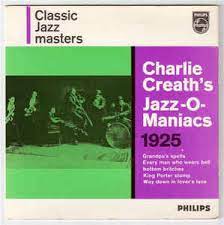
Charles Cyril Creath was born on December 30, 1890 in Ironton, Missouri and at an early age was playing in traveling circuses and in theater bands in the decade of the 1900s. He moved back to St. Louis, Missouri around 1919 and there he led bands playing on the Streckfus company’s riverboats traveling on the Mississippi River between New Orleans, Louisiana and St. Louis.
His ensembles became so popular that he had several bands under his own name at one time in the 1920s. A young Gene Sedric, later a mainstay of Fats Waller’s combo and orchestra, played with Creath on riverboats in the 1920s, and perhaps early 1930s. He co-led a group on the SS Capitol in 1927 with Fate Marable.
Late in the 1920s Charlie suffered from an extended illness, and primarily played saxophone and accordion instead of trumpet afterwards. He and Marable played together again from 1935 to 1938, and toward the end of the decade he opened a nightclub in Chicago, Illinois. He worked in an airplane manufacturing plant during World War II and retired in 1945. His last years were plagued with illness.
Aside from his brother-in-law, Zutty Singleton, members of Creath’s bands included Ed Allen, Pops Foster, Jerome Don Pasquall, Leonard Davis, and Lonnie Johnson. He recorded as a leader for Okeh Records between 1924 and 1927 billed as Chas. Creath’s Jazz-O-Maniacs, which were some of the hottest and most collectable jazz items recorded for OKeh’s race 8000 series.
Trumpeter, saxophonist, accordionist and bandleader Charlie Creath passed away on October 23, 1951, in Chicago.

More Posts: accordion,bandleader,history,instrumental,jazz,music,saxophone,trumpet
Daily Dose Of Jazz…
René Compère was born in Brussels, Belgium on December 28, 1906 in and by the time he was 17 he was working with the Billy Smith Brussels-based band. He then went on to found his own ensemble, the New Royal Dance Orchestra. However, as a member of Smith’s group, he met Charles Remue, with whom he worked for several years and Jean Omer who also played in Compère’s orchestra.
He recorded with Fernand Coppieters in 1929, then joined Josephine Baker’s backing band for several European tours in the first half of the 1930s. He was hired to play aboard the ship SS Normandie for transatlantic voyages. In 1937 he played at the Paris Exposition with Django Reinhardt, then worked in France with Joe Bouillon and in Belgium with Joe Heyne. During World War II he recorded with Eddie Tower.
Trumpeter René Compère, who never recorded as a leader, passed away on April 24, 1969 in his hometown.
More Posts: bandleader,history,instrumental,jazz,music,trumpet
Daily Dose Of Jazz…
William Fredrick Bean was born on December 26, 1933 into a musical family in Philadelphia, Pennsylvania. His mother played the piano, his father was an amateur singer and guitarist, and his sister sang professionally. He started on guitar at the age of twelve.
His father taught him some of the basics on guitar before he received lessons from Howard Herbert. He went on to study with Dennis Sandole for a year. During the late 1940s and 1950s, he performed at venues in the Philadelphia area, until in the mid-Fifties he moved to New York City and recorded with Charlie Ventura and Red Callender. By 1958 he was moving to the West Coast and settling in Los Angeles, California to record for Decca. In Los Angeles, he worked with Buddy Collette, Paul Horn, John Pisano, Bud Shank, Milt Bernhart, Les Elgart, Herb Geller, Lorraine Geller, Calvin Jackson, and Zoot Sims.
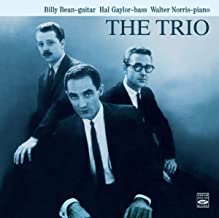
Returning to New York City in 1959 after accepting Tony Bennett’s offer to join his band, Bean remained with Bennett’s band for less than one year. Hal Gaylor, who had been Bennett’s bassist, assembled a trio with Bean and pianist Walter Norris, calling themselves The Trio. They recorded an album for Riverside Records in 1961. Finding it difficult to find work, the trio disbanded shortly after recording.
Bean performed with Stan Getz, Herbie Mann, and John Lewis, recording albums with Mann and Lewis. He co-led six recording albums and another 16 as a sideman. Returning to his hometown of Philadelphia, guitarist Billy Bean retired in 1986, and passed away on February 6, 2012.
More Posts: bandleader,guitar,history,instrumental,jazz,music
Daily Dose Of Jazz…
Edward L. Gibbs was born on December 25, 1908 in New Haven, Connecticut. A student of the great banjoist and bandleader Elmer Snowden, he went back and forth among three different stringed instruments during his career.
Gibbs began his career late in the 1920s, playing with Wilbur Sweatman, Eubie Blake, and Billy Fowler. He played with Edgar Hayes from 1937 and played with him on a tour of Europe in 1938. After a short stint with Teddy Wilson, he joined Eddie South’s ensemble in 1940, and worked later in the decade with Dave Martin, Luis Russell, and Claude Hopkins.
As a bassist, he led his own trio at the Village Vanguard and played in a trio with Cedric Wallace, but returned to banjo in the 1950s during the Dixieland jazz revival. He played and recorded with Wilbur de Paris among others during this time.
After studying with Ernest Hill, he returned to bass in the middle of the 1950s, but played banjo once again in the 1960s during another surge in interest in the Dixieland groups. He played at the World’s Fair in 1965 and in 1969 he played bass and occasionally banjo as a member of Buzzy Drootin’s Jazz Family, which included Herman Autrey, Benny Morton, Herb Hall, Sonny Drootin on piano and Buzzy on drums. Also, in the late ’60s he was part of a group called The Happy Family who featured him on both banjo and bass.
Banjoist, guitarist, and bassist Eddie Gibbs, who retired from active performance in the 1970s, passed away on November 12, 1994.
More Posts: bandleader,banjo,bass,guitar,history,instrumental,jazz,music
Daily Dose Of Jazz…
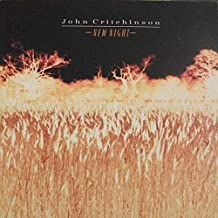
John William Frank Critchinson was born on December 24, 1934 in London, England. He worked as a part-time musician with Ronnie Scott, Tubby Hayes, and Jimmy Deuchar, among others. In 1979, at the recommendation of his mentor, Bill Le Sage, he became a member of Ronnie Scott’s Quartet until it folded in 1995. During that time, he worked with many visiting American artists, including Chet Baker, George Coleman, James Moody, Joe Henderson and Johnny Griffin.
In the early 1980s, he had an association with the British jazz fusion duo Morrissey–Mullen, appearing on two of their albums. He recorded with Dick Morrissey and was a member of Martin Drew’s Our Band, with Ron Mathewson, Jim Mullen, and Dick Morrissey.
In 1995, he formed a quartet with saxophonist Art Themen, bassist Dave Green and Dave Barry on drums. When Scott died in 1996, Critchinson formed the Ronnie Scott Legacy with Pat Crumly on saxophone and flute. Later in his life, he played and recorded with saxophonist Simon Spillett.
Pianist John Critchinson, who recorded eleven albums as a leader and was affectionately known as Critch, passed away on December 15, 2017.
More Posts: bandleader,history,instrumental,jazz,music,piano