

Daily Dose Of Jazz…
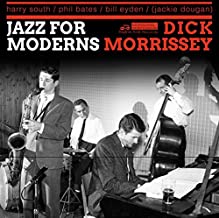
Richard Edwin Morrissey was born on May 9, 1940 in Horley, Surrey, England. Self-taught, he started playing clarinet in his school band, The Delta City Jazzmen, at the age of sixteen with fellow pupils. He then joined the Original Climax Jazz Band before going on to join trumpeter Gus Galbraith’s Septet, where alto saxophonist Peter King introduced him to Charlie Parker’s recordings, Shortly afterward he began specializing on tenor saxophone.
Making his name as a hard bop player, Morrissey appeared regularly at the Marquee Club in 1960, and recorded his first solo album It’s Morrissey, Man! in 1961 at the age of 21 for Fontana Records. Spending most of 1962 in Calcutta, India as part of the Ashley Kozak Quartet, they played three 2-hour sessions seven days a week. Upon returning to the UK he formed his quartet and recorded three LPs, Have You Heard?, Storm Warning!, and Here and Now & Sounding Good!.
He went on to play regular gigs in London and during this time Dick also played extensively in bands led by Ian Hamer and Harry South, including The Six Sounds. He also played briefly in Ted Heath’s Big Band, Johnny Dankworth and his Orchestra, the Harry South Big Band. and Eric Burdon and The Animals’ Big Band.
The mid-1960s, saw Dick played with Brother Jack McDuff, Jimmy Witherspoon, J. J. Jackson and Sonny Stitt together with guitarist Ernest Ranglin recorded with him during the Sixties and early Seventies.
In 1969, Morrissey by thenwas a many-time winner and runner-up of the Melody Maker Jazz Poll, and teaming up with another Melody Maker award-winner, guitarist Terry Smith, with whom he had worked in J. J. Jackson’s Band, to form an early jazz-rock group, If.
When If disbanded in 1975, he toured Germany and the United States, recording with the Average White Band, before meeting up with Glaswegian guitarist, Jim Mullen. With some of the members of AWB, together they formed Morrissey–Mullen, recording their first album, Up in 1976) in New York. On returning to Great Britain, Morrissey–Mullen formed another band which rapidly became Britain’s most highly acclaimed jazz-fusion band of the day. They ultimately recorded seven albums over the 16 years they were together, with Morrissey and Mullen collaborating on each other’s solo albums.
He went on to have numerous collaborations with Tubby Hayes, Bill Le Sage, Roy Budd, Ian Hamer, Ian Carr, Tony Lee, Tony Archer, Michael Garrick, Spike Robinson, Allan Ganley, Peter King, Ray Warleigh, and Hoagy Carmichael among others. Tenor and soprano saxophonist, flautist, and composer Dick Morrissey passed away on November 8, 2000.

More Posts: bandleader,flute,history,instrumental,jazz,music,saxophone
Daily Dose Of Jazz…
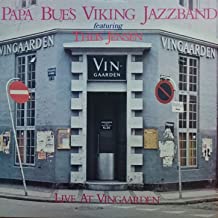
Arne Bue Jensen, known as Papa Bue, was born May 8, 1930 in Copenhagen, Denmark and at an early age became fascinated with jazz, prompted by a pile of records from his brother. The collection included Harry James, Artie Shaw, Tommy Dorsey, Glenn Miller, Bert Ambrose. Bunk Johnson and George Lewis made a strong impression.
After World War II, Jensen became a sailor, visiting ports around the world. It was around this time that he started to play jazz, buying a slide trombone with money he borrowed. Learning the basics from a musician from the Royal Danish Orchestra, he was mostly self-taught, he went on to play in clubs around Copenhagen with other young musicians and bands, including the Royal Jazzman, Henrik Johansen’s Jazz Band, and the Saint Peter Street Stompers, participating as a sideman in several recordings.
In the 1950s, Papa Bue worked with the Bonanza Jazz Band, Chris Barber, Adrian Bentzon, and Henrik Johansen. During the decade In the mid 1950s, he was part of the entertainment district in Nyhavn. With six musicians he founded the New Orleans Jazz Band in 1956, after a jam session at Cap Horn. Since Jensen was the eldest, he became the bandleader and as the only band member who was a father, was given the nickname Papa Bue.
By late 1957 he renamed the ensemble the Viking Jazz Band. The name came from American journalist and vocalist Shel Silverstein, who attended one of their concerts at Cap Horn during a stay in Copenhagen. He subsequently wrote an article about them, calling them the Danish Vikings, and adopting the new name, they released their first album as the Viking Jazz Band in 1958. In 1960 their Schlafe Mein Prinzchen sold over one million copies, and was awarded a gold disc.
At a time when many jazz musicians worked in the Bebop idiom, Bue’s style remained based on the Dixieland tradition but also with influences from early swing music. He is considered one of the most significant proponents of his genre.
The group remained active into the 1990s, and recorded with musicians such as George Lewis, Champion Jack Dupree, Art Hodes, Wild Bill Davison, Wingy Manone, Edmond Hall, Albert Nicholas. Earl Hines, Stuff Smith, and Ben Webster. In 1969, Papa Bue’s Viking Jazz Band was the only non-American band to participate in the New Orleans Jazz Festival.
While in New Orleans, he was honored with the Golden Keys to the City. In 1989 he received the Ben Webster’s Prize of Honour. Trombonist and bandleader Papa Bue, chiefly associated with the Dixieland jazz revival style, passed away on November 2, 2011 at the age of 81.
More Posts: bandleader,history,instrumental,jazz,music,trombone
Daily Dose Of Jazz…
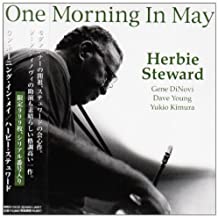
Herbert Bickford Steward was born May 7, 1926 in Los Angeles, California.
He recorded six albums as a leader and worked as a sideman with Serge Chaloff, Zoot SimsAl Cohn and Stan Kenton.
Saxophonist Herbie Steward, widely known for being one of the tenor saxophone players in Four Brothers, part of Woody Herman’s Second Herd, passed away on August 9, 2003 in Clearlake, California.
More Posts: bandleader,history,instrumental,jazz,music,saxophone
Daily Dose Of Jazz…
Hasaan Ibn Ali, born William Henry Langford, Jr. on May 6, 1931 in Philadelphia, Pennsylvania. In 1946 at age 15, he toured with trumpeter Joe Morris’s rhythm and blues band and two years later he was playing locally with Clifford Brown, Miles Davis, J. J. Johnson, Max Roach, and others. Based in Philadelphia, he freelanced and acquired a reputation locally as an original composer and theorist. The pianist performed with Horace Arnold in New York City in 1959, and again in 1961–62, in a trio with Henry Grimes.
According to Roach, while visiting New York, Ibn Ali went from club to club to play, and sometimes at the drummer’s home in the middle of the night continued to play unaccompanied on the piano there. The drummer routinely recorded Ibn Ali’s playing in this way when the pianist visited.
An album, The Max Roach Trio Featuring the Legendary Hasaan, was recorded on December 4 and 7, 1964, with bassist Art Davis, and was released six months later. Seven of the tracks were written by Ibn Ali. After the release of thealbum,
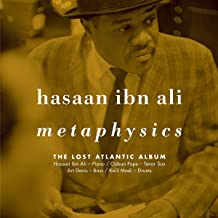
Ibn Ali mentored saxophonist Odean Pope, Ibn Ali had further studio sessions, with Pope, Art Davis and drummer Khalil Madi, on August 23 and September 7, 1965. Unfortunately for music posterity, the master tapes were destroyed in the fire at Atlantic’s warehouse at Long Branch, New Jersey in 1978. Pope believed that the recordings were not released by Atlantic because the label found out that the pianist had been imprisoned shortly after the sessions for drug offences. A copy of the recording was uncovered decades later; CD and LP versions were released as Metaphysics: The Lost Atlantic Album by Omnivore Recordings in 2021.
His parents died in a fire that destroyed their home North Gratz Street on October 24, 1980. Reckless with his health, pianist Hasaan Ibn Ali who was strongly influenced by Elmo Hope, passed away in 1980 at 48 or 49. He built a reputation in Philadelphia, where he influenced musicians including John Coltrane, but he remained little known elsewhere.
More Posts: bandleader,history,instrumental,jazz,music,piano
Daily Dose Of Jazz…
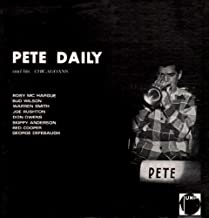
Pete Daily was born on May 5, 1911 in Portland, Indiana. He started his career in Chicago, Illinois in 1930 playing with various bands in and around the city. He was the leader of Pete Daily and his Chicagoans in the 1940s and 50s and recorded for Capitol Records as Dixie by Daily and Pete Daily’s Dixieland Band. They also recorded on the Jump and Decca labels in the 1950s.
In 1942, he moved to the West Coast and, after service in World War II, formed the Chicagoans. He played long engagements at several Hollywood night clubs in the 1950s such as Sardis, The Royal Room, and the Astors in Studio City. He continued to play during the 1970s until a stroke in 1979 forced him to retire.
During the filming of Pete Kelly’s Blues, actor Jack Webb, the cornet-playing star of the film, repeatedly went to the nightclub where Daily performed to study his mannerisms for his role in the film. The band which recorded the soundtrack appeared at Dixieland festivals supported by Pete Daily’s band.
His driving style on the cornet endeared him to generations of Dixieland Jazz enthusiasts. Cornetist and valve trombonist Pete Daily, who played swing and dixieland, passed away on August 23, 1981.
More Posts: bandleader,cornet,history,instrumental,jazz,music,valve trombone