

Daily Dose Of Jazz…
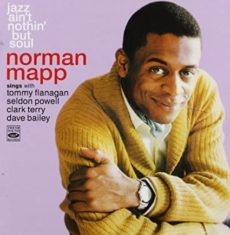
Born John Norman Mapp on March 31, 1928 and raised in Queens, New York. He started his music career as a singer with the U.S. Army band during World War II while stationed in Europe. Receiving his honorable discharge, he returned home to continue singing in New York City.
After an evening of performing, Dinah Washington went uptown to a Harlem night club to hear Norman sing at his debut. Impressed by his performance she adopted him as her protégé, encouraged him to continue singing and writing songs, and helped him start his career as a soloist and big-band musician.
As a composer, Mapp’s songs include Jazz Ain’t Nothin’ but Soul, I Worry ‘Bout You, Mr. Ugly, In the Night, Free Spirits, and Foul Play. His songs have been performed by Count Basie, Betty Carter, Marvin Gaye, Gigi Gryce, Peggy Lee, and Arthur Prysock.
Vocalist and composer Norman Mapp, who never regretted making music his career…because it brought him a wealth of experience, passed away in 1988.

More Posts: bandleader,history,instrumental,jazz,music,vocal
Daily Dose Of Jazz…
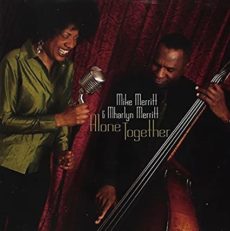
Mharlyn Merritt was born on March 30, 1950 in Philadelphia, Pennsylvania, the daughter of bassist Jymie Merritt. A vocalist rooted in jazz, R&B and classic soul, she has collaborated with her brother Michael on a recording titled Alone Together. She has paid tribute to cabaret with her Jukebox Reveries: Love Songs from the American Songbook as well as experimenting with other genres of music.
A novelist and poet with a Masters of Fine Arts in Creative Writing, Mharlyn is a recipient of a National Endowment for the Arts Fellowship in Jazz Performance and an Interdisciplinary Arts Fellowship from the Pennsylvania Council on the Arts.
Her band Messenger, she has opened fr Hugh Masekela, Eddie Palmieri, and Richard Beltzer among others. She has graced numerous sessions as a background vocalist at Sigma Sound Studios in Philadelphia. Having lived in New York and London vocalist Mharlyn Merritt currently resides in Philadelphia and continues to write, perform and record.
More Posts: bandleader,history,instrumental,jazz,music,vocal
Daily Dose Of Jazz…
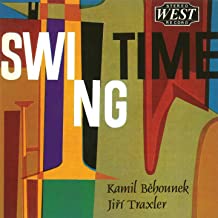
Kamil Běhounek was born on March 29, 1916 in Blatná, Czech Republic and was an autodidact on accordion, having learned to play by imitating recordings and BBC broadcasts. While studying law in Prague he began performing in clubs and recorded his first solo accordion date in 1936. By the late 1930s, he was working with the Blue Music Orchestra, Rudolf Antonin Dvorsky, Jiří Traxler, and Karel Vlach.
In 1943, he was forcibly compelled by the Nazis to go to Berlin and make arrangements for the bands of Lutz Templin and Ernst van’t Hoff. Upon returning to Czechoslovakia in 1945, he used some of these arrangements for his own band, then returned to Germany the following year, where he continued arranging for bandleaders such as Adalbert Luczkowski, Willy Berking, Heinz Schönberger, and Werner Müller.
He played with his own ensemble, including in Bonn, Germany and after 1948 he performed in West Germany at American soldiers’ clubs. Between 1968 and 1977 he recorded several albums of folk music but continued to play swing with his own groups. He also wrote an autobiography, Má láska je jazz (Jazz is my Love), which was published posthumously in 1986.
Bohemian accordionist, bandleader, arranger, composer, and film scorer Kamil Běhounek, who occasionally played tenor saxophone, passed away on November 22, 1983 in Bonn, Germany.
More Posts: accordion,arranger,bandleader,composer,film scorer,history,instrumental,jazz,music,saxophone
Daily Dose Of Jazz…
Bill Hughes was born William Henry Hughes in Dallas, Texas on March 28, 1930. His family moved to Washington, D.C., when he was nine years old where his father worked at the Bureau of Engraving and played trombone in the Elks Club marching band. He began learning to play the trombone around age twelve and was performing in Washington jazz venues by the age of sixteen. One of the clubs was the 7T Club, where he met and performed with saxophonist and flutist Frank Wess.
While students at Howard University, Hughes and Wess played in the Howard Swingmasters, along with bassist Eddie Jones. Though interested in music he originally wanted to pursue a career as a pharmacist and graduated from the University’s School of Pharmacy in 1952 and began working at the National Institutes of Health.
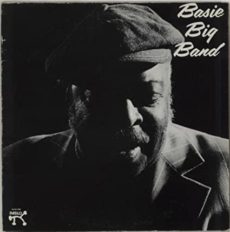
His career plans changed the following year when Wess, a member of the Count Basie Orchestra, suggested that Count Basie invite him to join the band. Also asked to join the Duke Ellington Orchestra, he declined and in 1953, he joined the Basie band where he already knew members Frank Wess, Eddie Jones, and Benny Powell. He played in a three-piece tenor trombone section with Powell and Henry Coker until 1957, when he decided to take a break from touring in order to help raise his family.
During this hiatus, Bill worked for the United States Postal Service and played trombone at the Howard Theater as well as with some small groups in Washington. A few years after returning to the band in 1963, he switched from the tenor to the bass trombone. In 2003 he took over leadership of the band following the death of Grover Mitchell. He retired from the band in 2010 and spent the last years of his life in Staten Island, New York with his wife and three children. On January 14, 2018 trombonist Bill Hughes passed away at the age of 87.
More Posts: bandleader,history,instrumental,jazz,music,trombone
Daily Dose Of Jazz…
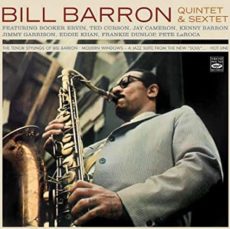
William Barron, Jr. was born on March 27, 1927 in Philadelphia, Pennsylvania where he spent his formative years. Moving to New York City in 1958 and came to the jazz world’s attention when he first appeared on a Cecil Taylor recording in 1959, later recorded extensively with Philly Joe Jones, after which he co-led a fine post-bop quartet with Ted Curson.
His younger brother, pianist Kenny appeared on all of the sessions that the elder Barron led. Other musicians he recorded with included Charles Mingus and Ollie Shearer.
Barron spent much of the remainder of his career as an educator, directing a jazz workshop at the Children’s Museum in Brooklyn, teaching at City College of New York, and becoming the chairman of the music department at Wesleyan University.
His day job made it possible for him to consistently record non-commercial music for Savoy, recording that label’s last jazz record in 1972, and Dauntless and Muse. The Bill Barron Collection is housed at the Institute of Jazz Studies of the Rutgers University Libraries,
Tenor and soprano saxophonist William Barron Jr., who never compromised his music or received much recognition, passed away in Middletown, Connecticut on September 21, 1989.
More Posts: bandleader,history,instrumental,jazz,music,saxophone