

Daily Dose Of Jazz…
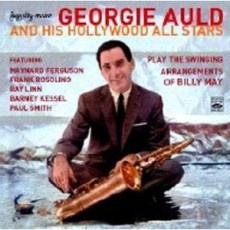
George Auld was born John Altwerger on May 19, 1919 in Toronto, Canada but lived in the U.S. from the late 1920s. He was most noteworthy for his tenor saxophone work Bunny Berigan, Artie Shaw, Benny Goodman, Erroll Garner, Dizzy Gillespie, Al Porcino, Billy Eckstine, Tiny Kahn, Frank Rosolino and many others.
Primarily a swing saxophonist, he did many big band stints in his career, and led several big bands, including Georgie Auld and His Orchestra and Georgie Auld and His Hollywood All Stars. Auld also played some rock´n roll working for Alan Freed in 1959.
George can be heard playing sax on the 1968 Ella Fitzgerald album “30 by Ella” and in 1977 he played a bandleader in “New York, New York” starring Liza Minelli and Robert DeNiro and also acted as a technical consultant for the film. The tenor saxophonist, clarinetist and bandleader George Auld died in Palm Springs, California at the age of 71 on January 8, 1990.

Give A Gift Of Jazz – Share
More Posts: bandleader,clarinet,saxophone
Daily Dose Of Jazz…
Rodney Kendrick was born April 30, 1960 in Philadelphia, Pennsylvania and grew up in Miami, Florida where his parents moved soon after his birth. Growing up in a musical and Pentecostal church-going family, his mother is a gospel singer named Juet and his father is pianist James “Jimmy Kay” Kendrick, who worked with saxophonist Illinois Jacquet for seven years and played with saxophonist Sonny Stitt and Sam Rivers.
At eighteen Rodney turned professional, touring and playing keyboards with R&B and funk bands, traveling internationally with Harold Melvin & the Blue Notes, James Brown and George Clinton. Three years later Kendrick began to primarily focus on jazz and moved to New York in 1981. He played keyboards for Freddie Hubbard, Terence Blanchard, Stanley Turrentine, Clark Terry, J.J. Johnson and numerous others.
Studying with pianist Barry Harris, who remained his teacher and mentor for over 20 years, Kendrick cites Randy Weston and Sun Ra as influences. In the early Nineties he served as Abbey Lincoln’s musical leader for seven years. In 1994 he signed a contract with Verve Records and released his debut album “The Secrets of Rodney Kendrick”, and a year later his sophomore project “Dance World Dance”. Both recordings showcase his arranging skills as well as his compositions and feature Houston Person, Graham Haynes, Arthur Blythe and Bheki Mseleku among his guests.
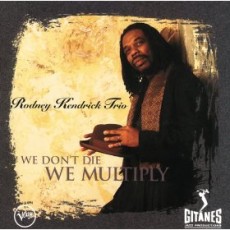
He went on to record his next album “We Don’t Die, We Multiply” with his wife Rhonda composing “Led Astray” and several tracks featuring saxophonist Dewey Redman. Rodney has produced several albums, including a solo piece titled “Thank You”, a duo-piano piece with his mentor Randy Weston, an album with his wife titled “Rhonda Ross Live: Featuring Rodney Kendrick”, as well as a project with his father, Jimmy Kay, titled “Black is Back”.
Rodney Kendrick, jazz pianist, bandleader, composer and producer who has been described as one who swings hard with a Monkish wit and drive, continues to perform, compose and record.
Give The Gift Of Knowledge
More Posts: bandleader,piano
Daily Dose OF Jazz…
Ward Pinkett was born on April 29, 1906, the son of an amateur cornet player. He started playing the trumpet when he was ten years old. He played in the school band at Hampton Institute and later attended the New Haven Conservatory of Music.
After working with the White Brothers Orchestra in Washington, D. C. he moved to New York City and played for brief periods with the bands of Charlie Johnson, Willie Gant, Billy Fowler, Henri Saparo, Joe Steele and Charlie Skeete.
During his stint with Jelly Roll Morton in 1928–30, he participated in seven of Morton’s recording sessions and his solos on “Strokin’ Away” and “Low Gravy” that are considered by music historians to be the best of his career. He also worked with Chick Webb, Bingie Madison, Rex Stewart and Teddy Hill but was never able to achieve fame.
By 1935 he teamed with Albert Nicholas and Bernard Addison at Adrian Rollini’s Tap Room and also had a short stint with Louis Metcalf’s Big Band. He recorded with King Oliver, Bubber Miley, Clarence Williams, the Little Ramblers and James P. Johnson.
Ward Pinkett died of alcoholism-aggravated pneumonia on March 15, 1937 just six weeks short of his thirty-first birthday.
Take A Dose On The Road
Take A Dose On The Road
More Posts: bandleader,trumpet
Daily Dose Of Jazz…
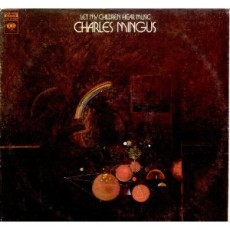
Charles Mingus Jr. was born on April 22, 1922 in Nogales, Arizona of Chinese, English, African and Swedish heritage. His mother allowed only church-related music in their home, but Mingus developed an early love for jazz, especially the music of Duke Ellington. He first studied trombone, later adding cello, which prepared him for the double bass in high school. He studied five years with H. Rheinshagen, principal bassist of the New York Philharmonic and compositional techniques with Lloyd Reese.
Beginning in his teen years, Mingus was writing quite advanced pieces incorporating elements of classical music. A number of them were recorded in 1960 with conductor Gunther Schuller and released as “Pre-Bird”, referring to Charlie “Bird” Parker. Mingus was one of many musicians whose perspectives on music were altered by Parker into “pre- and post-Bird” eras.
Gaining a reputation as a bass prodigy, his first major professional job was playing with former Ellington clarinetist Barney Bigard. This followed by a tour with Louis Armstrong in 1943 that led to his recording in a band led by Russell Jacquet that included Teddy Edwards and Chico Hamilton. He went onto record with Howard McGhee and into the late ‘40s played with Lionel Hampton’s band performing several of his pieces.
A popular Mingus trio had Red Norvo and Tal Farlow in tow in the early 50s with considerable acclaim but his mixed heritage caused problems with club owners and he left the group. Charles was briefly a member of Ellington’s band until his temper got him fired. He went on to record and play with Max Roach, Bud Powell, Dizzy Gillespie, Charlie Parker, Pepper Adams, Jaki Byard, Horace Parlan, Booker Ervin, John Handy, Charles McPherson, Eric Dolphy and Johnny Coles among others through the Sixties and into the next decade. By the mid-1970s, Mingus was suffering from Lou Gehrig’s disease that eventually stopped his playing, leaving him to continue composing and supervising recordings prior to his death on January 5, 1979 at age 56 in Cuernavaca, Mexico.
Composer, bandleader, bassist and civil rights activist Charles Mingus left a legacy of an autobiography, Mingus Big Band, Mingus Dynasty, Mingus Orchestra, the Charles Mingus High School Competition, the catalogue of Mingus compositions in the Music Division of the New York Public Library and the collected papers of Charles Mingus housed at the Library of Congress in Washington, DC.
Take A Dose On The Road
More Posts: bandleader,bass,composer

Daily Dose Of Jazz…
Junko Onishi was born April 16, 1967 in Kyoto, Japan and studied piano at Berklee College of Music. She then moved to New York City where she played with Joe Henderson, Betty Carter, Kenny Garrett and the Mingus Dynasty but has also worked with Jackie McLean, Holly Cole, Billy Higgins and many others.
Primarily playing in the post-bop genre, Junko cites her influences as Duke Ellington, Thelonious Monk and Ornette Coleman but one can hear McCoy Tyner, Kenny Kirkland and Mulgrew Miller’s influences in her playing. As a leader she has recorded nine albums on Blue Note Records label Somethin’ Else.
Choosing to study and practice she stopped performing in the late Nineties and when her mentor, Jaki Byard passed away she stopped playing completely for two years. Redeveloping her technique Onishi returned to playing and started a gym regimen to help her cope with the physical rigors of playing.
She appears in the 1997 documentary “Blue Note: A Story Of Modern Jazz playing the song “Trinity” and “Quick” from her album Play, Piano, Play: Junko Onishi Trio in Europe. In 2009 she released her Blue Note album “Musical Moments” followed by her Verve large band project “Baroque”. She continues to perform, record and tour worldwide.
Give The Gift Of Knowledge
More Posts: bandleader,composer,piano