

Daily Dose Of Jazz…
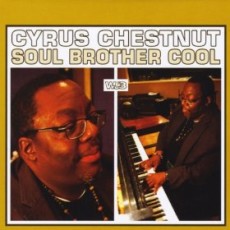
Cyrus Chestnut was born January 17, 1963 in Baltimore, Maryland. He started his musical career at the age of six, playing piano at Mount Calvary Baptist Church. By age nine, he was studying classical music at Peabody Institute and in 1985 earned a degree in jazz composition and arranging from Berklee College of Music where he was awarded the Eubie Blake Fellowship, the Quincy Jones Scholarship and the Oscar Peterson Scholarship.
A year after graduating his prolific career began with a tour with Jon Hendricks, followed by two-year stints with Terence Blanchard, Donald Harrison, Wynton Marsalis and Betty Carter. Under Betty’s tutelage, Cyrus was advised to take chances and play things she had never heard.
Signing with Atlantic Records in 1993 he released the critically acclaimed Revelation followed by The Dark Before The Dawn the next year, debuting at #6 on the Billboard charts. He has performed and/or recorded with Freddy Cole, Bette Midler, Freddie Hubbard, Jimmy Scott, Chick Corea, Isaac Hayes, Kevin Mahogany, Dizzy Gillespie, Manhattan Transfer, Vanessa L. Williams, Brian McKnight, Christian McBride, Lewis Nash, James Carter, Wycliffe Gordon and the list continues.
Never straying far from his church roots he collaborated and toured with soprano opera diva Kathleen Battle, recording the notable “So Many Stars” in 1996. Later that same year came Blessed Quietness: A Collection of Hymns, Spirituals and Carols.
Chestnut’s leadership and prowess as a soloist has also led him to be a first call for the piano chair in many big bands including the Lincoln Center Jazz Orchestra, Dizzy Gillespie Big Band and the Carnegie Jazz Orchestra. He has amassed a further string of critically acclaimed albums while continually touring with his trio, playing jazz festivals around the world as well as clubs and concert halls.
More Posts: bandleader,composer,piano
Daily Dose Of Jazz…
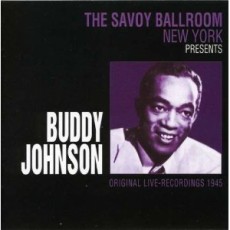
Buddy Johnson was born Woodrow Wilson Johnson on January 10, 1915 in Darlington, South Carolina. He took piano lessons as a child and classical music remained one of his passions. In 1938 he moved to New York and the following year toured Europe with the Cotton Club Revue, but was expelled from Nazi Germany. Later in 1939 he first recorded for Decca Records with his band, soon afterwards being joined by his sister Ella as vocalist.
In 1941 he assembled a nine-piece orchestra and soon began a series of R&B and pop chart hits that included “They All Say I’m The Biggest Fool” with Arthur Prysock on vocals and his sister Ella’s recording of “Since I Fell for You” in 1945, that would later become a jazz standard. In 1946 Buddy composed a Blues Concerto, which he performed at Carnegie Hall two years later. His orchestra remained a major touring attraction through the late 1940s and early 1950s, and continued to record in the jump blues style with some success for Mercury Records. By the end of the 50s Buddy switched to Roulette Records the next year, and bowed out with a solitary session for Hy Weiss’s Old Town label in 1964.
Buddy Johnson, jazz and blues pianist and bandleader passed away on February 9, 1977 in New York at the age of 62 from a brain tumor and sickle cell anemia.
More Posts: bandleader,piano
Daily Dose Of Jazz…
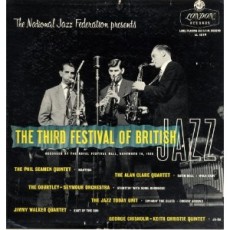
Keith Ronald Christie was born January 6, 1931 in Blackpool, England and began playing trombone at 14 while attending the Guildhall School of Music and Drama. He formed a band with his brother Ian in the late 1940s, and soon after the pair joined the band of Humphrey Lyttleton, recording copiously.
Keith served in the military early in the 1950s, reconvening to lead an ensemble with his brother in 1951 that lasted until 1953. He went on to work with other jazz musicians like John Dankworth, Cleo Laine, George Chisholm, Vic Ash and others in the mid 50s. He worked with Ted Heath as well as Allan Ganley in the Jazzmakers from the late 50s to early 60s, with brief stints in other bands through the end of the decade.
During this period he joined Benny Goodman on a European tour, also playing with Tubby Hayes, Paul Gonsalves, Kenny Wheeler, Ronnie Ross, and Bobby Lamb among others. In the mid-1970s Keith Christie suffered and recovered from a fall but his continuing battles with alcoholism eventually resulted in the trombonist’s early death on December 16, 1980 in London, England.
More Posts: bandleader,trombone
Daily Dose Of Jazz…
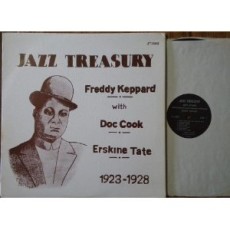
Erskine Tate born on December 19, 1895 in Memphis, Tennessee played violin and studied music at Lane College in Jackson, Tennessee. He moved to Chicago in 1912, studied at the American Conservatory and took his first professional gig at 17. By 1918 he was an early figure in the jazz scene and leading his band the Vendome Orchestra providing music during intermission and for the silent films that were shown in the Vendome Theatre at 31st and State streets.
The band was originally a nine-piece outfit but by the mid 20s had grown to 15. Among the members were Louis Armstrong, Freddie Keppard, Stomp Evans, Buster Bailey, Fats Waller and Teddy Wilson. They recorded during the period for Okeh and Vocalion Record labels.
By 1928 Erskine left the orchestra and led a band at the Metropolitan Theatre and then the Michigan Theatre. He had a long residency at the Cotton Club and continued to lead orchestras and play for dance marathons throughout the 1930s. In 1945 he retired from active performance, opened his own studio, began teaching music and became one of the city’s top instructors throughout the 50s and 60s.
Violinist, composer, conductor and bandleader Erskine Tate passed away on December 17, 1975 in Chicago, Illinois.
More Posts: bandleader,composer,conductor,violin
Daily Dose Of Jazz…
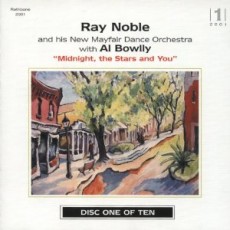
Raymond Stanley Noble was born on December 17, 1903 in Brighton, England and studied music at the Royal Academy. He became the leader of the HMV Records studio band, known as the New Mayfair Dance Orchestra that featured popular vocalist Al Bowlly and many musicians of the top hotel bands.
The Bowlly/Noble recordings achieved popularity in the United States, however, union bans prevented Noble from bringing British musicians to America so he arranged for Glenn Miller to recruit American musicians. Bowlly returned to England but Noble continued to lead bands in America, moving into an acting career portraying a stereotypical upper-class English idiot in films like Top Hat and Slumming On Park Avenue. He also played the “dense” character in love with Gracie Allen, or with his orchestra in an Edgar Bergen vehicle. Noble also provided music for many radio shows of the times like The Charlie McCarthy Show. His last major success as a bandleader came with Buddy Clark in the late 1940s.
Ray Noble arranged hits in the 1930s such as “Easy to Love”, “Mad About the Boy”, “Paris in the Spring”, wrote both lyrics and music for now jazz standards “Love Is The Sweetest Thing”, “Cherokee”, “The Touch of Your Lips”, “I Hadn’t Anyone Till You” and “The Very Thought Of You” and co-wrote “Goodnight, Sweetheart” and “You’re So Desirable”, recorded by Billie Holiday, Teddy Wilson and in 1990 by Robert Palmer.
Ray Noble, bandleader, composer, arranger, pianist, singer and actor passed away on April 3, 1978 at the age of 74.
More Posts: arranger,bandleader,composer