

Daily Dose Of Jazz…
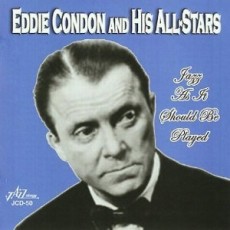
Albert Edwin Condon was born November 16, 1905 in Goodland, Indiana and started playing music on the ukulele before switching to guitar. By the time he was sixteen he was in Chicago playing professionally with Bix Beiderbecke, Jack Teagarden and Frank Teschmacher.
In 1928 Condon moved to New York City frequently arranging jazz sessions for various labels, sometimes playing with the artists he brought like Louis Armstrong and Fats Waller. He organized racially integrated recording sessions – when these were still rare – with Waller, Armstrong and Henry “Red” Allen. He played with the Red Nichols band, later forming a long association with Milt Gabler’s Commodore Records in 1938.
From the late 1930s on Eddie was a regular at Nick’s in Manhattan with Pee Wee Russell, Wild Bill Davison and Bobby Hackett. He went on to appear in a short film with Hackett, produced a series of jazz broadcasts from Town Hall during the last years of WWII that gave him national popularity.
From 1945 through 1967 he ran his own New York jazz club, Eddie Condon’s. In the 50s he recorded a sequence of classic albums for Columbia Records, toured Britain, Australia, Japan, the U. S. and performed at jazz festivals throughout the world until 1971. Two years later, Eddie Condon, jazz banjoist, guitarist, bandleader and arranger passed away on August 4, 1973 in New York City.
More Posts: arranger,bandleader,banjo,guitar
Daily Dose Of Jazz…
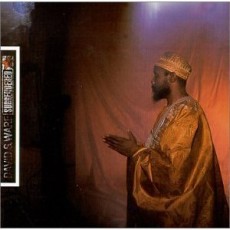
David S. Ware was born on November 7, 1949 in Plainfield, New Jersey and began playing at age ten due to his father’s admiration for the saxophone and his large record collection. While in high school he played in the bands and ventured into New York as a teenager to listen to jazz. He had informal practice sessions with Sonny Rollins as a youth in the ’60s; then as part of the fertile NYC Loft Jazz era of the ’70s.
During this decade, he joined the Cecil Taylor Unit and Andrew Cyrille’s Maono. He also worked together with drummers Beaver Harris and Milford Graves. In the early ’80s he toured Europe with both Andrew Cyrille and his own trio. In mid-decade, Ware purposefully engaged himself in a period of extensive woodshedding – in order to further develop both his personal sound and his visionary group concept.
The ’90s saw the full-on actualization of this group, and the recognition of David S. Ware as a true saxophone colossus. A series of groundbreaking albums by the David S. Ware Quartet were released on the Silkheart, DIW, Homestead, AUM Fidelity, and Columbia Jazz labels. Perhaps the most highly acclaimed group of the last decade, David’s efforts were rewarded by being one of the very few jazz musicians whose work was appreciated by an audience outside the narrow confines of the jazz world. In an unprecedented coup, the ‘Cryptology’ album garnered the lead review slot in Rolling Stone Magazine.
Over the course of his career, tenor saxophonist David Ware has recorded for Columbia, Black Saint, DIW, Silkheart, Homestead, AUM Fidelity and Thirsty Ear record labels. He has performed with a host of musicians and was responsible for bringing the young pianist Matthew Shipp to the attention of the jazz environment. David S. Ware, who has played the most prestigious clubs and festivals around the globe passed away on October 18, 2012 ar age 62 in New Brunswick, New Jersey.
More Posts: bandleader,composer,saxophone
Daily Dose Of Jazz…
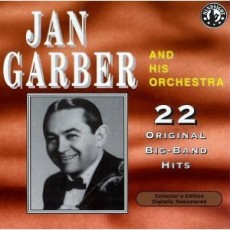
Jan Garber was born Jacob Charles Garber on November 5, 1894 in Indianapolis, Indiana. He had his own band by the time he was 21. He became known as “The Idol of the Airwaves” in his heyday of the 1920s and 1930s, playing jazz in the vein of contemporaries such as Paul Whiteman and Guy Lombardo.
It was during World War II that Garber began playing swing jazz with arranger Gray Rains and vocalist Liz Tilton. However, the recording restrictions in America during the war eventually made his ensemble unfeasible, and he returned to “sweet” music after the war, playing violin with the Philadelphia Symphony Orchestra.
Jan formed the Garber-Davis Orchestra with pianist Milton Davis from 1921–1924. After parting with Davis, he formed his own orchestra, playing both “sweet” and “hot” 1920s dance music. He was hit hard by the Great depression and in the thirties he refashioned his ensemble into a big band and recorded a string of successful records for Victor.
Violinist and bandleader Jan Garber continued to lead ensembles nearly up until the time of his death on October 5, 1977 in Shreveport, Louisiana.
More Posts: bandleader,violin
Review: EC3 | It’s All About The Rhythm
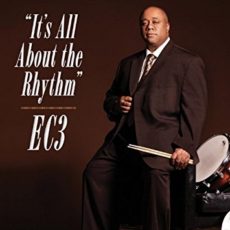
Appropriately titled, It’s All About The Rhythm, the drummer you know as EC3 takes us on a whirlwind ride across the global rhythmic landscape. He does this because it is his obsession with jazz and his attire is reminiscent of yester-year when musicians were sharp dressed men.
Choosing to hang with pop, jazz, Latin, Broadway and Motown luminaries like Pedro Flores, Kurt Weill, Stevie Wonder, Frank Foster, Burt Bacharach and Mario Bauza as well as pianists Kenny Barron, Herbie Hancock and Cedar Walton who more than adequately provide the landscape to accentuate his talents.
But it is his arrangements that move us beyond the borders of the music constructed by their greatness and prompts multiple listens. His selection of musicians and the configurations he employs exhibit his playfulness within the madness. From trio to sextet, one begins to truly appreciate not only the individual contributions each musician has brought to the birth of this project but the genius behind the trap.
Surprises in this offering are weaved in the tapestry of the music taking you on an unexpected journey into the abyss. So to say he plays well with others is an understatement and I implore you to take a moment and put some enjoyment in your travels.
carl anthony | notorious jazz | october 13, 2013
Give A Gift Of Jazz ~ Share 
#preserving genius
More Posts: bandleader,drums,history,instrumental,jazz,music,review
Daily Dose Of Jazz…
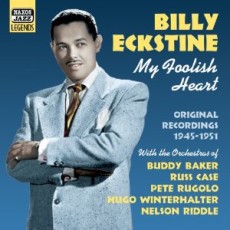
William Clarence Eckstine was born on July 8, 1914 in Pittsburgh, Pennsylvania but grew up in Washington, DC of Prussian and African American heritage. He began singing at the age of seven, entering amateur talent shows while dreaming of a football career that was sidelined when he broke his collarbone. Focusing on music he worked his way west to Chicago, joining Earl Hines’ Grand Terrace Orchestra as vocalist and occasionally trumpeter from1939 – 1943. During his tenure he made a name for himself through the Hines band’s radio shows with such jukebox hits as “Stormy Monday Blues” and his own “Jelly Jelly”.
Eckstine formed the first bop big band in 1944 making it a fountainhead for young musicians who would reshape jazz by the end of the decade, including Dizzy Gillespie, Dexter Gordon, Miles Davis, Art Blakey, Charlie Parker, Fats Navarro and Sarah Vaughn, with Tadd Dameron and Gil Fuller were among the band’s arrangers. Billy hit the charts often during the mid-’40s, with Top Ten entries including “A Cottage For Sale” and “Prisoner of Love”.
Breaking down barriers throughout the Forties as a leader of the original bop big band and as the first romantic black male in popular music, Mr. B, as he was affectionately known, went solo in 1947. His seamless transition to string-filled balladry saw him recording more than a dozen hits by the end of the decade and winning numerous awards from Esquire, Down Beat and Metronome magazines. His 1950 appearance at New York’s Paramount Theatre greatly surpassed Sinatra’s audience draw at the same venue.
Over the course of the next two decades Billy appeared on every major television variety show from Ed Sullivan to Nat King Cole, Jack Paar, Steve Allen, Joey Bishop, Flip Wilson and Playboy After Dark. After a long series of hit tunes and recordings by the 70’s Billy’s recordings came sparingly although he still performed before adoring audiences throughout the world. He made his final Grammy-nominated recording singing with Benny Carter in 1986.
Billy Eckstine, vocalist, bandleader, trumpeter, valve trombonist and guitarist passed away on March 8, 1993, at age 78, in his hometown of Pittsburgh.
More Posts: bandleader,guitar,trombone,trumpet,vocal