

Daily Dose Of Jazz…
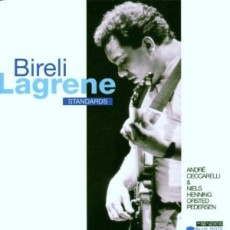
Biréli Lagrène was born September 4, 1966 in Soufflenheim, Bas-Rhin Alsace, France in a traditional manouche-Gypsy family and community. He started playing the guitar at the age of four. He grew up in the loving but tough environment of the “tzigane” or Romani Gypsies. His biggest influences came from family with a gifted violinist father. At age eight, he covered Django Reinhardt’s repertoire, at twelve won a Gypsy music festival in Strasbourg and later recorded his live performance on the double LP, “Route to Django”.
Offered the chance to leave for the U.S., Biréli met the greatest jazz musicians of the international scene such as Stephane Grappelli, Benny Goodman and Benny Carter. In 1984, he met Larry Coryell in New York, then later introduced to bassist Jaco Pastorious and ventured with him into jazz-fusion. Together, they toured Europe, which contributed a great deal to Lagrène’s musical emancipation.
Lagrène, a guitarist and bassist, came to prominence in the 1980s for his Django Reinhardt influenced style. He often performs within the swing; jazz-fusion and post bop mediums. He has also performed live with guitarist Al Di Meola, recorded “Gipsy Project” and “Gipsy Project & Friends” in 2002. He has thirty-seven albums and four film scores to date and continues to record, perform and tour.

Daily Dose Of Jazz…
Wilton Lewis Felder was born August 31, 1940 in Houston, Texas and is both saxophonist and bass player. He is best known as an original member of The Jazz Crusaders, founded while still in high school, along with Joe Sample, Wayne Henderson and Stix Hooper.
The Jazz Crusaders evolved from a straight-ahead jazz combo into a pioneering jazz-rock fusion group, with a soul music influence. They dropped jazz from the name and became simply known as The Crusaders. Felder worked with the original group for over thirty years, and continues to work in its current versions, which often features other founding members.
Felder also worked as a west coast studio musician, mostly playing electric bass, for various soul and R&B musicians. He was one of the in-house bass players for Motown Records when the label opened operations in Los Angeles in the early 70s working with The Jackson 5, Marvin Gaye, America, Billy Joel, Joni Mitchell and Michael Franks.
Wilton worked with Dizzy Gillespie, John Klemmer, Richard Groove Holmes, Grant Green and Milt Jackson among others during his studio years. His solo release titled “Secrets” featured vocalist Bobby Womack singing the hit “(No Matter How High I Get) I’ll Still Be Looking Up To You”. Wilton Felder continues to perform and record.

Daily Dose Of Jazz…
Peter Ind was born July 20, 1928 in Middlesex, England who didn’t begin playing double-bass professionally until the late Forties as part of the house band on the Queen Mary. Relocating to New York in 1951 he played with Lennie Tristano, Lee Konitz, Buddy Rich, Booker Ervin, Mal Waldron and Slim Gaillard.
Branching into production Peter became a pioneer in stereo recording and the overdubbing of jazz in the Fifties. He produced sessions in his loft for Zoot Sims, Gerry Mulligan and Booker Little and founded his own “Wave” label in 1961, releasing as a leader “Looking Out” featuring Joe Puma and Dick Scott.
By 1963 Ind had moved to Big Sur, California where he remained until 1966. During this period he concentrated on performing unaccompanied, and recorded several albums of solo material. In 1965 he played with Konitz and Warne Marsh and continued to play with Marsh and Konitz into the 1970s after his return to England in 1967. Private recordings under the Wave imprint began to be issued.
In 1984 he opened a nightclub in London called the Bass Clef and after several successful years, the club had to close for tax reasons. Peter Ind continues to record and issue CDs, perform internationally and has written two books – “Jazz Visions” that explores the legacy of Lennie Tristano and “The Environment and Cosmic Metabolism” centering on energy concerns.
More Posts: bass
Daily Dose Of Jazz…
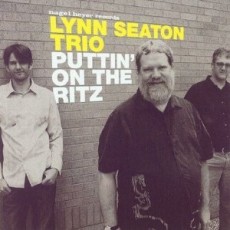
Lynn Seaton was born on July 18, 1957 in Tulsa, Oklahoma and began studying classical guitar vey young but by age nine switched to the bass. By the late 70s he was performing around the state and in 19080 he moved to Ohio with the Steve Schmidt Trio and later became the house bassist at the Blue Wisp Jazz Club in Cincinnati. This gig gave him the opportunity to accompany a host of big name jazz guest soloists every week.
Seaton joined Woody Herman in 1984 followed by the Count Basie Orchestra in ’85 and after two years began touring extensively with Tony Bennett and George Shearing. He went on to spend time touring with Monty Alexander and with the Jeff Hamilton Trio. Since the early ‘90s the bebop and swing bassist has free-lanced with the likes of Toshiko Akiyoshi, Ernestine Anderson, Buck Clayton, Al Cohn, Kenny Drew Jr., Scott Hamilton, Ken Peplowski, Wynard Harper, Frank Foster, Harry “Sweets” Edison, Mark Murphy, Joe Williams, Nancy Wilson, Mel Torme, Frank Wess and Blossom Dearie, just to name a few.
Rarely a leader, Lynn has recorded under his name as in 1991with “Bassman’s Basement” followed by “Solo Flights” and “Puttin’ On The Ritz” and as a sideman on over 100 recordings including Grammy-winning “Dianne Schuur and the Count Basie Orchestra”. He lived in New York from 1986 to 1998 and has performed at festivals worldwide such as Newport, North Sea, Kyoto and others. He currently teaches at the University of North Texas, home to one of the world’s largest jazz program.
More Posts: bass

Daily Dose Of Jazz…
Leroy Vinnegar was born on July 13, 1928 in Indianapolis, Indiana and the self-taught bassist established his reputation in Los Angeles during the 50s and 60s. His trademark was the rhythmic “walking” bass line, a steady series of ascending or descending notes, and it brought him the nickname “The Walker”. Besides his jazz work, he also appeared on a number of soundtracks and pop albums, notably Van Morrison’s 1972 album, Saint Dominic’s Preview.
He recorded extensively as both a leader and sideman and came to public attention in the 1950s as a result of recording with Lee Konitz, Andre Previn, Stan Getz, Shorty Rogers, Chet Baker, Shelly Manne, Joe Castro and Serge Chaloff. He played bass on Previn and Manne’s My Fair Lady album, one of the most successful jazz records ever produced. He also performed on another of jazz’s biggest hit albums, Eddie Harris and Les McCann’s “Swiss Movement” released in 1969.
Moving to Portland, Oregon in 1986, the Oregon State Legislature honored him in 1995 by proclaiming May 1st as Leroy Vinnegar Day. The bassist died from a heart attack at the age of 71 in Portland on August 3, 1999.
More Posts: bass