

Daily Dose Of Jazz…
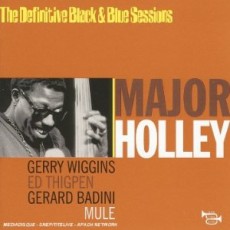
Major Holley was born on July 10, 1924 in Detroit, Michigan and started his music lessons playing violin and tuba at a young age. He started playing bass while serving in the Navy. In the latter half of the 1940s he played with Dexter Gordon, Charlie Parker, and Ella Fitzgerald. In 1950 he and Oscar Peterson recorded duets, and he also played with Peterson and Charlie Smith in a trio setting.
In the mid-1950s Major moved to England, working at the BBC. Upon returning to America he toured with Woody Herman in 1958 and with Al Cohn/Zoot Sims in 1959-60. A prolific studio musician, he played with Duke Ellington in 1964 and with the Kenny Burrell Trio, Coleman Hawkins, Lee Konitz, Roy Eldridge, Michel Legrand, Milt Buckner, Jay McShane and Quincy Jones during the Sixties and Seventies.
He was also noted for singing along with his arco (bowed) bass solos, a technique Slam Stewart also used. Holley and Stewart recorded together on two albums during the 1970s.
Never one far from the educational process, informal or formal, Holley was a professor and taught at the Berklee College of Music from 1967 to 1970. Upright jazz bassist Major Holley passed away on October 25, 1990 in Maplewood, New Jersey.
More Posts: bass
Daily Dose Of Jazz…
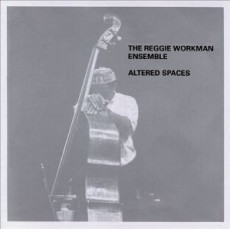
Reggie Workman was born Reginald Workman on June 26, 1937 in Philadelphia, Pennsylvania has been lauded for his work with both John Coltrane and Art Blakey. The double bassist, known for his avant-garde jazz and hard bop playing was a member of jazz groups led by Gigi Gryce, Roy Haynes, Wayne Shorter and Red Garland.
It was in 1961 that Workman joined Coltrane’s quartet, replacing Steve Davis and became a part of Trane’s “Live At The Village Vanguard” sessions, which has since become a legendary album. He also worked along with second bassist Art Davis on “Ole Coltrane”.
After a European tour Workman left the quartet and went on to play with James Moody, Yusef Lateef, Pharoah Sanders, Herbie Mann, Thelonious Monk, and became a Jazz Messenger. He has recorded several albums as a leader and with Archie Shepp, Lee Morgan and David Murray.
Reggie Workman has recorded seven albums as a leader and nearly four-dozen as a sideman working with Booker Little, Oliver Lake, Duke Jordan, Bobby Hutcherson and Grant Green among many others. He is currently a professor at The New School for Jazz and Contemporary Music in New York City.
More Posts: bass
Daily Dose Of Jazz…
Chuck Rainey was born Charles Walter Rainey III on June 17, 1940 in Cleveland, Ohio. His youthful pursuits included violin, piano and trumpet but switched to baritone horn in order to join the Lane College traveling ensemble while matriculating. But it was while on active military duty that he learned the rhythm guitar, however, his lack of improvisational skills led him to pick up the bass. He soon found steady work as a studio bassist in New York, recording and touring with many of the greats of the time.
Through the 1970s he played with Jerome Richardson, Grady Tate, Mose Allison, Gato Barbieri, Gene Ammons and Eddie Vinson. He was a member of the King Curtis All Stars, toured with the Beatles second U.S. run and had firmly established himself as New York City’s “first call” session bass guitarist.
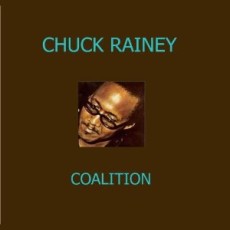
In 1972, he released his first solo album “The Chuck Rainey Coalition” consisting of notable session musicians Richard Tee, Warren Smith, Specs Powell, Eric Gale, Bernard Purdie, Herb Lovelle, Cornell Dupree and Billy Butler. He moved to Los Angeles that same year working with Quincy Jones and his big band but continued as a studio musician playing for Betty Davis, Steely Dan and Aretha Franklin.
Rainey’s style has always been to provide a rhythmic and melodic bottom that works with the drummer for the benefit of the song. His books on bass study refer to ”sensitivity to music” and a dedication to studying the fundamentals of music theory. While his “sideman” philosophy of bass has not brought him the level of recognition of star players such as Jaco Pastorious, Rainey is by far more recorded than his more famous contemporaries.
More Posts: bass
Daily Dose Of Jazz…
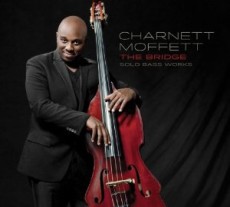
Charnett Moffett was born June 10, 1967 in New York City. His first name is a combination of his father’s name, drummer Charles Moffett and that of Ornette Coleman. Taking up the bass in his childhood, he attended Fiorello H. La Guardia High School for Music and Arts in New York City, later studied at Mannes College of Music and the Juilliard School of Music.
In 1983, he played on saxophonist Branford Marsalis’ debut as a leader, Scenes in the City, and the following year he joined the Wynton Marsalis quintet, appearing on the1985 acclaimed Black Codes (From the Underground). During the Eighties, he also played on Stanley Jordan’s best-selling 1985 Blue Note debut, Magic Touch, and went on to play with Tony Williams on two Blue Note albums.
In 1987, Moffett signed with Blue Note Records and debuted as a leader that year with his first of three albums for the label, Beauty Within, which featured his father and older brothers Codaryl Moffett on drums and Mondre Moffett on trumpet, Kenny Garrett on alto saxophone, and Stanley Jordan on guitar.
This led to a career as a free-lance bassist, performing and recording with Stanley Jordan, Ornette Coleman, McCoy Tyner, Kenny Garrett, Mulgrew Miller, Courtney Pine, Arturo Sandoval, Lew Soloff and Sonny Sharrock.
Charles Moffett, who plays the bass, piccolo bass, double bass, bass guitar has played and recorded as a leader in addition to Blue Note with Manhattan, Evidence and Piadrum record labels. With eleven albums under his belt as a leader and set to release an album for Motema, the former member of the Manhattan Jazz Quintet is currently performing with Melody Gardot.
More Posts: bass

Daily Dose Of Jazz…
Matthew Garrison was born June 2, 1970 in New York. The son of double bassist Jimmy Garrison, he spent the first eight years of his life immersed in a community of musicians, dancers, visual artists and poets. After the death of his father (John Coltrane’s bassist), his family relocated to Rome, Italy where he began to study piano and bass guitar.
In 1988 Matthew returned to the United States and lived with his godfather Jack Dejohnette for two years, studying intensively under him and bassist Dave Holland. In 1989 he received a full scholarship to attend Berklee College of Music in Boston. Along with his studies, he began his professional career with the likes of Gary Burton, Bob Moses, Betty Carter, Mike Gibbs and Lyle Mays to mention a few.
Garrison moved to Brooklyn, New York in 1994 and since then has performed, toured and recorded with artists such as Herbie Hancock, Whitney Houston, Joe Zawinul, Chaka Khan, Meshell Ndege Ocello, Joni Mitchell, Wayne Shorter, Jack Dejohnette, Steve Coleman, Bill Cosby, Paul Simon, Cassandra Wilson, Wallace Roney, Geri Allen, John Mclaughlin, Tito Puente, John Scofield, Pat Metheny and many others.
In 1998 Matthew founded record label and production company, GarrisonJazz Productions, through which he currently produces, promotes and markets his music. Since 2000 he has released two compact discs and a live performance DVD. He is noted for playing his signature series Fodera bass, having created and developed a pizzicato technique that uses four fingers. He continues to perform and record.
More Posts: bass