Daily Dose Of Jazz…

Wade Legge was born on February 4, 1934 in Huntington, West Virginia. He played more bass than piano in his early years, and it was with the bass that Milt Jackson first noticed him, recommending Wade to Dizzy Gillespie. After hiring him, Gillespie moved him to piano and he remained a member of Gillespie’s ensemble until 1954. During his Dizzy years, Legge recorded a date in France as a trio session leader.

Following his tenure with Gillespie, Wade moved to New York City and freelanced there, playing in Johnny Richards’s orchestra, and sessions with Charles Mingus, Sonny Rollins, Milt Jackson, Joe Roland, Bill Hardman, Pepper Adams, Jimmy Knepper and Jimmy Cleveland.

Legge was one of three pianists recording as a member of the variously staffed Gryce/Byrd Jazz Lab Quintets in 1957 and appeared on more than 50 recordings before retiring to Buffalo in 1959. Jazz bassist and pianist Wade Legge died on August 15, 1963 in Buffalo, New York at the age of 29.

More Posts: ,

CHRISTIAN MCBRIDE & URSA MAJOR

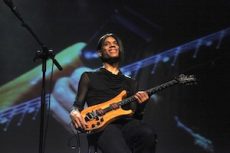
World renowned bassist, composer, arranger, educator, and eight-time Grammy Award-winner, Christian McBride has been one of the most important and prolific figures in the jazz world for over 20 years. From jazz to R&B, and pop/rock and hip-hop/neo-soul to classical, Christian is one of the most acclaimed bassists of his generation, renowned for his bold, swinging style and robust sound. He has appeared on more than 300 recordings as a sideman, and is an eight-time Grammy Award winner, earning a 2016 GRAMMY Award for “Best Improvised Jazz Solo”, the only bassist to ever win at this category.

Christian McBride has worked with the best of the very best – James Brown, Herbie Hancock, Pat Metheny, Chaka Khan, Freddie Hubbard, Sonny Rollins, J.J. Johnson, Ray Brown, Milt Jackson, McCoy Tyner, Roy Haynes, Chick Corea, Isaac Hayes, Natalie Cole, Lalah Hathaway, Sting, Carly Simon, Don Henley, Bruce Hornsby, The Roots, D’Angelo & Queen Latifah. Christian has been artist-in-residence and artistic director with organizations such as Jazz Aspen, Los Angeles Philharmonic, The Jazz Museum in Harlem, Jazz House Kids, the New Jersey Performing Arts Center – Newark, the Montclair Jazz Festival, and the Newport Jazz Festival. 

The Band:
Christian McBride ~ bass
Nicole Glover ~ saxophone
Ely Perlman ~ guitar
Michael King ~ piano
Savannah Harris ~ drums

Tickets: $45.00 ~ $55.00 +fees
Streaming: $20.00 +fees | %:00pm Show

More Posts: ,,,,,,,,

Daily Dose Of Jazz…

Tiny Winters: The Bassist Who Fooled Fans Into Thinking He Was Ella Fitzgerald
Frederick Gittens was born on January 24, 1909, in London, England, but the jazz world would come to know him by a name that became legendary in British jazz circles: Tiny Winters.

From Violin to the Bass That Swings
He learned violin as a child—a common enough beginning—but something about the double bass called to him. He made the switch and developed a pizzicato style directly inspired by the great New Orleans bassist Pops Foster, whose propulsive walking lines and rhythmic drive had helped define early jazz. Winters was absorbing American jazz from across the Atlantic and making it his own.

Rising Through Britain’s Jazz Scene
By the 1920s, he was already working with the Roy Fox Band, one of Britain’s premier dance orchestras. The 1930s brought collaboration with pianist and arranger Lew Stone, whose sophisticated arrangements were pushing British jazz toward new heights.

But here’s where Winters’ story gets delightfully unusual: he possessed an unusually high vocal range that he put to remarkable use covering Ella Fitzgerald hits. His falsetto was so convincing that he regularly received fan mail addressed to “Miss Tiny Winters.” Imagine the surprise of fans who showed up expecting a female vocalist and discovered a bassist with a four-octave range!

Becoming a Bandleader and Session Ace
Winters went on to play with the elegant Ray Noble, recorded with the great American tenor saxophonist Coleman Hawkins when he visited London, and began leading his own groups by 1936. With his reputation firmly established, he became a regular fixture at the fashionable Hatchett Club while freelancing as a sought-after session player in theatrical orchestras for major productions like Annie Get Your Gun and West Side Story.

Comedy, Television, and New Ventures
Later in his career, Winters played with cornetist Digby Fairweather in the Kettner’s Five, recorded with veteran saxophonist Benny Waters, and became both the bassist and featured comedian with trombonist George Chisholm in The Black and White Minstrel Show—a television variety program that showcased his versatility as an entertainer, not just a musician.

The Final Chapters
During the late 1980s, Winters led the Café Society Orchestra and his own Palm Court Trio, proving that age hadn’t diminished his passion for leading ensembles. He also found time to write his autobiography, cheekily titled It Took a Lot of Pluck—a perfect pun for a bassist whose fingers had plucked millions of notes over seven decades.

When he retired in the 1990s, he did so with honor: Winters was awarded the Freedom of the City of London, a historic recognition that acknowledged not just his musical contributions but his status as a beloved cultural figure.

A Life Well Lived
Bassist, vocalist, comedian, and bandleader Tiny Winters passed away on February 7, 1996, leaving behind a legacy that reminds us jazz wasn’t just an American export—it was reimagined, reinterpreted, and reinvigorated by musicians around the world who made it their own.

From fooling fans with his Ella Fitzgerald impersonations to holding down the bass in London’s finest orchestras for seventy years, Tiny Winters proved that sometimes the most interesting careers are the ones that refuse to fit into neat categories.

More Posts:

Daily Dose Of Jazz…

Don Thompson: The Triple-Threat Canadian Who Could Do It All
What if you could sit down at the piano, pick up a bass, or grab the vibes and master all three at the highest professional level? That’s not a hypothetical. That’s Don Thompson’s reality.

A Vancouver Beginning
Born Donald Winston Thompson on January 18, 1940, in Powell River, British Columbia, he was already gigging around Vancouver by age 20, freelancing primarily on bass but always ready to switch instruments as the music demanded. He led his own groups, played with the city’s top jazz ensembles, and became a familiar face and sound on Canadian radio and television. The kid from Powell River was going places.

The Call to San Francisco
Then came 1965 and the opportunity that changed everything: saxophonist John Handy’s acclaimed quintet needed a bassist, which meant relocating to San Francisco. Thompson toured extensively across the United States, recorded two Columbia Records albums with Handy, and suddenly found himself crossing paths with heavyweight players like trombonist Frank Rosolino, trumpeter Maynard Ferguson, pianist Denny Zeitlin, and keyboardist George Duke. The West Coast jazz scene was thriving, and Thompson was right in the middle of it.

Toronto and the Boss Brass
By 1967, Thompson had relocated to Toronto, and in 1969 he joined Rob McConnell’s legendary Boss Brass, first as percussionist, then bassist, then pianist over the course of six years. Talk about job security through sheer versatility! The 1970s also brought him into saxophonist Moe Koffman’s orbit, where he contributed not just bass and piano but also sophisticated arrangements and original compositions. Thompson wasn’t just a hired gun; he was a complete musician.

A Passport Full of Jazz History
Thompson’s travel documents tell their own story: European and Japanese tours with the elegant guitarist Jim Hall, countless nights as part of Toronto’s famed Bourbon Street Jazz Club “house rhythm section” (backing whoever came through town), and collaborations with an almost absurd roster of legends Paul Desmond, Art Farmer, James Moody, Zoot Sims, Clark Terry, Harry “Sweets” Edison, Slide Hampton, Abbey Lincoln, Sarah Vaughan, Sheila Jordan, Joe Henderson, Dewey Redman… and the list keeps going.

Each collaboration revealed a different side of Thompson’s musical personality. Need a supportive, swinging bassist? He’s got you. Want intricate harmonic accompaniment at the piano? No problem. Looking for shimmering vibraphone colors? Done. The man could do it all, and do it with taste, intelligence, and deep listening.

Recognition and Continuation
Awards have piled up over the decades, albums as both leader and sideman fill the discography, and Thompson has earned recognition as one of Canada’s most important jazz musicians. But accolades haven’t slowed him down, today he continues doing what he’s always done: freelancing, teaching the next generation, playing with the band JMOG, and leading his own quartet when the mood strikes.

The Ultimate Team Player
Three instruments. Countless collaborations across six decades. One remarkable career that proves sometimes the best musicians are the ones who refuse to be limited by a single chair on the bandstand.

Don Thompson never became a household name, and he probably wouldn’t want to be one. But ask any serious jazz musician who’s played in Canada or toured through Toronto, and they’ll tell you: when Don Thompson walks into the room, whether he’s heading for the piano, the bass, or the vibes, you know you’re about to make some beautiful music.

That’s a legacy worth celebrating.

More Posts:

Daily Dose Of Jazz…

Chris Laurence: A Master Bassist Bridging Classical and Jazz Worlds
Born in the heart of London on January 6, 1949, Chris Laurence grew up in a city where musical boundaries have always been meant to be crossed. As a double bassist, he drew inspiration from an eclectic mix of visionaries—Keith Jarrett’s lyrical piano explorations, Miroslav Vitous’s revolutionary bass work, Tony Coe’s clarinet mastery, and Chick Corea’s fusion innovations. These diverse influences would shape Laurence into one of Britain’s most versatile and sought-after bassists.

A Career of Creative Collaborations
Laurence first gained significant recognition during the 1980s through his work in various innovative trios with the adventurous drummer Tony Oxley. In 1984, he expanded his musical palette further by joining the prestigious London Bach Orchestra—a move that showcased his ability to move fluidly between the worlds of jazz improvisation and classical precision.

His collaborative spirit has led him to work with a remarkable roster of British jazz luminaries: the atmospheric saxophonist John Surman, the powerful tenor voice of Alan Skidmore, the poetic pianist John Taylor, the lyrical trumpeter Kenny Wheeler, and the versatile percussionist Frank Ricotti. Each partnership revealed a different facet of Laurence’s musical personality.

An Extraordinary Session Legacy
As a sideman, Laurence’s discography reads like a who’s who of contemporary music. He has appeared on some twenty-one albums alongside artists as varied as Pink Floyd’s David Gilmour, minimalist composer Michael Nyman, pianist Gordon Beck, saxophonist Elton Dean, and classical guitarist John Williams. His bass lines have graced recordings on virtually every major label—EMI, CBS, Turtle, ECM, Vinyl, MN, Virgin Venture, Ogun, Sony Classical, and Columbia—testament to his universal appeal and adaptability.

Stepping into the Spotlight
After decades of enriching others’ music, Laurence recently stepped forward as a leader, forming the Chris Laurence Quartet and releasing his debut album “New View.” The title itself seems to acknowledge a career spent supporting others’ visions—now, finally, it’s time for his own perspective to take center stage.

For those who know jazz and classical music in Britain, Chris Laurence’s name represents reliability, creativity, and that rare ability to make every note count—whether behind a bandleader or leading his own ensemble.

More Posts:

« Older Posts       Newer Posts »