

Requisites
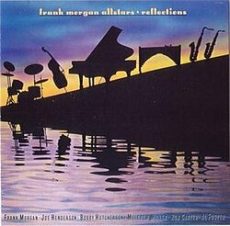
Reflections ~ Frank Morgan Allstars | By Eddie Carter
I discovered Frank Morgan in the 80s while living in Cincinnati, Ohio and listening to WNOP 740 AM, the city’s then jazz station. This morning’s album from the library was his eighth release as a leader and seventh for Lester Koenig’s label. Reflections (Contemporary Records C-14052) by the Frank Morgan Allstars is the only album the group recorded together and isn’t a loose, thrown-together blowing session. The sextet is a powerhouse group of musicians: Frank Morgan on alto sax; Joe Henderson on tenor sax; Bobby Hutcherson on vibraphone; Mulgrew Miller on piano; Ron Carter on bass; and Al Foster on drums. I own the 1989 U.S. stereo release.
The first side gets underway with Old Bowl, New Grits by Mulgrew Miller. The sextet’s easy-flowing melody gives way to Joe’s opening solo, inviting us to settle in. Bobby follows with a blissfully happy reading, then Frank continues motoring along next. Mulgrew gets the final word ahead of the theme's restatement and fade-out. The title track, Reflections by Thelonious Monk, shifts the energy toward Frank and Joe taking center stage for the enticingly delicate theme. Frank shows a tender vulnerability in the first interpretation. Joe takes over with a gracefully emotional response, then Bobby takes a sensitive, poignant turn, leading to the theme’s return and gorgeous ending.
Starting Over by Bobby Hutcherson picks the beat back up with a lively opening ensemble. Bobby comes out swinging hard first, then Frank dives into the second solo with surgical precision. Joe jumps right into the third reading next, then Mulgrew provides the exclamation point, soaring cheerfully into the ensemble’s vigorous reprise and climax. Side Two opens with the rhythm section’s introduction to Black Narcissus by Joe Henderson, segueing into a compelling front-line dialogue between Frank and Joe. Frank paints a delicate palette first, then Joe adds a few more elegant colors. Bobby infuses the third statement with tender beauty, and Mulgrew saves the best for last in a gorgeous finale before the close.
Sonnymoon for Two by Sonny Rollins affords everyone solo space and begins with the trio’s introduction to the sextet’s medium melody. Frank’s first solo is a great example of relaxed lyricism. Bobby follows with a bounce that’s pure artistry. Joe sets up the next reading perfectly, then Mulgrew keeps the line moving forward. Ron takes a short, satisfying walk before Al brings the curtain down, preceding the closing chorus. O.K. by Ron Carter is his tribute to album producer Orrin Keepnews, and the ensemble opens with a leisurely paced theme. The solo order is Frank, Joe, and Mulgrew before the melody’s reprise and Bobby, who gets the last word in a gentle fade to nothingness.
Orrin Keepnews produced the album; Danny Kopelson managed the recording console, and George Horn mastered the album. The recording is fantastic, with an exceptional soundstage and outstanding detail that emerges through your speakers with exceptional fidelity. Reflections by the Frank Morgan Allstars is a gorgeous album with an all- star lineup and a wonderful selection of tunes. If you’re a fan of the alto saxophonist and in the mood for a terrific blend of bop and modal jazz, I invite you to check it out on your next record shop visit. I’m sure it’ll be a welcome addition to your library, and you’ll enjoy it as much as I do!
© 2026 by Edward Thomas Carter

More Posts: bass,choice,classic,collectible,collector,drums,history,instrumental,jazz,music,piano,saxophone,vibraphone
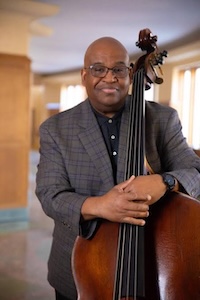
RODNEY JORDAN
Growing up in Memphis, Rodney played the bass in church and with his high school orchestra. He later studied music at Jackson State University in Jackson, Mississippi, joined the Mississippi Symphony Orchestra as Assistant Principal Bassist and after graduating, he became Chair of the String Department at the Dougherty County Public School. He has served as Principal Bassist with the Albany Symphony Orchestra in Albany, GA.
Teaching, having always been an important part of his life, he has held positions in Dougherty County, DeKalb County School Systems, Darton College, Georgia State University in Atlanta and since 2001 at Florida State University in Tallahassee, FL as an Associate Professor of Jazz Studies.
While living in Atlanta, Jordan became one of the city’s most active jazz bassists, performing and recording with some of America’s finest jazz musicians, including Marcus Printup, Mulgrew Miller, James Williams, Milt Jackson, George Coleman, and Russell Gunn. He joined the faculty in the School of Music at Florida State University in Tallahassee, FL in 2001 where he now holds a rank of Associate Professor of Jazz Studies. Jordan teaches jazz bass, jazz combo playing, music education classes, and a jazz styles class.
Jordan currently leads his own band and tours when his teaching schedule allows.
Cover: TBD
More Posts: adventure,bandleader,bass,genius,instrumental,jazz,music,preserving,travel
Daily Dose Of Jazz…
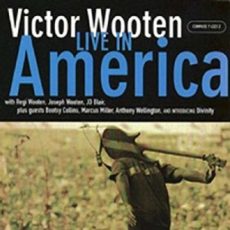
Victor Lemonte Wooten was born on September 11, 1964 in Mountain Home, Idaho and was the youngest of the five Wooten Brothers; Regi, Roy, Rudy and Joseph, all of whom are musicians. Regi began to teach him to play bass when he was two, and by the age of six was performing with his brothers in their family band, The Wooten Brothers Band. As a United States Air Force family, they moved around a lot when he was very young, but the family finally settled in the Warwick Lawns neighborhood of Newport News, Virginia in 1972.
While in high school, he and his brothers played in the country music venue at Busch Gardens theme park in Williamsburg, Virginia, Graduating from Denbigh High School in 1982, by 1987 Victor was traveling to Nashville, Tennessee to visit friends that he made at the theme park, one of whom was a studio engineer who introduced him to Béla Fleck, with whom he still collaborates musically.
As an educator Wooten has created a music program called Bass/Nature camp that has since expanded into the Victor Wooten Center for Music and Nature and now includes all instruments. All of his camps are held at his location called Wooten Woods which is a 147 acre retreat center located in Only, Tennessee, outside of Nashville. He also co-leads the Victor Wooten/Berklee Summer Bass Workshop at Berklee College of Music in Boston, MA. He collaborates with Berklee Bass Dept. chair, Steve Bailey and the two bassists have been teaching together since the early 1990s.
He has been featured on the cover of Making Music Magazine, has won the “Bass Player of the Year” award from Bass Player magazine three times, is the first to win the award more than once, and was named #10 in the “Top 10 Bassists of All Time” by Rolling Stone. As a leader he has recorded ten albums, another seven with various groups and with Béla Fleck , fourteen. He has authored a novel titled “The Music Lesson: A Spiritual Search for Growth Through Music” and has a sequel in the making. Bassist, composer, author, producer, educator, and five-time Grammy Award winner Victor Wooten, who has recorded an album titled SMV with Stanley Clarke and Marcus Miller, continues to compose, perform and record.
More Posts: bass
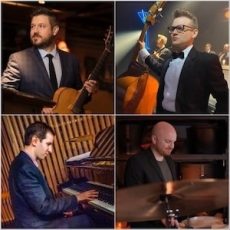
DECHTER | FRANK | SEGIEL | SHAW QUARTET
The quartet frequently performs live at prominent jazz venues like The Baked Potato in Studio City, California, often collaborating with special guest horn players and saxophonists. Guitarist Graham Dechter is known for his work with the Clayton-Hamilton Jazz Orchestra and upright bassist Alex Frank is best known for his work with Jeff Goldblum’s Mildred Snitzer Orchestra.
The Quartet:
Graham Dechter – Guitar
Alex Frank – Upright Bass
Jordon Segiel – Fender Rhodes
Ryan Shaw – Drums
Cover:
$25.00 + $6.25 fee | 1st Set ~ Inside
$20.00 + fee | 2nd Set ~ Inside
$15.00 + fee ~ Patio Seating | Live Video Concert as patio is not inside the club
More Posts: adventure,bandleader,bass,club,drums,genius,instrumental,jazz,music,piano,preserving,travel
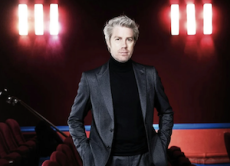
KYLE EASTWOOD
Kyle Eastwood, son of film icon and jazz lover Clint Eastwood, developed a love for both art forms at an early age. He has become a world-renowned bassist (with numerous recordings and tours) and a successful film score composer (“Mystic River,” “Million Dollar Baby,” “Gran Torino,” etc.). This week, Kyle will be performing many new songs with his quintet, which will be recorded for a new album at the end of the month.
Personnel
Kyle Eastwood: bass
Quentin Collins: trumpet & bugle
Brandon Allen: saxophone
Andrew McCormack piano
Chris Higginbottom, Ph.D.
Tickets:
Tuesday~Thursday 1st Show: CHF 40 | $49.43 / 2nd Show: CHF 40 | $30.89
Friday~Saturday 1st Show: CHF 40 | $49.43 / 2nd Show: $43.25
More Posts: adventure,bandleader,bass,club,genius,instrumental,jazz,music,preserving,travel