

Daily Dose Of Jazz…
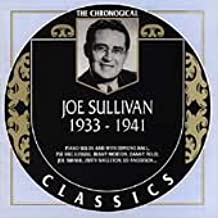
Arthur Shapiro was born on January 15, 1916 in Denver, Colorado, and began on trumpet at age 13, ultimately picking up bass as his prominent instrument at 18. By the late 1930s he was playing with Wingy Manone, Joe Marsala, Eddie Condon, and Chu Berry. From 1938 to 1940 he played with Paul Whiteman, then returned to play with Marsala in addition to working with Bobby Hackett.
Moving to Hollywood, California in the early 1940s, Artie started playing with Jack Teagarden and Joe Sullivan before serving in the United States Army. In 1947 he returned to music, playing with Benny Goodman.
As an accompanist, he worked with, among others, Billie Holiday, Peggy Lee, Anita O’Day, Doris Day, Bing Crosby and Frank Sinatra. His list of recording credits runs to more than 100 during his period of activity, stretching into the late 1960s. Bassist Artie Shapiro transitioned in Los Angeles, California on March 24, 2003.

More Posts: bass,history,instrumental,jazz,music
Daily Dose Of Jazz…
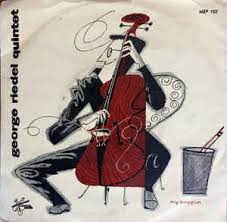
Georg Riedel was born January 8, 1934 in Karlovy Vary, Czechoslovakia, and in 1938, when he was four years old, the family fled to Sweden following the German annexation of the Sudetenland. He attended school in Stockholm, Sweden and at the Adolf Fredrik’s Music School.
The best known recording featuring Riedel is probably Jan Johansson’s Jazz på svenska (Jazz in Swedish), a minimalist-jazz compilation of folk songs recorded between 1962–1963. He recorded with other leading Swedish musicians including trumpeter Jan Allan and Arne Domnérus.
As a composer, George worked almost exclusively writing music for Astrid Lindgren movies, including the main theme from the Emil i Lönneberga (Emil of Maple Hills) movies. He also composed the music for several films by Arne Mattsson in the 1960s as well as for film adaptations of novels by Stig Dagerman.
Double bassist and composer George Riedel, played on Jazz at the Pawnshop in 1977, at 87 continues his involvement with jazz.
Bestow upon an inquiring mind a dose of a Karlovy Vary double bassist to motivate the perusal of the genius of jazz musicians worldwide whose gifts contribute to the canon…
More Posts: bandleader,bass,composer,history,instrumental,jazz,music

Daily Dose Of Jazz…
Andy González was born in The Bronx, New York on January 1, 1951. He and his brother Jerry González were founding members of Conjunto Libre and Grupo Folklórico y Experímental Nuevayorquíno, with whom he produced three albums: Concepts in Unity (1975), Lo Dice Todo (1976), and Homenaje a Arsenio (2011).
The band included Frankie Rodríguez, Milton Cardona, Gene Golden, Carlos Mestre, Nelson González, Manny Oquendo, Oscar Hernández, José Rodríguez, Néstor Torres, Gonzalo Fernández, Alfredo “Chocolate” Armenteros, Willy García, Heny Álvarez, Virgilio Martí, Marcelino Guerra, Rubén Blades, Orlando “Puntilla” Ríos, and Julito Collazo on the first two albums.
Over the course of his career, along with leading bands of his own, Andy worked with Dizzy Gillespie, Tito Puente, Eddie Palmieri, Kip Hanrahan and Astor Piazzolla.
Double bassist Andy González, who performed primarily in the Latin jazz and Afro-Cuban idioms, transitioned on April 9, 2020 from pneumonia and complications of diabetes in the Bronx.
More Posts: bass,history,instrumental,jazz,music
Daily Dose Of Jazz…
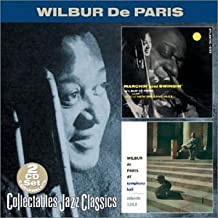
Edward L. Gibbs was born on December 25, 1908 in New Haven, Connecticut. A student of the great banjoist and bandleader Elmer Snowden, he went back and forth among three different stringed instruments during his career.
Gibbs began his career late in the 1920s, playing with Wilbur Sweatman, Eubie Blake, and Billy Fowler. He played with Edgar Hayes from 1937 and played with him on a tour of Europe in 1938. After a short stint with Teddy Wilson, he joined Eddie South’s ensemble in 1940, and worked later in the decade with Dave Martin, Luis Russell, and Claude Hopkins.
As a bassist, he led his own trio at the Village Vanguard and played in a trio with Cedric Wallace, but returned to banjo in the 1950s during the Dixieland jazz revival. He played and recorded with Wilbur de Paris among others during this time.
After studying with Ernest Hill, he returned to bass in the middle of the 1950s, but played banjo once again in the 1960s during another surge in interest in the Dixieland groups. He played at the World’s Fair in 1965 and in 1969 he played bass and occasionally banjo as a member of Buzzy Drootin’s Jazz Family, which included Herman Autrey, Benny Morton, Herb Hall, Sonny Drootin on piano and Buzzy on drums. Also, in the late ’60s he was part of a group called The Happy Family who featured him on both banjo and bass.
Banjoist, guitarist, and bassist Eddie Gibbs, who retired from active performance in the 1970s, passed away on November 12, 1994.

More Posts: bandleader,banjo,bass,guitar,history,instrumental,jazz,music
Requisites
James ~ James Leary | By Eddie Carter
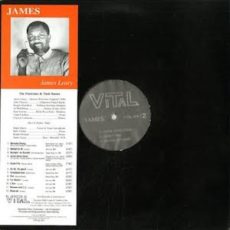
VTL (Vacuum Tube Logic of America), as any audiophile knows, is one of the finest makers of high-end tube audio equipment. In 1991, David Manley, the company’s founder (who began VTL in England, a decade earlier) began recording a small roster of musicians utilizing their tube technology. All the albums recorded on Vital Records and VTL (The Vital Sound) were created in Manley’s newly designed recording studio at 15 IPS on a modified Studer C37 Tube Tape Recorder. If you have the equipment to properly audition them, each record has a breathtaking soundstage that’s mesmerizing. The focus was completely on the music and sound rather than the packaging, this release came in two black twelve-inch cardboard sleeves with the album cover and musicians listed on the left side. Submitted for your consideration this morning is an album by one of the best jazz bassists you may be unfamiliar with, James Leary.
The first of his two records, James (Vital 003) was unlike anything I ever heard before on an album when I first discovered it thirty years ago. The front line for this unique septet is a five-piece string Bass Choir. James Leary is featured on a 1908 England Hawkes-Panormo bass, John Clayton plays an Unknown French Rarity bass, Reggie Hamilton plays a Pollman German-Modern bass, Fred Tinsley plays a Bella Rosa Italy-Modern bass, and Al McKibbon plays a 1620 Steiner bass (tracks: A1 to C2, D1 to D3). The quintet is anchored by Eddie Harris on tenor sax, vocals (track: C3), Billy Childs (track: C3), Todd Cochran (tracks: A1 to C2, D1 to D3) on acoustic piano, Clayton Cameron (tracks: A1 to C2, D1 to D3), Ralph Penland (track: C3) on drums. My copy used in this report is the 1991 two-record Stereo audiophile release.
Side One opens with an original by Thelonious Monk and Denzil Best, Bemsha Swing. The tune originally appeared on Thelonious (1953), and Monk recorded it again on Brilliant Corners (1957). Leary sets a lively mood leading the ensemble through the mid-tempo melody, then launches into a sparkling opening statement. John creates something special on the second reading that’s extremely satisfying. Fred follows with an enthusiastic interpretation, and Al gets a moment in the sun with an outstanding performance shining brilliantly like a diamond. Among the highlights is Wes Montgomery’s Bumpin’ On Sunset. Fred Tinsley opens the song with a gorgeous introduction preceding the main theme. The interplay between the Bass Choir reinterprets this contemporary classic with a gorgeous performance.
Quiet Fire by George Cables begins with the bassists introducing a vigorous opening chorus. Cochran’s lead solo takes off with electric energy. Leary follows, thoroughly swinging on the next reading. Clayton comes in next with an assertive, energetic interpretation, and McKibbon packs a beefy and impressive punch on the closing statement. Wayne Shorter’s Fall is given a breathtaking treatment as Leary and his colleagues state the melody alongside Cochran in the background on the piano. James offers exquisite softness on the first solo. His tuneful conversation with the pianist and Cameron is also affectionate. Hamilton creates a deeply introspective work on the closing reading. There is a freshness and resiliency to his playing with warmth, tenderness, and elegance into the song’s luscious climax.
Leary also composes as well as he plays, as demonstrated on I’m Walkin’, one of the bassist’s six compositions. This tune is loosely based on the 1957 composition by Fats Domino and Dave Bartholomew and is the only quartet performance on this album. Harris’s voice dominates, making a vibrant improvisation on the mid-tempo melody matched by the rhythm section. In the opening statement, Cochran swings easily. Harris’ tenor sax is also clearly defined in the next presentation. Leary solos beautifully on the closing reading preceding the theme’s reprise and ending led by Harris’ scat. This foursome is also featured on James II.
L’ Ear, also by Leary, brings the bassists back to provide a splendid display of vibrant spontaneity as the Bass Choir presents the opening chorus. Cochran and Leary are the featured soloists, Todd is upbeat and spirited on the first statement with a deceptively relaxed approach. Leary sustains a steady flow of ideas on an attractive closing performance. Throughout the remainder of the album, James shines as an enduring commitment to straight-ahead jazz of the highest order. It’s a significant accomplishment by James Leary and a noteworthy release for your library with nearly eighty minutes of music that’s marvelously presented and beautifully recorded!
~ Brilliant Corners (Riverside RLP 12-226/RS 1174), James II (Vital Records ViTaL 005), Thelonious (Prestige PRLP 142) – Source: Discogs.com ~ Bemsha Swing, I’m Walkin’ – Source: Wikipedia.org ~ Fall – https://www.youtube.com/watch?v=9VPOJr0cuRs © 2020 by Edward Thomas Carter

More Posts: bass,choice,classic,collectible,collector,history,instrumental,jazz,music