

Daily Dose Of Jazz…
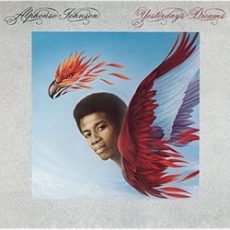
Alphonso Johnson was born on February 2, 1951 in Philadelphia, Pennsylvania and started off as an upright bass player, but switched to the electric bass in his late teens. He began his career in the early 1970s, and showing innovation and fluidity on the electric bass he sessioned with a few jazz musicians before landing a job with Weather Report, taking over for co-founding member Miroslav Vitous.
His debut with Weather Report was on the album Mysterious Traveller, followed by two more albums in the Seventies: Tale Spinnin’ and Black Market before he left the band to work with drummer Billy Cobham. During 1976-77 Alphonso recorded three solo albums as a bandleader, for the Epic label, in a fusion-funk vein.
One of the first musicians to introduce the Chapman Stick to the public, in 1977, his knowledge of the instrument offered him a rehearsal with Genesis, who were looking for a replacement for guitarist Steve Hackett but being more of a bassist than a guitarist, Johnson instead recommended his friend ex-Sweetbottom guitarist and fellow session musician Daryl Stuermer. However, he was one of two bass players on Phil Collins’s first solo album, Face Value, in 1981.
He would work with Bob Weir on a couple of projects – Bobby & The Midnites and The Other Ones; reunite with Cobham in the band Jazz Is Dead, and Steve Hackett’s Genesis Revisited album as well as with Santana, Steve Kimock and Chet Baker. He toured Europe and Japan with saxophonist Wayne Shorter, pianist James Beard, drummer Rodney Holmes, and guitarist David Gilmore.
Earning a Bachelor of Arts in Music Education degree from California State University in 2014, as an undergrad he was a member of the CSUN Wind Ensemble. With extensive experience as a bass teacher he has conducted bass seminars and clinics in Germany, England, France, Scotland, Ireland, Japan, Switzerland, Australia, Brazil and Argentina.
Bassist Alphonso Johnson continues to perform while serving as an adjunct instructor at the University of Southern California and the California Institute of the Arts.

More Posts: bandleader,bass,educator,history,instrumental,jazz,music
Daily Dose Of Jazz…
Charles Valdez “Truck” Parham was born in Chicago, Illinois on January 25, 1911 and was first a professional boxer and football player with the Chicago Negro All Stars. He played drums before settling on bass, and studied under Walter Page. From 1932~34 he was part of Zack Whyte’s band, playing primarily in Cincinnati, Ohio but was mostly a singer and valet for the band, the latter activity giving rise to his nickname.
Returning home he played through the Thirties with Zutty Singleton, Roy Eldridge, Art Tatum, and Bob Shoffner. 1940 saw Truck joining Earl Hines’s orchestra, remaining for two years;then on to be hired by Jimmie Lunceford for five years until 1947.
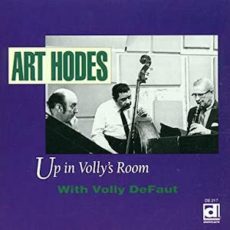
During the 1950s Parham continued to play revival gigs with Muggsy Spanier,, Herbie Fields, Hines again, and Louie Bellson. He spent much of the 1960s working with Art Hodes, and played in numerous Dixieland jazz groups later in his career. Recording profusely as a sideman, he continued playing into the 2000s, being a member of Franz Jackson’s band in 2000.
Double bassist Truck Parham, who never recorded as a leader transitioned in his hometown of Chicago on June 5, 2002.
More Posts: bass,history,instrumental,jazz,music

Daily Dose Of Jazz…
Bob Whitlock was born on January 21, 1931 in Roosevelt, Utah and began playing bass as a teenager. After relocating to Los Angeles, California was active as a session musician from the early 1950s. He was heard working with Gerry Mulligan, Art Pepper, Chet Baker, Stan Getz, Buddy DeFranco, Joe Albany, Jack Sheldon, Warne Marsh, and numerous others.
Late in the Fifties decade Bob led his own small group while attending the University of California. He went on to work in France in the early 1960s, playing with Zoot Sims, Vi Redd, Curtis Amy, Peggy Lee and Victor Feldman. Towards the end of the Sixties he worked with Joe Pass and extensively with George Shearing. In the 1970s he worked with Albany once again.
Between 1957 and 1972 he recorded fourteen albums as a sideman, never as a leader. Double-bassist Bob Whitlock transitioned on June 20, 2015 in Long Beach, California
More Posts: bandleader,bass,history,instrumental,jazz,music
Daily Dose Of Jazz…
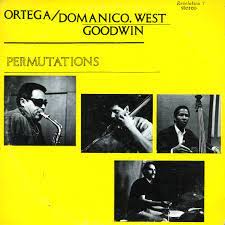
Charles Louis Domanico, better known professionally as Chuck Domanico, was born on January 20, 1944 in Chicago, Illinois. Settling in Los Angeles, California in the mid-1960s, for nearly forty years, he was a central jazz figure in Hollywood who contributed to many movies and TV programs.
Domanico worked with Frank Sinatra, Barbra Streisand, Carmen McRae, Joni Mitchell, Taj Mahal, Diane Schuur, Natalie Cole, and The Manhattan Transfer. He participated in instrumental jazz performances by Chet Baker, Henry Mancini, Shelly Manne, Oliver Nelson, John Klemmer, Roger Kellaway, Barney Kessel, and Art Pepper.
His bass can be heard in themes for television shows like M*A*S*H, Cheers and Frasier, and he contributed to the soundtracks of more than two thousand films.
Double bassist and bass guitarist Chuck Domanico, who played on the West Coast jazz scene, transitioned from lung cancer on October 17, 2002 at the age of 58.
More Posts: bass,bass guitar,history,instrumental,jazz,music
Three Wishes
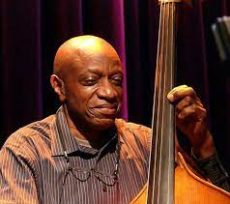
What Reggie Workman told Nica his three wishes would be were the following:
- “Complete health, which includes peace of mind.”
- “Everlasting happiness with my wife and family.”
- “That the art of jazz will find its rightful place all over the world, which will be a sign of man’s disregarding things that have kept people unhappy.”
*Excerpt from Three Wishes: An Intimate Look at Jazz Greats ~ Compiled and Photographed by Pannonica de Koenigswarter
More Posts: baroness,bass,history,instrumental,jazz,music,pannonica,three,wishes