

Daily Dose Of Jazz…
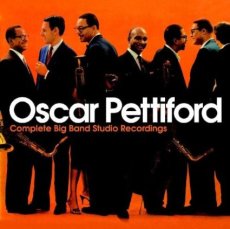
Oscar Pettiford was born September 30, 1922 in Okmulgee, Oklahoma to a Choctaw mother and Cherokee/African American father. Growing up playing in the family band in which he sang and danced, he switched to piano at the age of 12 then to double bass when he was at the age of 14. Despite being admired by the likes of Milt Hinton, he stopped playing in 1941, feeling he couldn’t make a living. Five months later, he once again met Milt, who persuaded him to return to music.
In 1942 he joined the Charlie Barnet band and 1943 saw him gaining wider public attention after recording with Coleman Hawkins on his “The Man I Love.” He also recorded with Earl Hines, Ben Webster, led a group with Dizzy Gillespie and went to California with Hawkins to play in the film The Crimson Canary and on the soundtrack.
Following this he joined Duke Ellington, then Woody Herman but by the 50s mainly became a leader. It was in this role he inadvertently discovered Cannonball Adderley after one of his musicians tricked him into letting Adderley, an unknown music teacher, onto the stand, he had Adderley solo on a demanding piece, on which Adderley performed impressively.
Pettiford is considered the pioneer of the cello as a solo instrument in jazz music, first played the cello as a practical joke on Woody Herman. However, in 1949, after breaking his arm and finding it impossible to play his bass, he started playing the cello allowing him to perform during his rehabilitation. He made his first recordings with the instrument in 1950. The cello thus became his secondary instrument, and he continued to perform and record with it throughout the remainder of his career.
He recorded extensively during the 1950s for the Debut, Bethlehem and ABC Paramount labels among others, and for European companies after his move to Copenhagen, Denmark in 1958. Oscar Pettiford passed away from a virus associated with polio on September 8, 1960 in Copenhagen and along with his contemporary, Charles Mingus, he stands out as one of the most-recorded bassist and bandleader/composers in jazz

Dose A Day – Blues Away
Daily Dose Of Jazz…
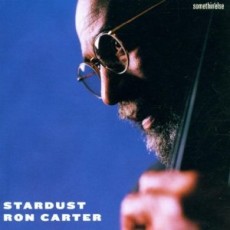
Ron Carter was born May 4, 1937 in Ferndale, Michigan and started playing the cello at the age of 10, but when his family moved to Detroit, he ran into difficulties regarding the racial stereotyping of classical musicians and instead moved to bass. He attended Cass Technical High School and later the Eastman School of Music, played in the later Philharmonic Orchestra. He received his bachelor’s degree at Eastman in 1959, and in 1961 a master’s degree in double bass performance from the Manhattan School of Music.
His first jobs as a jazz musician were with Jaki Byard and Chico Hamilton and made his first records were made with Eric Dolphy and Don Ellis in 1960. Ron led his first date as leader, “Where?”with Dolphy and Mal Waldron and a date “Out There” with Dolphy, George Duvivier and Roy Haynes playing advanced harmonies and concepts were in step with the third stream movement. He truly came to fame in the early ‘60s in the second great Miles Davis quintet with Herbie Hancock, Wayne Shorter and Tony Williams.
Over the course of his career, Carter who is also an acclaimed cellist has appeared on over 2,500 albums make him one of the most-recorded bassists in jazz history. He has played with Sam Rivers, Freddie Hubbard, Duke Pearson, Lee Morgan, McCoy Tyner, Andrew Hill, Horace Silver, Joe Henderson, Hank Jones and too many more to name.
He was a member of the New York Jazz Quartet, the Classical Jazz Quartet, was a Distinguished Professor Emeritus of the Music Department of The City College of New York after twenty years teaching and received an honorary Doctorate from the Berklee College of Music. He is currently on the faculty of the Julliard School teaching bass in the school’s Jazz Studies program, sits on the Advisory Committee of the Board of Directors of The Jazz Foundation of America.
Inspire A Young Mind
Daily Dose Of Jazz…
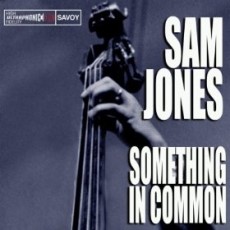
Samuel Jones was born on November 12, 1924 in Jacksonville, Florida. He started his career playing in local bands but by 1953 he was playing with Tiny Bradshaw. Moving to New York City in 1955 he joined up with the groups of Kenny Dorham, Cannonball Adderley, Dizzy Gillespie, and Thelonious Monk. But it would be with the Cannonball’s quintet from 1959 to 1966 that would establish his reputation.
Pairing up with stellar drummer Louis Hayes, the association proved to be a benchmark rhythm section for being “in the pocket”. Jones went on to replace Ray Brown in the Oscar Peterson Trio from 1966 to 1970. After this tenure he teamed up with Cedar Walton and Billy Higgins.
Known for playing the bass and cello with impeccable technique he could also swing and groove with the best of them. Sam fronted his own bands and left a reputable recorded legacy as a leader, recording solo projects during the early sixties and released some wonderful sides for Riverside, where he was able to stretch out on some of his cello oriented pieces.
From 1977 to 1981 Jones remained very active both as leader and sought after session player with two of his landmark recordings “Something New” and Something In Common” being produced during this period. He has played with Bobby Timmons, Tiny Bradshaw, Freddie Hubbard, Bill Evans and Illinois Jacquet as well as many others who revolved around the New York City jazz scene that was fertile ground for his career.
Sam Jones, double bassist, cellist and composer of the jazz standard, “Del Sasser”, passed away on December 15, 1981 at the age of 57.
Daily Dose Of Jazz…
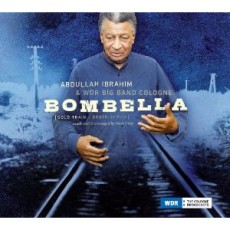
Abdullah Ibrahim was born October 9, 1934 in Cape Town, South Africa, formerly known as Adolph Johannes Brand, and as Dollar Brand. He first received piano lessons at age seven, was an avid consumer of jazz records brought by American sailors, and was playing jazz professionally by 1949. In 1959 and 1960, he played alongside Kippie Moeketsi and Hugh Masekela with The Jazz Epistles in Sophiatown, later recording the first jazz LP by Black South African musicians in 1960. Ibrahim then joined the European tour of the musical King Kong.
Moving to Europe in 1962, it was in the following year that Duke Ellington heard the Dollar Brand Trio at Zurich’s Africana Club at the request of Brand’s wife-to-be Sathima Bea Benjamin. As a result, Duke Ellington presents The Dollar Brand Trio was recorded at Reprise followed by a second session of the trio with Duke Ellington and Billy Strayhorn also on piano performing with Sathima as the vocalist. The recording, A Morning In Paris, remained unreleased until 1996 and then under Benjamin’s name. This led to wider appearances of the Dollar Brand Trio at many European festivals, as well as on radio and television.
Ibrahim has toured mainly in Europe, the United States, and South Africa, the band performing mainly in concert and club settings, and sometimes playing solo piano. Mainly playing the piano, he also plays the flute, saxophone, and cello, performing mostly his own compositions, although he sometimes performs pieces composed by others.
Abdullah Ibrahim to date has recorded more than forty albums as a leader, has written the soundtracks for a number of films, Chocolat and No Fear, No Die; and was a part of the 2002 documentary Amandla! – A Revolution in Four Part Harmony where he and others recalled the days of apartheid. He has ventured into orchestral performances with the inauguration of Nelson Mandela and the later initiation of the 18-piece Cape Town Jazz Orchestra in 2006.
A pianist and composer, Abdullah Ibrahim’s music reflects many of the musical influences of his childhood in the multicultural port areas of Cape Town, ranging from traditional African songs to the gospel of the AME church and ragas, to more modern jazz and other Western styles reflecting the influences of Thelonious Monk and Duke Ellington. He continues to perform, record and tour.
Daily Dose Of Jazz…
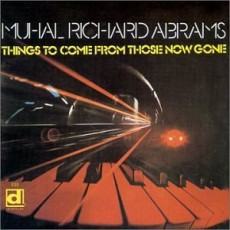
Muhal Richard Abrams was born on September 19, 1930, in Chicago, Illinois. He didn’t start his musical training until his enrollment in Roosevelt University but not hearing what he heard in the streets caused him to study piano on his own. His natural ability to study and analyze things allowed him to read, identify the key the music was in, then the notes and how to play the piano. Listening to Art Tatum, Charlie Parker, Bud Powell, Thelonious Monk and many others, he concentrated on the composition of Duke Ellington and Fletcher Henderson pieces. Although it took a lot of time and sweat, he was soon playing on the scene.
Abrams’ first gigs were playing the blues, R&B, and hard bop circuit in Chicago and working as a sideman with everyone from Dexter Gordon and Max Roach to Ruth Brown and Woody Shaw. In 1950 he began writing arrangements for the King Fletcher Band, and in 1955 played in the hard-bop band Modern Jazz Two + Three, with tenor saxophonist Eddie Harris.
After this group folded he kept a low profile until he organized the Experimental Band in 1962, a contrast to his earlier hard bop venture in its use of free jazz concepts. This band, with its fluctuating lineup, evolved into the Association for the Advancement of Creative Musicians (AACM), emerging in May 1965 with Abrams as its president. Opting not to play in smoky nightclubs they often rented out theatres and lofts where they could perform for attentive and open-minded audiences.
His landmark album “Levels and Degrees of Light” in 1967 saxophonists Anthony Braxton and Maurice McIntyre, vibraphonist Gordon Emmanuel, violinist Leroy Jenkins, bassist Leonard Jones and vocalist Penelope Taylor. However, he never strayed too far from hard bop during this period playing with Eddie Harris, Dexter Gordon and other hard boppers.
Moving to New York in 1975, Abrams became a part of the local Loft Jazz scene and in 1983 he established the New York chapter of the AACM. Over the course of his career he composed for symphony orchestras, classical works, string quartets, solo piano, voice, and big bands in addition to making a series of larger ensemble recordings that include harp and accordion. He has recorded extensively under his own name frequently on the Black Saint label and as a sideman on others’ records, working with the likes of Marion Brown, Chico Freeman, Eddie “Lockjaw” Davis, Art Farmer, Sonny Stitt, Art Ensemble of Chicago, and numerous others.
Muhal Richard Abrams, educator, administrator, composer, arranger, cellist, clarinetist and pianist was given a Lifetime Achievement Award by the Vision Festival, New York City’s premier jazz festival and in 2010 was honored as a NEA Jazz Master. He continues to perform and record.